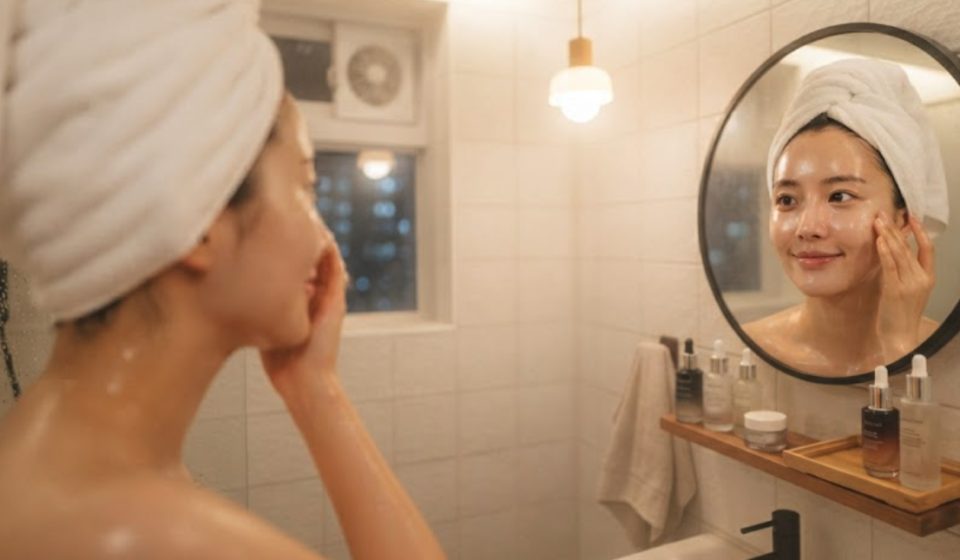

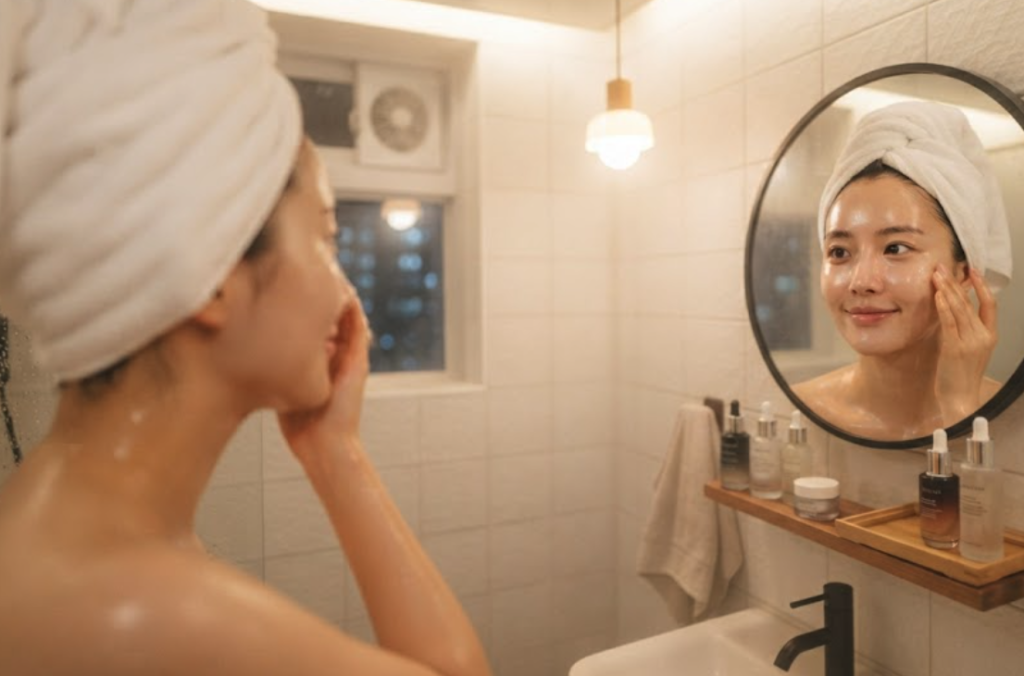
A quiet, steamy moment that reveals more about Korean beauty culture than any skincare product ever could.
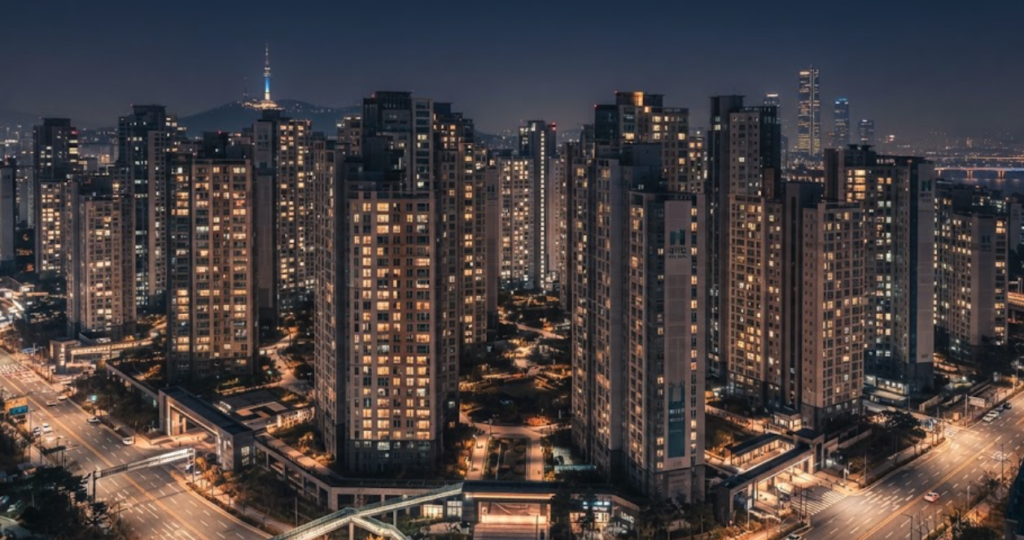
Seoul after sunset has its own rhythm.
The neon signs soften, the subway crowds thin out, and apartment windows begin to glow one by one.
Inside those rooms, something almost universal happens:
Koreans shower.
Not in the morning.
Not before work.
But at night — deliberately, consistently, almost ritualistically.
To outsiders, it looks like a simple habit.
But in Korea, nighttime showering is a quiet beauty ritual woven into daily life, shaping skin health, lifestyle, and even the country’s skincare industry.
This is the story of why Koreans end their day with water, steam, and a fresh face.
🌙 1. Night Is When the City Stops — and Skin Starts to Heal
Morning showers wake you up.
Night showers reset you.
Koreans believe the skin needs to be clean before sleep — not just washed, but reset.
During the day, Seoul throws everything at your face:
- fine dust
- humidity
- subway air
- makeup
- sunscreen
- sweat
- city pollution
Sleeping with that on your skin?
절대 안 돼.
Night showers are the moment Koreans remove the day from their body.
Only then can skincare actually work.
💆 2. The Korean Beauty Routine Begins After the Shower
In many countries, skincare is a quick morning thing.
In Korea, skincare is a nighttime ritual.
After showering:
- pores open
- skin temperature rises
- absorption increases
- circulation improves
This is why Korean skincare routines — toners, essences, serums, ampoules — are designed for nighttime use.
The shower isn’t the end.
It’s the beginning.
🛏️ 3. Clean Sheets, Clean Skin: The Korean Sleep Philosophy
Koreans care deeply about “sleep quality.”
Not just hours — conditions.
Clean skin + clean sheets = better sleep + better skin.
It’s a simple equation, but it shapes behavior:
- No going to bed with makeup
- No lying down with city dust
- No skincare on dirty skin
- No pillow contact before cleansing
Night showers are part of this sleep hygiene culture.
🧖♀️ 4. Korean Apartments Are Built for Night Showers
This part foreigners never notice.
Korean homes are designed for nighttime bathing:
- bathrooms are warm
- floors are heated
- ventilation is strong
- water pressure is high
- showers are fast and efficient
Korean bathrooms feel like mini spas — even in small apartments.
It makes nighttime showering feel natural, easy, comforting.
🌆 5. Seoul’s Pace Demands a Night Reset
Seoul is intense.
Fast.
Crowded.
Competitive.
People leave home early and return late.
Morning time is rushed.
Nighttime is personal.
A night shower is the moment Koreans reclaim their day:
- decompress
- wash off stress
- relax muscles
- reset the mind
- prepare for tomorrow
It’s beauty, but also therapy.
💧 6. Korean Skin Doctors Recommend Night Showers
Dermatologists in Korea often say:
“Skin heals at night.
Give it a clean environment.”
Night showers:
- reduce acne
- prevent clogged pores
- improve moisture retention
- help anti-aging products absorb
- reduce irritation from pollution
This medical advice became cultural habit.
🧴 7. Korean Skincare Products Are Designed for Night Use
Look at Korean beauty products:
- sleeping masks
- night creams
- overnight serums
- calming ampoules
- repair balms
They’re all built around nighttime skin recovery.
The beauty industry didn’t create the habit.
The habit shaped the industry.
🌙 8. Night Showers Are a Cultural Comfort
Ask a Korean why they shower at night and they’ll say:
“그냥 편해.”
“It just feels right.”
It’s not dramatic.
It’s not symbolic.
It’s simply woven into life.
A warm shower.
Soft lighting.
Quiet apartment.
Fresh pajamas.
Clean skin.
It’s a small moment of peace in a fast city.
🏁 Conclusion: Night Showers Are Korea’s Most Underrated Beauty Secret
It’s not a product.
Not a treatment.
Not a clinic.
It’s a habit.
A simple, nightly ritual that keeps Korean skin consistently clean, calm, and ready to absorb skincare.
Night showers are the foundation of K‑beauty — the quiet step before all the famous ones.
If you want to understand Korean beauty culture, don’t start with serums.
Start with the shower.