
For many international visitors, one of the biggest surprises in South Korea isn’t the food, K-pop, or even the skyscrapers.
It’s the roads.
Particularly for people from countries like the United States, driving in Korea often feels surprisingly easy and efficient.
Many foreigners find themselves saying:
“Koreans are incredibly smart.”
“Now I understand why Korea is considered such a technologically advanced country.”
So what exactly makes Korean highways so impressive to foreign drivers?
⭐ Key Takeaways
- Foreign drivers are often impressed by Korea’s driver-friendly road system.
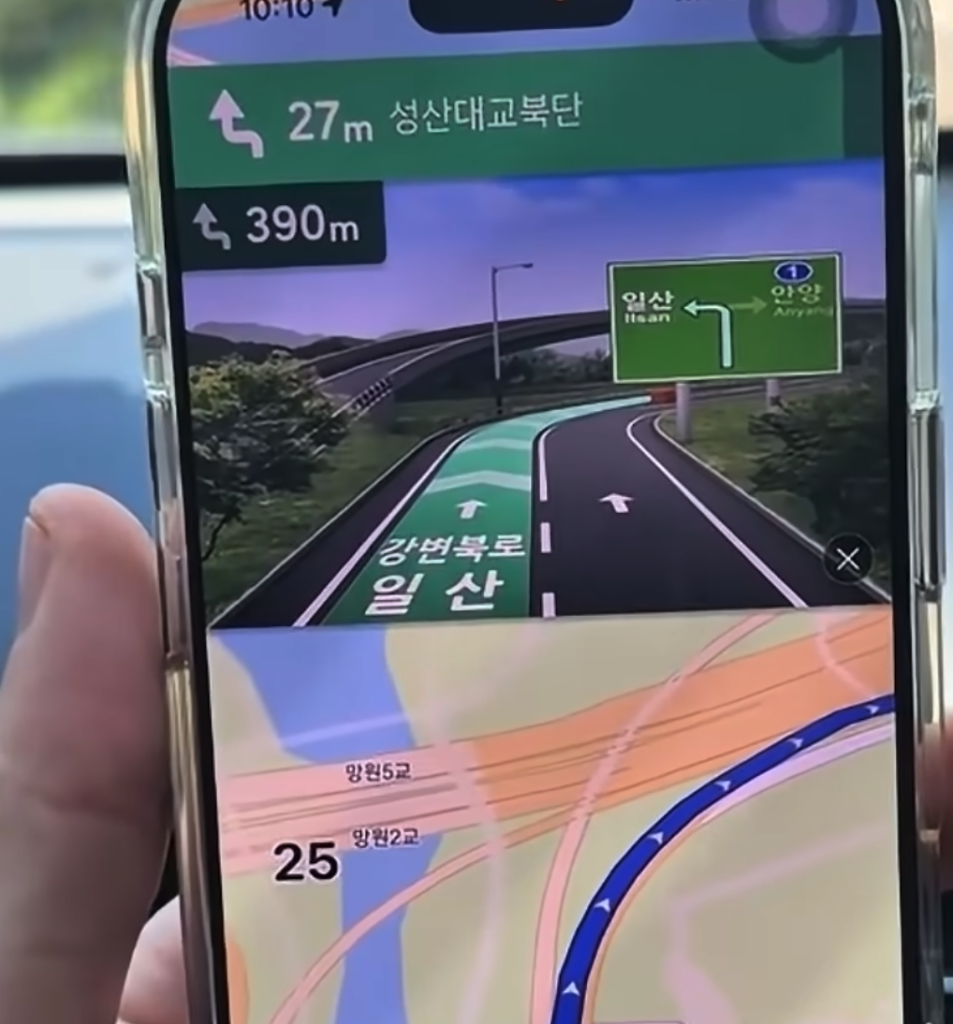
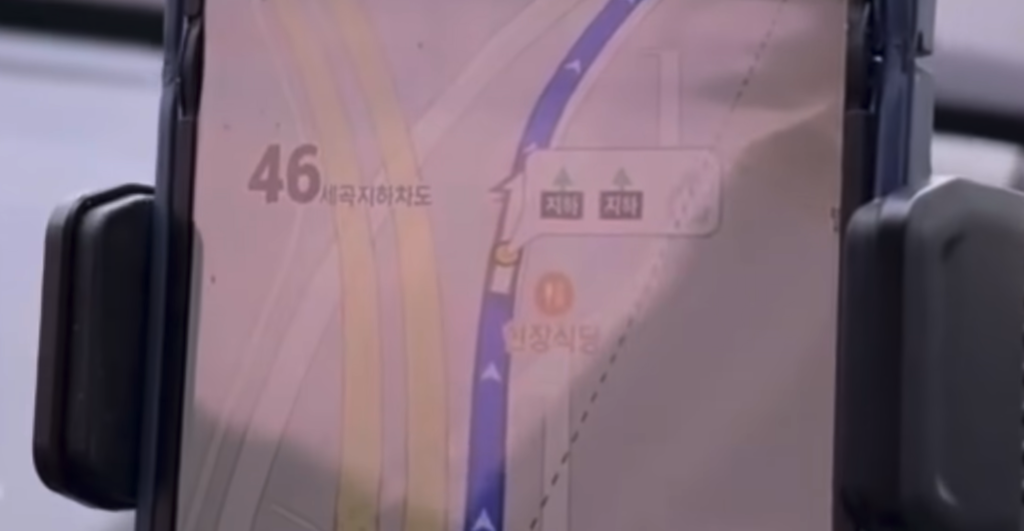
- Korean navigation apps provide tunnel guidance, traffic signals, lane information, and real-time updates.
- Colored lane guidance lines help drivers navigate complex interchanges intuitively.
- Many road design features were created to improve both convenience and safety.
- What feels ordinary to Koreans often seems innovative to international visitors.
Missing a Highway Exit in America Can Be a Big Problem
Anyone who has driven extensively in the United States knows how frustrating it can be to miss a highway exit.
In some states, particularly large ones like Texas, the next exit may be miles away.
Missing a turn can mean:
- Significant delays
- Longer travel times
- Complicated route adjustments
As a result, American drivers often joke:
“Miss one exit and your whole trip changes.”
When foreigners drive in Korea, they quickly notice a very different experience.
The road network is highly connected, and navigation systems constantly provide real-time guidance, making route corrections much easier.
The First Thing That Surprised Foreign Drivers: Tunnels
One foreign visitor, Nick Leon, a real estate investor from Texas, began documenting his driving experience shortly after arriving in Korea.
One of the first features that caught his attention was something many Koreans barely notice.
Tunnel navigation.
When entering a tunnel, Korean navigation systems continue displaying relevant driving information and indicate that the vehicle is currently traveling through a tunnel.
For many Koreans, this is completely normal.
For foreign drivers, it feels surprisingly advanced.
Many visitors comment that even small details seem carefully designed to improve the driving experience.
The “Person” Standing Near Road Construction
Another feature that fascinates visitors is the human-shaped safety mannequin commonly used in construction zones.
From a distance, these figures often resemble real workers directing traffic.
As drivers approach, they realize the “person” is actually a safety device.
What foreigners find most interesting isn’t the mannequin itself.
It’s the idea behind it.
Instead of requiring workers to stand in dangerous traffic areas all day, the mannequin provides visibility and guidance while improving safety.
Many visitors view it as an example of thoughtful engineering.
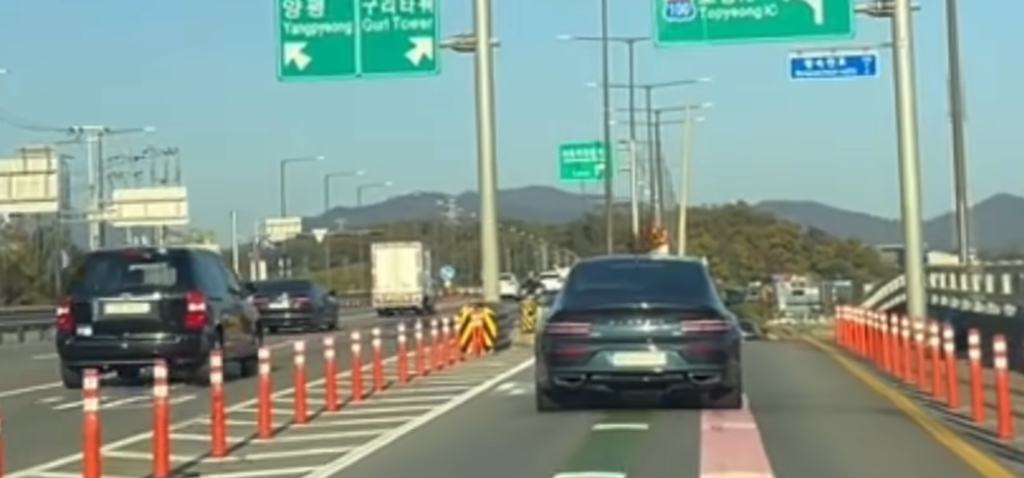
The Colored Lines That Foreigners Can’t Stop Talking About
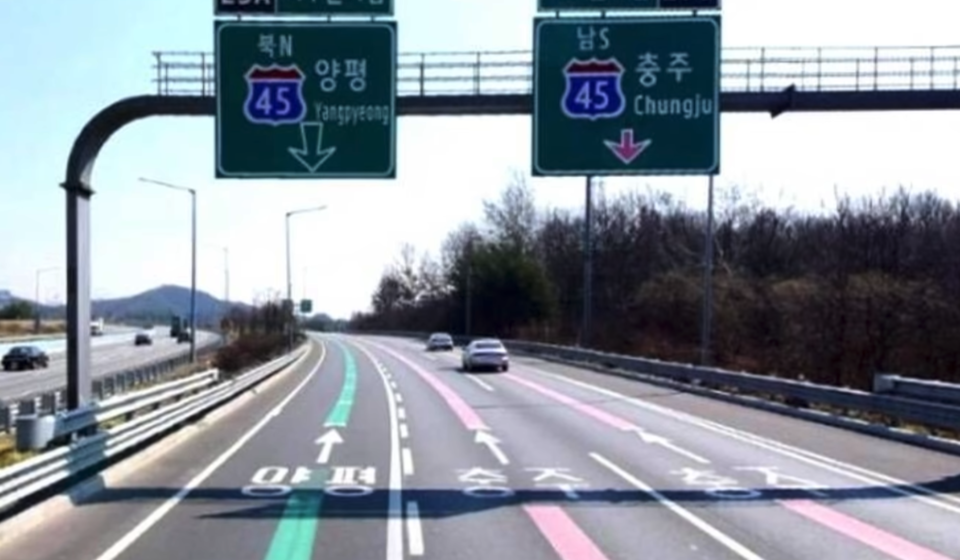
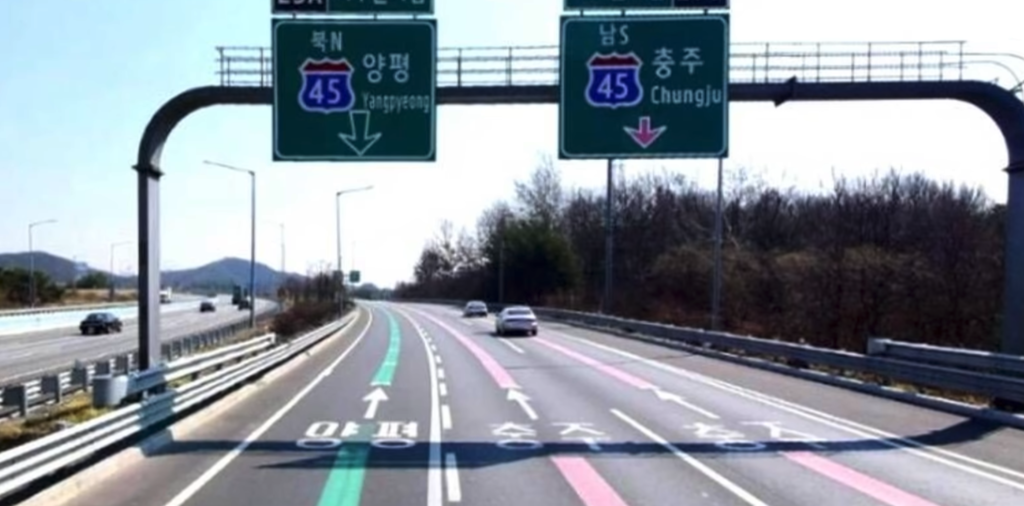
One of the most frequently mentioned features of Korean roads is the colored lane guidance system.
On complicated highway interchanges and exits, drivers often see colored lines painted directly on the road:
- Green
- Blue
- Red
These lines guide drivers toward specific routes.
Rather than searching for multiple signs, drivers simply follow the color indicated by their navigation system.
“Just Follow the Green Line”
For foreign drivers, the appeal is its simplicity.
Instead of constantly reading:
- Exit numbers
- Highway names
- Direction signs
they can simply identify the correct color and follow it.
Many visitors describe the system as intuitive.
Even drivers unfamiliar with Korean road names can find their way easily.
This often leads to one common reaction:
“That’s incredibly smart.”
More Than Convenience: Improved Safety
These colored guidance lines were not created simply to look attractive.
They were designed to help drivers make better decisions in complex traffic environments.
Benefits include:
- Easier lane selection
- Less driver confusion
- Reduced last-minute lane changes
- Improved traffic flow
Several studies and transportation analyses have suggested that such systems may contribute to accident reduction in complex roadway environments.
What began as a simple idea eventually became a standard feature on many Korean highways.
Korea Even Tells Drivers When Traffic Lights Will Change
Another feature that surprises many visitors is the traffic signal countdown information integrated into navigation systems.
In Korea, many navigation apps display:
- Remaining red-light time
- Countdown until signal change
- Real-time traffic signal information
This means drivers don’t have to wonder:
“How much longer will this red light last?”
The information is already available.
It’s a small feature, but one that many foreigners immediately appreciate.
Speed Warnings Built Into the Driving Experience
Many visitors also notice that Korean vehicles and navigation systems actively alert drivers when they exceed the speed limit.
Warnings may include:
- Visual alerts
- Speed-limit notifications
- Color-coded warnings
Drivers receive immediate feedback without constantly checking their speedometer.
The result is a driving environment that feels both convenient and safety-oriented.
Why Foreigners Keep Calling Korea “Smart”
One interesting pattern appears repeatedly in travel videos and visitor reactions.
Foreigners driving in Korea often use the same word:
“Smart.”
They describe:
- The navigation systems as smart
- The road design as smart
- The construction safety solutions as smart
- The lane guidance system as smart
It is rarely one big technological innovation that impresses them.
Instead, it is the accumulation of countless small details designed to eliminate inconvenience.
Ordinary for Koreans, Extraordinary for Visitors
Most Koreans encounter these features every day.
They have become part of normal life.
However, international visitors see them differently.
They notice:
- Tunnel guidance displays
- Colored lane guidance lines
- Traffic light countdowns
- Speed-limit alerts
- Construction safety mannequins
Each feature may seem minor on its own.
Together, they create a road system that feels efficient, intuitive, and user-friendly.
Why Korea’s Highways Leave Such a Strong Impression
What impresses foreign visitors isn’t necessarily the size of the highways or the sophistication of the vehicles.
Instead, it is the thoughtfulness behind the system.
Many aspects of Korean road design appear focused on answering a simple question:
“How can we make driving easier and safer?”
The result is an experience that many visitors remember long after leaving Korea.
Conclusion
Foreigners are often surprised by Korean highways because of the countless small innovations they encounter while driving.
From colored lane guidance systems and advanced navigation features to real-time traffic updates and safety-focused road design, Korea has created a driving environment that feels remarkably intuitive.
For Koreans, these features may seem ordinary.
For visitors from around the world, they represent a fascinating example of practical innovation at work.
Perhaps Korea’s greatest strength is not always found in massive technological breakthroughs.
Sometimes it is found in the small details that make everyday life just a little easier.
Related Topics