
A country built on speed is learning how to slow down — quietly, subtly, almost imperceptibly.
For decades, Korea’s office culture was defined by one thing: presence.
Being there.
Staying late.
Showing commitment through time, not output.
But modern Korea is changing — not loudly, not dramatically, but quietly.
The shift is happening in small details:
a laptop opened in a café instead of a cubicle,
a Zoom call replacing a morning commute,
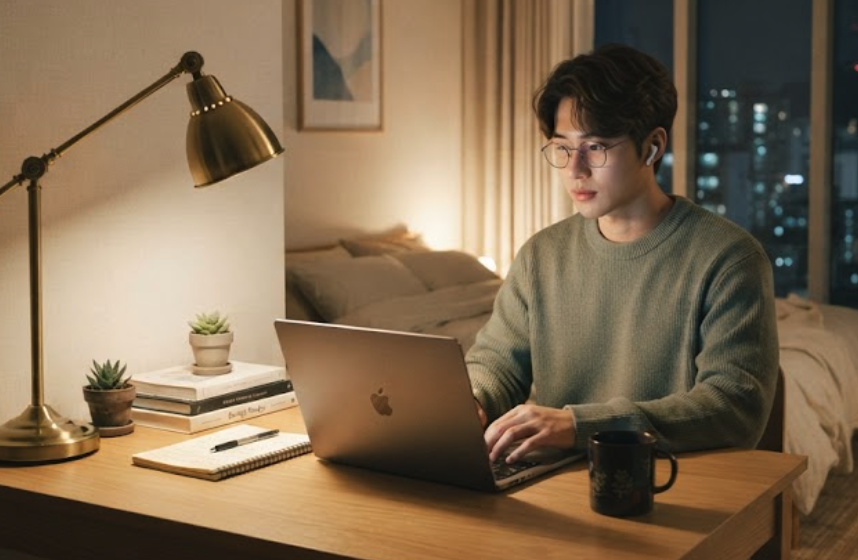
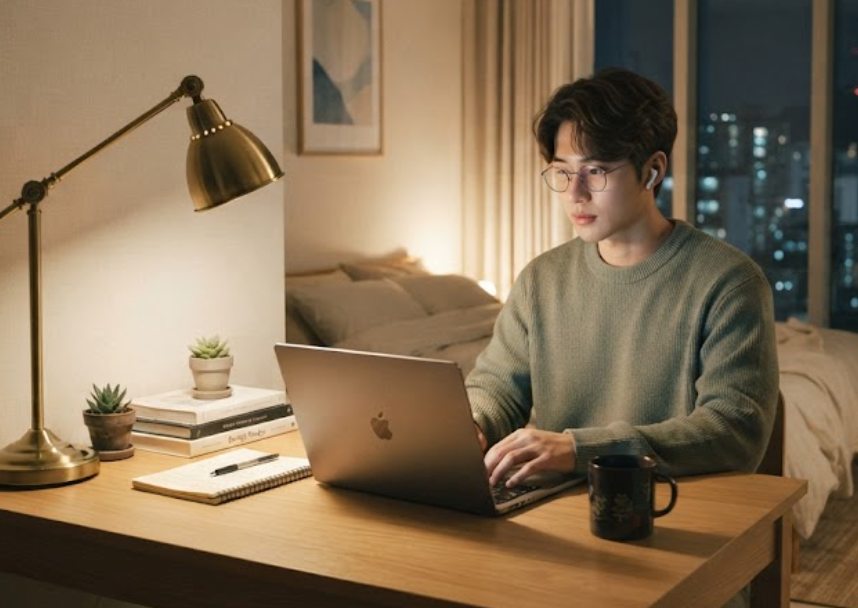
a freelancer working at midnight because they choose to, not because they must.
Korea’s office culture is not collapsing.
It’s evolving.
🌫️ 1. The End of the Morning Rush
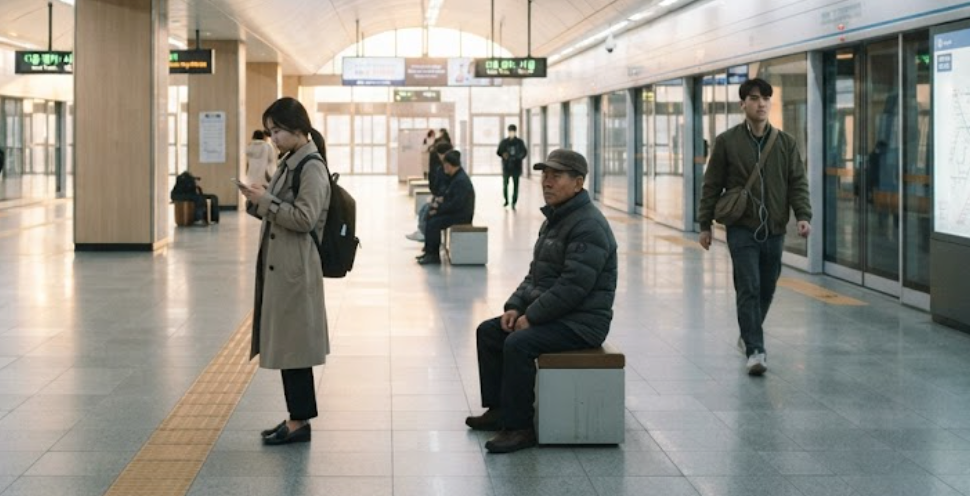
There was a time when Seoul’s subway at 8:30 AM felt like a single organism — millions of bodies moving with one purpose: get to the office.
Today, the rush is softer.
Some people commute at 10.
Some don’t commute at all.
Some open their laptops in bed.
Some start their day in a café with a latte and noise-canceling headphones.
The city hasn’t slowed down.
But the office hour has.
Remote work didn’t erase the commute.
It blurred it.
☕ 2. The Rise of the Café Worker
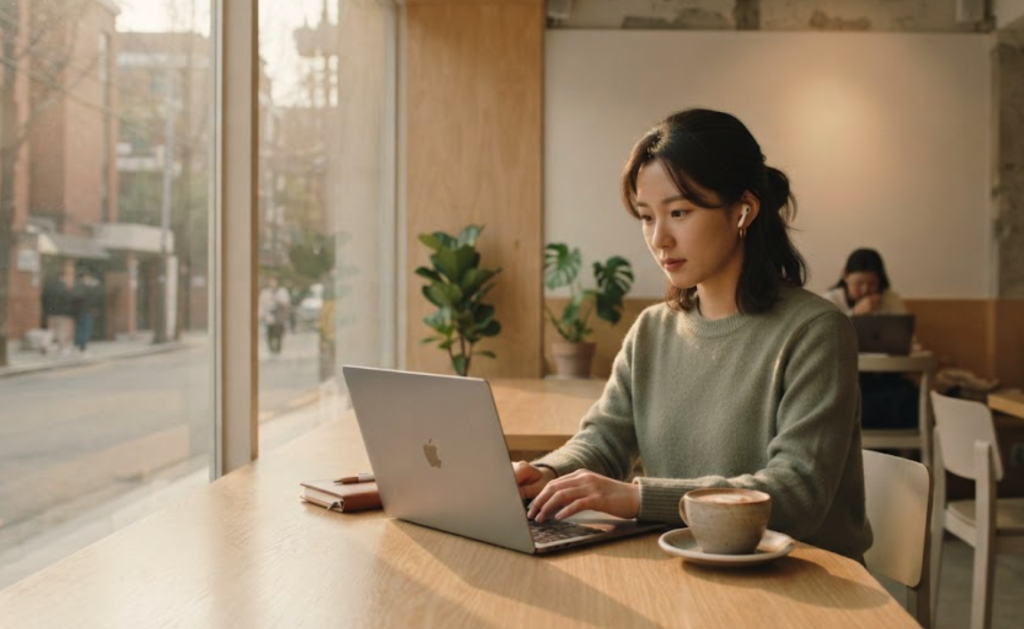
Walk into any café in Seoul at 2 PM.
You’ll see:
- designers editing on MacBooks
- marketers writing proposals
- developers debugging code
- freelancers sending invoices
- students studying
- office workers on Zoom calls with AirPods in
Korean cafés have become unofficial offices — bright, warm, caffeinated workspaces with better vibes than fluorescent-lit cubicles.
This shift didn’t happen because companies changed.
It happened because workers changed.
They wanted:
- flexibility
- comfort
- autonomy
- sunlight
- space
- silence
- or noise, depending on the day
Cafés became the answer.
🏠 3. Remote Work: The Change That Started as a Crisis
Remote work in Korea didn’t begin as innovation.
It began as necessity.
During the pandemic, companies were forced to adapt.
But something unexpected happened:
Workers realized they were more productive at home.
Managers realized output didn’t drop.
Companies realized office rent was expensive.
Remote work didn’t stay because it was trendy.
It stayed because it made sense.
Now, hybrid schedules are common:
- 2 days office
- 3 days home
- flexible arrival times
- optional Fridays
- remote-only teams in tech and design
Korea didn’t embrace remote work loudly.
It embraced it quietly — and permanently.
🧑💻 4. The Freelancer Boom: Korea’s New Workforce
Korea used to be a country where stability meant one thing:
a full-time job at a big company.
Not anymore.
Freelancers are everywhere:
- designers
- developers
- translators
- marketers
- video editors
- consultants
- writers
- creators
They work from home, cafés, co-working spaces, or even Jeju for a month.
Freelancing in Korea isn’t rebellion.
It’s adaptation.
People want:
- control over their time
- freedom from office politics
- income diversity
- creative work
- mental space
- autonomy
The quiet shift is not toward quitting work.
It’s toward choosing how to work.
🏢 5. The Office Is Still There — But It Feels Different
Korean offices haven’t disappeared.
They’ve transformed.
You’ll see:
- empty desks on Mondays
- flexible seating
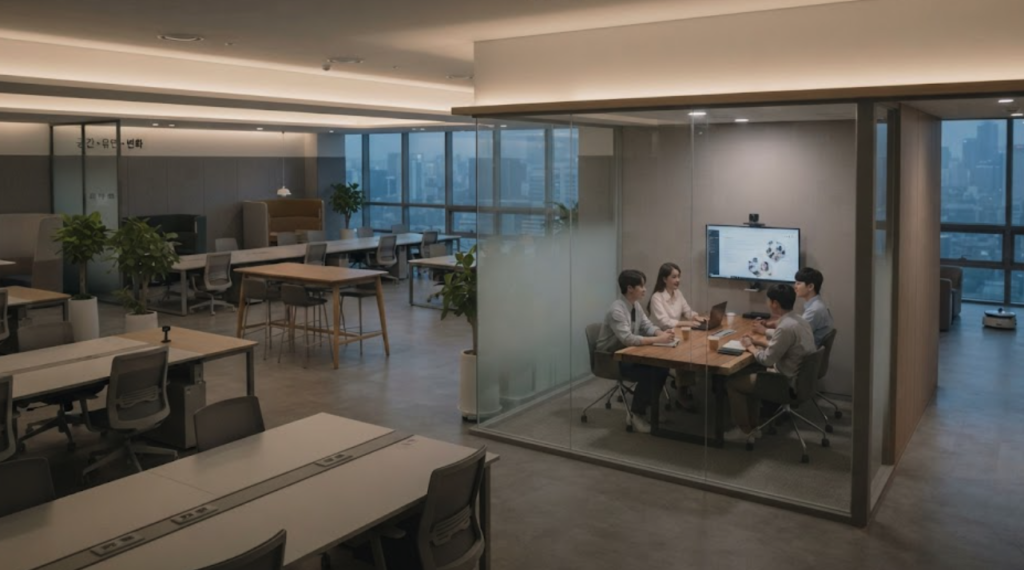
- quiet zones
- collaboration rooms
- fewer meetings
- more Slack messages
- shorter hours
- earlier departures
- managers who don’t track arrival time
- HR teams promoting “work-life balance” without irony
The office is no longer the center of work.
It’s one of many places where work happens.
🧠 6. The Psychological Shift: Koreans Are Choosing Themselves
The biggest change is not physical.
It’s mental.
Koreans used to believe:
“Work hard now, rest later.”
But “later” never came.
Now, younger Koreans believe:
“Work well, live well — at the same time.”
They want:
- time
- health
- hobbies
- relationships
- rest
- meaning
- balance
This shift is subtle but powerful.
It’s changing how people choose jobs, how companies recruit, and how society defines success.
🌐 7. Global Influence: Korea Is Becoming More Like the World — and the World More Like Korea
Korea’s digital infrastructure — fast internet, mobile payments, cloud systems — made flexible work easy.
Global companies brought new work cultures.
Startups brought new expectations.
Tech brought new possibilities.
Korea is not copying global trends.
It’s merging them with its own identity:
- efficiency
- speed
- digital fluency
- ambition
- creativity
The result is a uniquely Korean version of modern work.
🌅 8. The Quiet Revolution
Korea’s office culture didn’t change through protests or policy.
It changed through preference.
One worker choosing a café.
One team choosing Zoom.
One company choosing hybrid.
One freelancer choosing independence.
Small choices, multiplied across millions of people, became a cultural shift.
Korea’s work culture is still fast.
Still ambitious.
Still intense.
But it is no longer rigid.
It is flexible.
It is fluid.
It is quietly transforming.
And that quiet transformation is reshaping modern Korea more than any loud revolution ever could.