
Korea’s Emergency Alert System: Why Korean Phones Receive Instant Disaster Messages

How Korea built one of the world’s fastest and most reliable national alert systems.
When foreigners first arrive in Korea, one of the earliest surprises comes from something unexpected — their phone suddenly screams with a loud alarm, even if it’s on silent mode.
A sharp, piercing sound fills the room, followed by a message in Korean text.
Everyone around calmly checks their phones, reads the alert, and continues with their day.
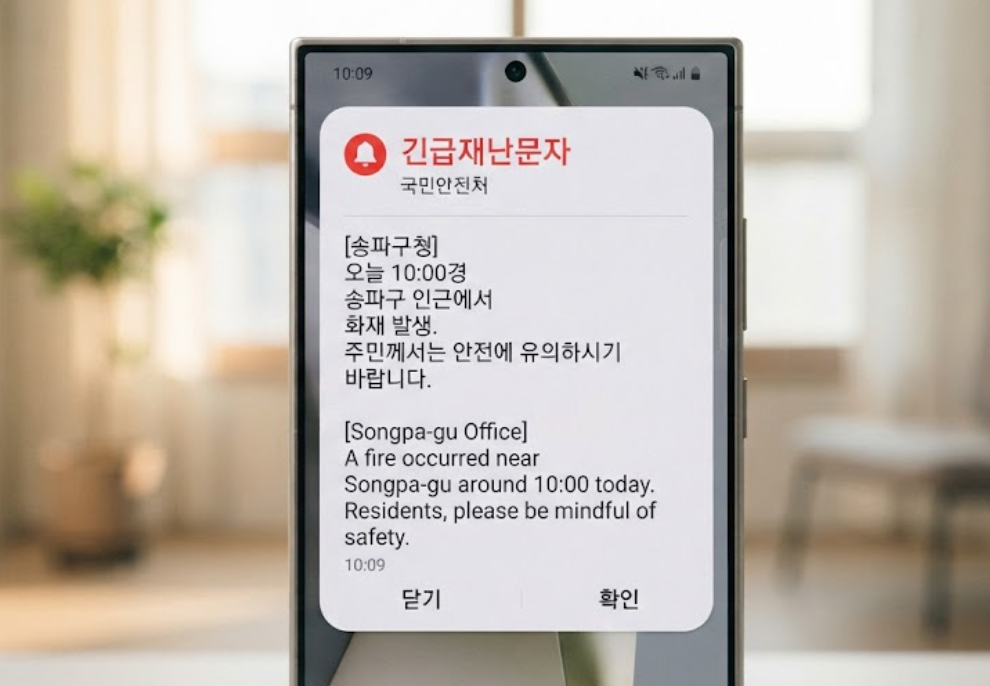
For newcomers, this moment is shocking.
“What was that sound?”
“Why did everyone’s phone go off at the same time?”
“Is this normal in Korea?”
Yes.
It’s completely normal.
Korea has one of the world’s most advanced and comprehensive emergency alert systems, designed to notify the entire population within seconds during disasters, accidents, or urgent public safety situations.
This article explains why Korea’s emergency alerts exist, how they work, and why foreigners often say, “I’ve never seen anything like this in my country.”
🟥 1. What Exactly Is Korea’s Emergency Alert System?
Korea’s emergency alert system is a nationwide mobile broadcast network that sends instant notifications to every phone in a specific region — or the entire country — when a dangerous situation occurs.
These alerts are called:
- 재난 문자 (Disaster Messages)
- 긴급 재난 알림 (Emergency Disaster Alerts)
- 안전 안내 문자 (Safety Guidance Messages)
They are sent by:
- The Korean government
- Local city governments
- Fire departments
- Police
- Meteorological agencies
- Health authorities
Unlike normal text messages, these alerts:
- Override silent mode
- Play a loud alarm
- Appear instantly
- Do not require mobile data
- Reach everyone in the affected area
Foreigners often say it feels like “the government is inside my phone,” but the system is designed purely for safety.
🟧 2. Why Korea Created This System
Korea’s geography and history shaped its emergency alert culture.
✔ 1) Natural disasters
Korea experiences:
- Typhoons
- Heavy rain
- Flooding
- Heatwaves
- Cold waves
- Earthquakes (small but increasing)
Fast alerts save lives.
✔ 2) Public safety incidents
Alerts are used for:
- Large fires
- Chemical accidents
- Missing children
- Dangerous individuals
- Traffic shutdowns
- Building collapses
The goal is to inform people immediately.
✔ 3) National security
Due to Korea’s geopolitical situation, emergency alerts can also be used for:
- Missile warnings
- Military-related incidents
- Border-area emergencies
Foreigners often say they’ve never experienced a system this comprehensive.
🟨 3. How Korea’s Alerts Reach Phones So Quickly
Korea’s emergency alert system uses cell broadcast technology, not SMS.
This means:
- Messages are sent to all phones connected to nearby cell towers
- No phone numbers are needed
- No internet connection is required
- Delivery is instant
- Network congestion does not affect alerts
Even during disasters when mobile networks are overloaded, emergency alerts still go through.
This is why foreigners often say:
“I got the alert before the news even reported it.”
🟦 4. Types of Emergency Alerts in Korea
Korea sends several types of alerts depending on the situation.
✔ 1) Emergency Disaster Alerts (긴급 재난 문자)
Highest priority.
Used for life-threatening situations.
Examples:
- Earthquakes
- Major fires
- Missile warnings
- Severe weather
- Chemical accidents
These alerts are loud and impossible to ignore.
✔ 2) Safety Guidance Alerts (안전 안내 문자)
Lower priority but still important.
Examples:
- COVID-19 exposure notices
- Local traffic disruptions
- Heatwave warnings
- Missing persons
- Air pollution alerts
These alerts may be less urgent but still useful.
✔ 3) Local Government Alerts
Sent by city or district offices.
Examples:
- Water supply issues
- Local fires
- Road closures
- Neighborhood safety notices
Foreigners living in Korea often receive multiple alerts per week depending on their region.
🟩 5. Why Foreigners Are Surprised by Korea’s Alert System
Foreigners often mention several reasons:
✔ 1) The sound is extremely loud
Even if the phone is on silent, the alert overrides settings.
✔ 2) Everyone’s phone goes off at the same time
It feels like a synchronized alarm.
✔ 3) Alerts are very frequent
Especially during:
- Rainy season
- Heatwaves
- COVID outbreaks
- Air pollution spikes
✔ 4) Alerts are extremely fast
Often faster than news or social media.
✔ 5) Alerts are very detailed
They include:
- Exact location
- Time
- Instructions
- Safety tips
Foreigners often say:
“My country doesn’t warn us this quickly.”
🟫 6. Real Examples of Situations Where Alerts Helped
✔ Earthquake alerts
Even small earthquakes trigger immediate warnings.
✔ Flash flood alerts
People receive alerts minutes before dangerous flooding.
✔ Heatwave alerts
Korea warns citizens to avoid outdoor activity.
✔ COVID-19 alerts
During the pandemic, Korea used alerts to notify people of exposure locations.
✔ Missing child alerts
Amber-style alerts are sent instantly nationwide.
These alerts have saved countless lives.
🟪 7. Why Koreans Appreciate the System
Koreans generally view emergency alerts positively because:

- They increase safety
- They provide real-time information
- They prevent panic
- They help people make quick decisions
- They show government responsiveness
Even though the alerts can be loud or frequent, most Koreans prefer having them.
🟧 8. Final Thoughts: Korea’s Alert System Shows a Culture of Preparedness
Korea’s emergency alert system is more than a loud message —
it reflects a national commitment to safety, speed, and public awareness.
Foreigners often say Korea feels like one of the safest countries in the world, and this alert system is a major reason why.
In Korea, danger is never silent.
Your phone will warn you — instantly, loudly, and reliably.
It’s one of the clearest examples of how Korea blends technology with public safety, creating a modern system that protects millions of people every day.