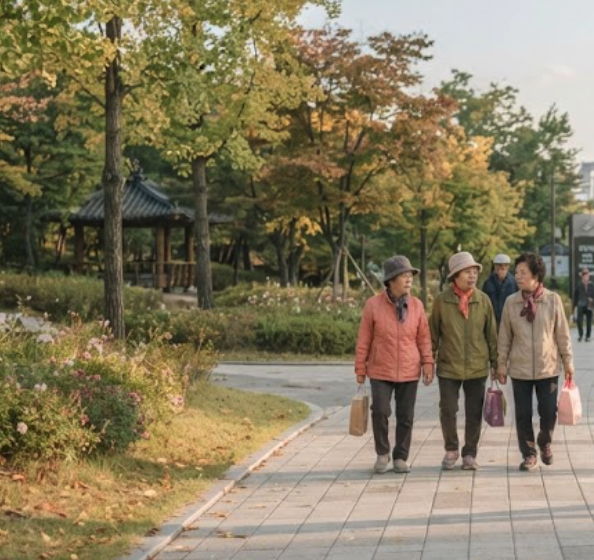

A story about a country moving forward so quickly that its population began moving backward.
Korea’s demographic shift didn’t happen loudly.
There was no single moment, no dramatic announcement, no national shock.
It happened quietly — in apartments where couples chose not to have children, in offices where young people stayed late, in cities where one-person households multiplied like neon signs.
Modern Korea is aging fast.
Not gradually, not naturally, but at a pace that feels almost surreal.
The country that rebuilt itself from war, became a tech powerhouse, and shaped global pop culture is now facing a future where its population shrinks every year.
This is not a crisis story.
It’s a transformation story — one that reveals how deeply modern life can reshape a nation.
🧊 1. The Birth Rate That Fell Faster Than Anyone Expected
Korea’s fertility rate didn’t just decline.
It collapsed.
In the 1960s, Korean families had five or six children.
Today, the national average is 0.7 — the lowest in the world.
Seoul is even lower.
A city of ten million dreams, but barely half a child per woman.
Why?
Because modern Korea became a place where:
- housing is expensive
- work is demanding
- education is competitive
- time is scarce
- rest is rare
- freedom is precious
Children didn’t disappear.
They simply became optional — and for many, unrealistic.
🧑🦳 2. The Elderly Population That Grew Without Waiting
While births fell, life expectancy rose.
Koreans live long — very long — thanks to healthcare, diet, and lifestyle.
The result?
A society where seniors are everywhere:
- morning parks filled with walkers
- subway seats occupied by silver hair
- neighborhoods where elderly people live alone
- clinics specializing in aging care
- welfare systems under pressure
Korea didn’t just age.
It aged fast — faster than Japan, faster than Europe, faster than any country with similar economic growth.
🏙️ 3. The City of One: How Korea Became a Nation of Solo Households
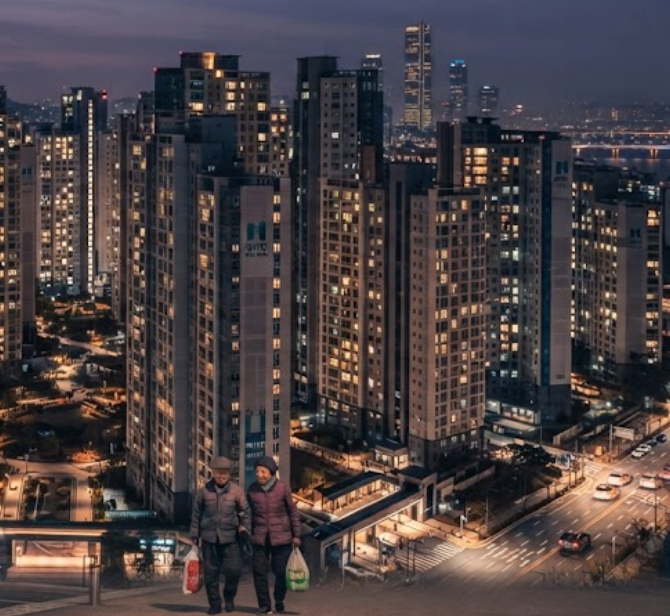
Walk through Seoul at night.
Look up at the apartment windows.
Most lights belong to one person.
One-person households are now the largest household type in Korea.
Not families.
Not couples.
Individuals.
This shift changed everything:
- housing design
- food packaging
- convenience store culture
- delivery services
- entertainment
- social norms
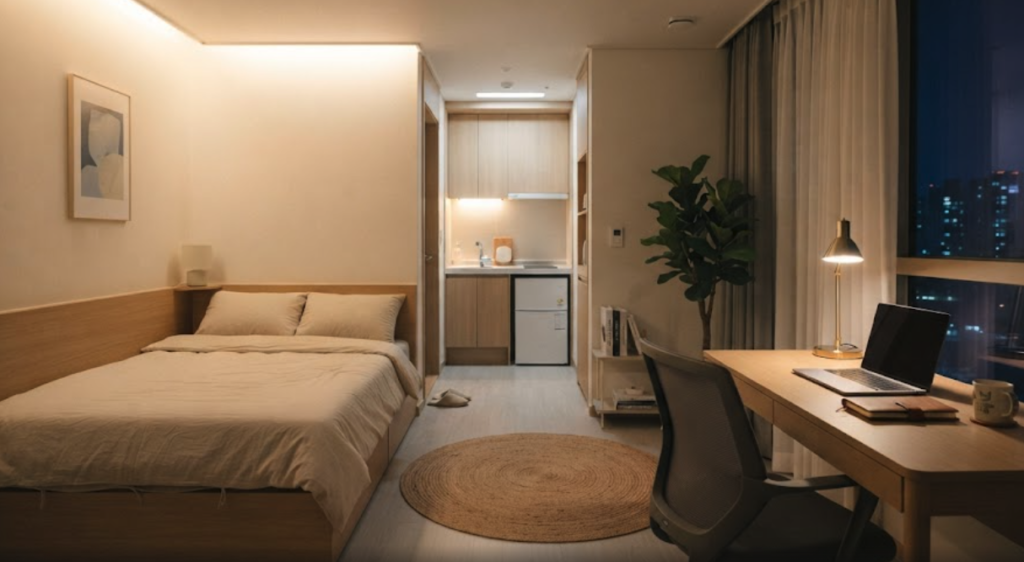
Korea became a country built for one — one desk, one bed, one meal, one life.
It’s not loneliness.
It’s lifestyle.
🧠 4. The Psychology Behind the Shift: A Generation That Chose Itself
Korea’s demographic change is not just economic.
It’s emotional.
Young Koreans grew up in a world of:
- intense competition
- high expectations
- rapid modernization
- digital immersion
- global comparison
- constant pressure
They learned to survive by focusing on themselves:
- their career
- their mental health
- their freedom
- their time
- their identity
Marriage became optional.
Children became a choice.
Independence became the default.
This is not selfishness.
It’s self-preservation.
🏢 5. Work Culture: The Engine That Drives Growth and Decline
Korea’s work culture is legendary — and notorious.
Long hours.
High performance.
Fast deadlines.
High responsibility.
This culture built modern Korea.
It also made parenting nearly impossible for many.
When work takes your day,
and rest takes your night,
what time is left for raising a child?
The demographic shift is not separate from work culture.
It is a direct consequence of it.
🏠 6. Housing: The Dream That Became Too Expensive
Korea’s housing market is a paradox:
- small apartments
- high prices
- intense competition
- long mortgage periods
For many young Koreans, owning a home feels like winning a lottery.
Starting a family feels like a luxury.
So they choose a different path:
- small studio
- solo living
- flexible lifestyle
- fewer obligations
Housing didn’t just shape the demographic shift.
It accelerated it.
🧭 7. The Future Korea Is Walking Toward
By 2050, Korea will be one of the oldest countries in the world.
By 2060, its population may shrink by millions.
Schools will close.
Workplaces will automate.
Immigration will rise.
Cities will redesign themselves for seniors.
Families will look different.
Life will feel different.
But Korea has always adapted.
It rebuilt from war.
It industrialized in a generation.
It became a cultural superpower.
The demographic shift is not the end.
It’s the next chapter.
🌅 8. A Country Redefining What It Means to Live
Korea’s aging is not a tragedy.
It’s a reflection of modern life — fast, demanding, ambitious, individualistic.
It shows how deeply lifestyle can shape a nation.
How choices become patterns.
How patterns become culture.
How culture becomes destiny.
Modern Korea is aging fast.
But it is also evolving fast.
The question is not “How do we stop aging?”
The question is:
“What kind of society will Korea become next?”