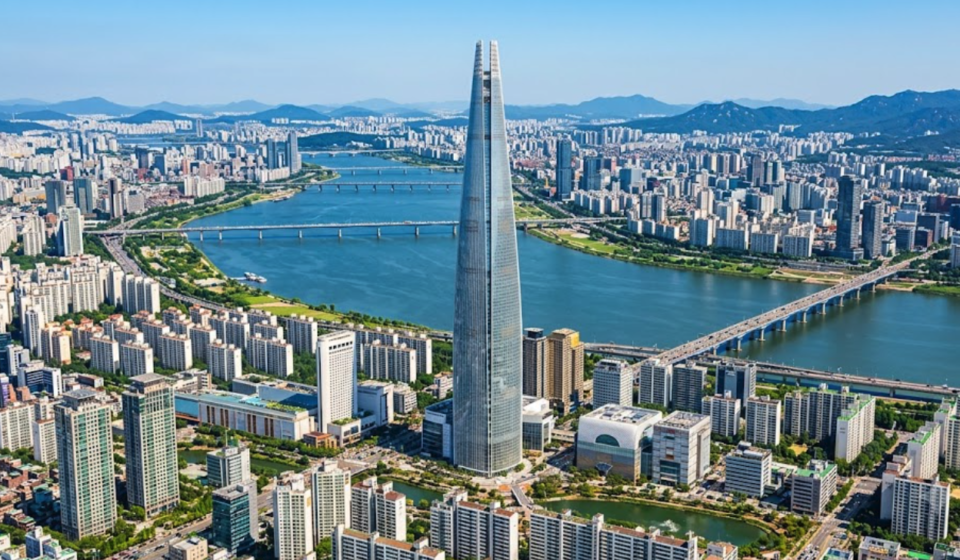

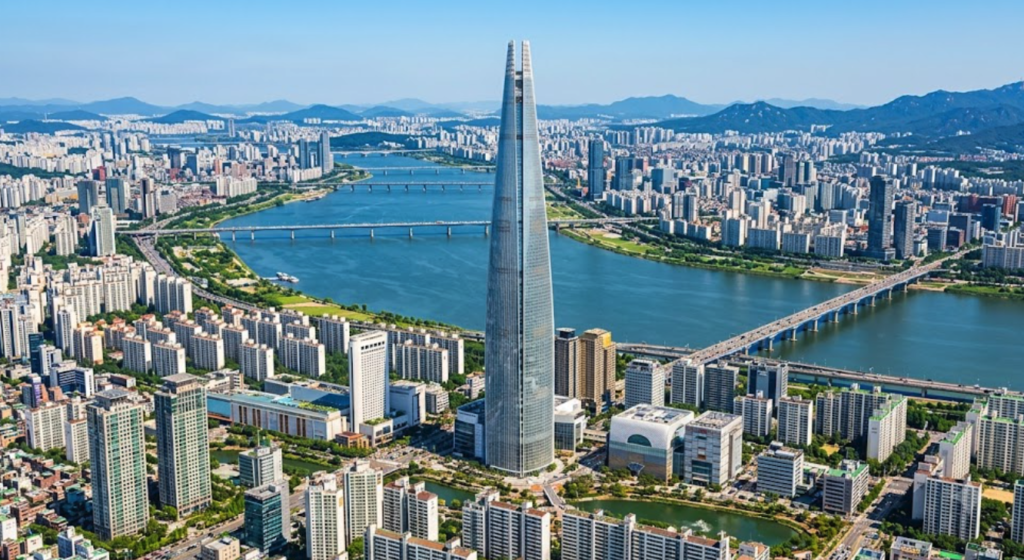
Seoul is one of the most dynamic and technologically advanced cities in the world. For foreigners visiting or living in Korea, understanding how modern Seoul operates can dramatically improve daily life. The city blends cutting‑edge innovation with deep cultural heritage, creating an environment where tradition and technology coexist seamlessly.
In 2026, Seoul continues evolving at a rapid pace. From smart city systems and transportation networks to lifestyle trends, safety, and cultural shifts, modern Seoul offers a unique experience that feels futuristic yet deeply human.
This extended guide provides a comprehensive look at what foreigners should know about modern Korea’s capital.
⭐ 1. Seoul as a Global Smart City
Seoul is consistently ranked among the world’s top smart cities. The government integrates AI, IoT, and big data into nearly every aspect of urban management.
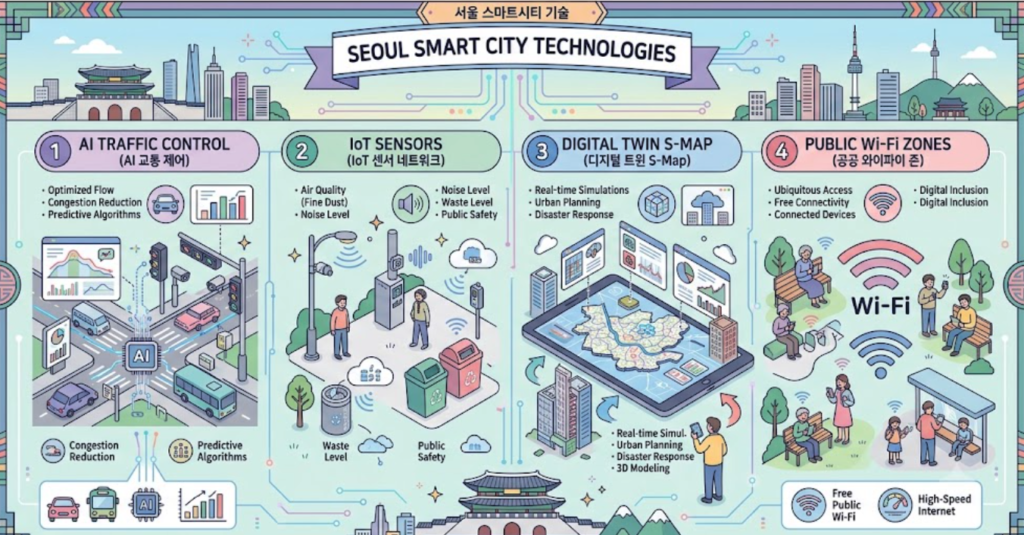
✔ TOPIS: AI Traffic Control
Seoul’s Traffic Operation & Information System (TOPIS) uses AI to monitor traffic flow, adjust signals, and reduce congestion.
Foreigners often notice how quickly traffic clears after peak hours — this is TOPIS at work.
✔ S‑DoT Sensors
Over 1,000 IoT sensors across the city track:
- Air quality
- Noise levels
- Temperature
- Pedestrian movement
- Traffic density
These sensors help Seoul respond to environmental changes in real time.
✔ Digital Twin S‑Map
Seoul has a full 3D virtual model of the city used for:
- Disaster simulations
- Urban planning
- Traffic prediction
- Emergency response
This makes Seoul one of the safest and most efficiently managed cities globally.
✔ Public Wi‑Fi Everywhere
Foreigners can enjoy free Wi‑Fi in:
- Parks
- Subway stations
- Buses
- Major streets
- Government buildings
Seoul’s digital accessibility is unmatched.
⭐ 2. Transportation: Fast, Clean, and Predictable
Seoul’s transportation system is one of the best in the world.
✔ Subway
- 23+ lines
- English signage
- Clean and safe
- Extremely punctual
- Air‑conditioned year‑round
- Average fare: ₩1,400–₩1,600
Foreigners often praise the subway for being intuitive and foreigner‑friendly.
✔ Buses
Color‑coded by region:
- Blue (citywide)
- Green (local)
- Yellow (downtown)
- Red (express to suburbs)
Real‑time arrival screens make navigation easy.
✔ Taxis
Affordable compared to other global cities.
Most drivers use navigation apps, and international taxis are available.
✔ T‑Money
One card works for:
- Subway
- Bus
- Taxi
- Convenience stores
- Some cafes
Seoul’s transportation ecosystem is designed for simplicity.
⭐ 3. Daily Life Convenience: The Heart of Modern Korea
Seoul is built around convenience — everything is fast, accessible, and efficient.
✔ Convenience Stores (편의점)
Open 24/7 and offer:
- Ready meals
- ATM
- Package pickup
- Mobile charging
- Alcohol
- Bill payment
- Delivery pickup
Foreigners often say convenience stores feel like mini‑life hubs.
✔ Delivery Culture
Korea’s delivery system is legendary.
Food, groceries, medicine, and even electronics can arrive within 15–30 minutes.
Apps like:
- Baemin
- Yogiyo
- Coupang Eats
make ordering effortless.
✔ Cashless Lifestyle
Most payments are done through:
- Credit cards
- KakaoPay
- NaverPay
- QR codes
Cash is rarely used.
✔ 24‑Hour Lifestyle
Seoul never sleeps.
Restaurants, cafes, convenience stores, and entertainment spots operate late into the night.
⭐ 4. Safety & Cleanliness
Seoul is one of the safest major cities in the world.
✔ Safety Features
- CCTV everywhere
- Well‑lit streets
- Police boxes in busy areas
- Low violent crime rate
- Safe for solo travelers and women at night
✔ Cleanliness
Public spaces are regularly maintained.
Recycling rules are strict, and trash disposal is organized.
Foreigners often comment on how clean Seoul feels compared to other global cities.
⭐ 5. Modern Korean Culture Trends
Korean society is evolving rapidly, especially among younger generations.
✔ Rise of Single‑Person Households
More Koreans live alone, leading to growth in:
- Small apartments
- Solo dining
- Convenience store meals
- Delivery services
- Pet ownership
✔ Work Culture Shift
Younger Koreans prioritize:
- Work‑life balance
- Flexible jobs
- Remote work
- Mental health
- Personal hobbies
✔ K‑Beauty & Aesthetic Trends
K‑beauty continues to influence global beauty standards.
The dominant look is:
- Natural
- Clean
- Minimal
- Healthy skin over heavy makeup
✔ Digital Lifestyle
Koreans rely heavily on apps for:
- Banking
- Shopping
- Dating
- Navigation
- Government services
- Medical appointments
Everything is digital and fast.
⭐ 6. Food Culture: Tradition Meets Modernity
Seoul’s food culture blends tradition with innovation.
✔ Traditional Korean Food
Foreigners love:
- Kimchi
- Bibimbap
- Korean BBQ
- Tteokbokki
- Jjigae (stews)
✔ Modern Korean Dining
Trends include:
- Fusion restaurants
- Vegan Korean food
- High‑end tasting menus
- Convenience store gourmet meals
- Dessert cafés
✔ Café Culture
Seoul has one of the world’s strongest café cultures.
Unique cafés include:
- Minimalist design cafés
- Pet cafés
- Themed cafés
- Specialty roasters
⭐ 7. Entertainment & Nightlife
Seoul’s nightlife is vibrant and diverse.
✔ Hongdae
Youth culture, indie music, street performances.
✔ Itaewon
International district with global food and nightlife.
✔ Gangnam
Upscale clubs, luxury shopping, modern restaurants.
✔ Han River
Picnics, bike rides, night views, convenience store food.
Foreigners often say Seoul feels alive 24 hours a day.
⭐ 8. What Foreigners Love Most About Modern Seoul
- Fast internet
- Efficient public services
- Friendly locals
- Safe streets
- Amazing food
- Vibrant nightlife
- Easy transportation
- Rich culture and history
- Futuristic yet traditional atmosphere
Seoul offers a lifestyle that feels both comfortable and exciting.
👉 Learn more about modern Korean trends and Seoul lifestyle at About Korea 8282: