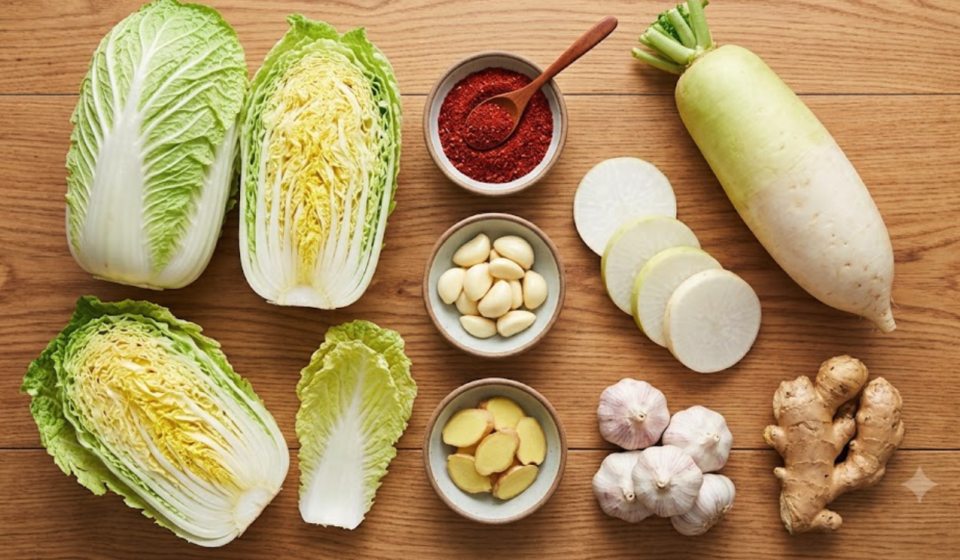

A cultural, culinary, and historical journey into Korea’s most iconic food.
Kimchi is more than just a side dish in Korea—it is a symbol of Korean identity, history, and community. For many foreigners, kimchi is known as a spicy fermented cabbage, but behind this simple description lies a deep cultural tradition called Kimjang, the communal practice of making kimchi together.
This guide explains how Koreans make kimchi, why Kimjang is so important, and how beginners can understand the process step by step.
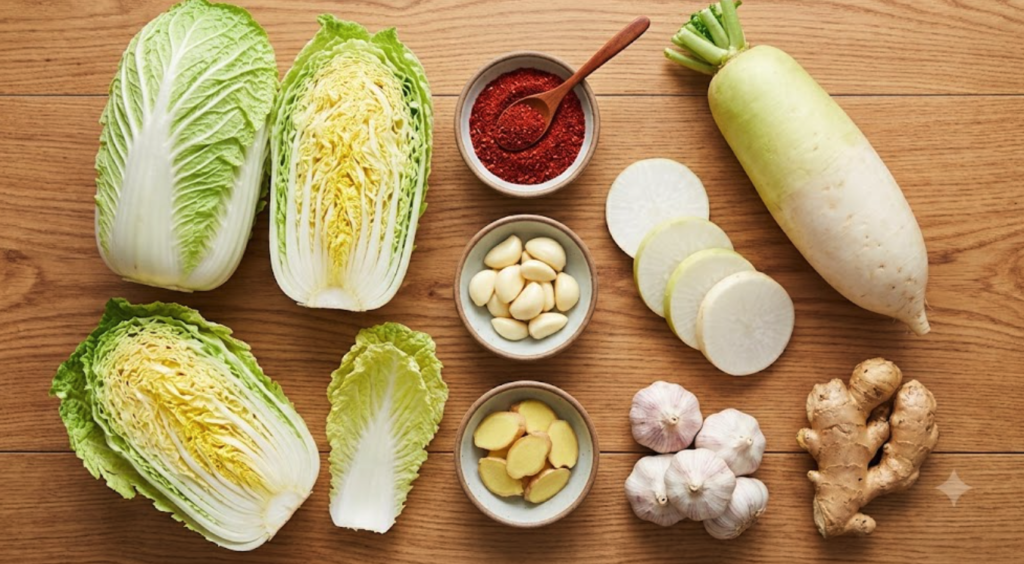
🌿 1. What Is Kimchi? Korea’s Most Iconic Food
Kimchi is a fermented vegetable dish seasoned with:
- Salt
- Garlic
- Ginger
- Chili flakes (gochugaru)
- Fish sauce or salted seafood
- Vegetables like cabbage, radish, cucumber, or scallions
There are over 200 types of kimchi, each with its own flavor, region, and history.
Kimchi is:
- Spicy
- Sour
- Savory
- Crunchy
- Fermented
It is served with almost every Korean meal.
🧂 2. What Is Kimjang? The Tradition Behind Kimchi Making
Kimjang is the cultural practice of making large batches of kimchi for winter.
Why Kimjang matters
- It brings families and communities together
- It preserves food for cold seasons
- It reflects Korean values of sharing and cooperation
- It is recognized by UNESCO as Intangible Cultural Heritage
Kimjang is not just cooking—it is a cultural event.
🥬 3. Ingredients Koreans Use to Make Kimchi
Main ingredients
- Napa cabbage (배추)
- Korean radish (무)
- Salt (굵은소금)
- Gochugaru (고춧가루)
- Garlic
- Ginger
- Fish sauce (액젓)
- Green onions
- Sugar (optional)
Optional ingredients
- Pear (배) for sweetness
- Shrimp paste (새우젓)
- Seaweed broth
- Carrots
- Sesame seeds
These ingredients create the signature Korean flavor—spicy, savory, and slightly sweet.
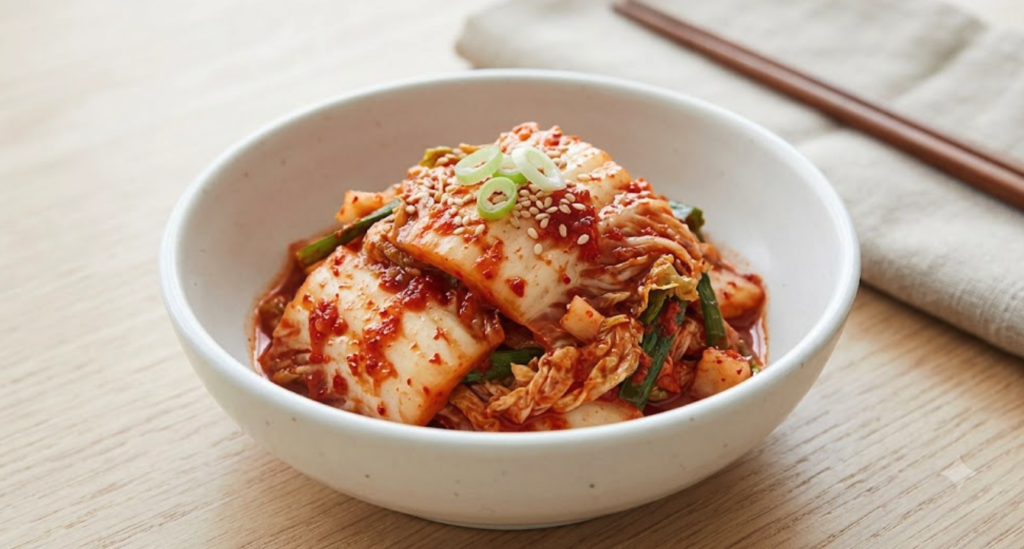
🧼 4. Step-by-Step: How Koreans Make Kimchi (Beginner-Friendly)
Step 1: Salt the cabbage
Cut the cabbage and soak it in coarse salt for several hours.
This softens the leaves and prepares them for seasoning.
Step 2: Rinse and drain
Wash the cabbage to remove excess salt and let it drain completely.
Step 3: Make the seasoning paste
Mix:
- Gochugaru
- Garlic
- Ginger
- Fish sauce
- Sugar
- Water or broth
- Optional pear puree
This creates the red, flavorful kimchi paste.
Step 4: Add vegetables
Mix sliced radish, green onions, and other vegetables into the paste.
Step 5: Coat the cabbage
Spread the paste evenly between each leaf.
This step is the heart of kimchi making.
Step 6: Pack and store
Place the kimchi into containers or jars.
Press down to remove air.
Step 7: Ferment
Leave at room temperature for 1–2 days, then refrigerate.
Kimchi continues to ferment and develop flavor over time.
🔥 5. Why Kimchi Tastes Different Depending on Fermentation
Fermentation changes kimchi’s flavor:
- Fresh kimchi → crunchy, mild, slightly sweet
- 1–2 weeks → deeper flavor, more sour
- 1–2 months → strong, tangy, perfect for stews
Koreans use different kimchi depending on the dish.
🍲 6. How Koreans Eat Kimchi in Daily Life
Kimchi is used in:
- Kimchi stew (김치찌개)
- Kimchi fried rice (김치볶음밥)
- Kimchi pancakes (김치전)
- Kimchi ramen
- Side dishes for every meal
Kimchi is not just food—it’s part of Korean lifestyle.
🌍 7. Why Foreigners Love Kimchi
✔ Unique flavor
✔ Healthy probiotics
✔ Low calories
✔ Vegan-friendly options
✔ Cultural significance
✔ Versatile in cooking
Kimchi is becoming a global superfood.


[…] How Koreans Make Kimchi: A Beginner-Friendly Guide to Kimjang Culture […]
[…] How Koreans Make Kimchi: A Beginner-Friendly Guide to Kimjang Culture Author […]