
A city where presence quietly fills the spaces between strangers
Seoul is often described as fast, modern, efficient—a city of neon lights, endless movement, and people who always seem to be heading somewhere. But beneath that rhythm lies something softer, something quieter, something deeply human. It’s the feeling that even when you’re alone in Seoul, you’re never truly lonely.
Foreigners talk about this all the time. They arrive expecting a massive metropolis, a place where anonymity rules and people disappear into crowds. Instead, they find a city where togetherness is woven into everyday life—not loudly, not dramatically, but gently, almost invisibly. It’s a kind of social warmth that doesn’t demand interaction, yet somehow makes you feel accompanied.
Seoul’s togetherness isn’t about constant conversation or extroverted energy. It’s about presence. Shared space. Mutual awareness. A collective rhythm that makes solitude feel safe rather than isolating.
The Comfort of Shared Spaces
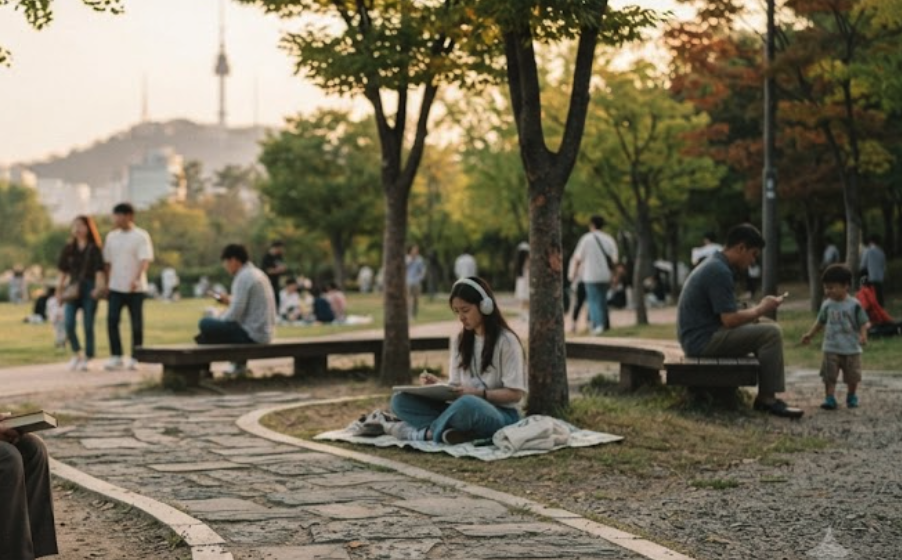
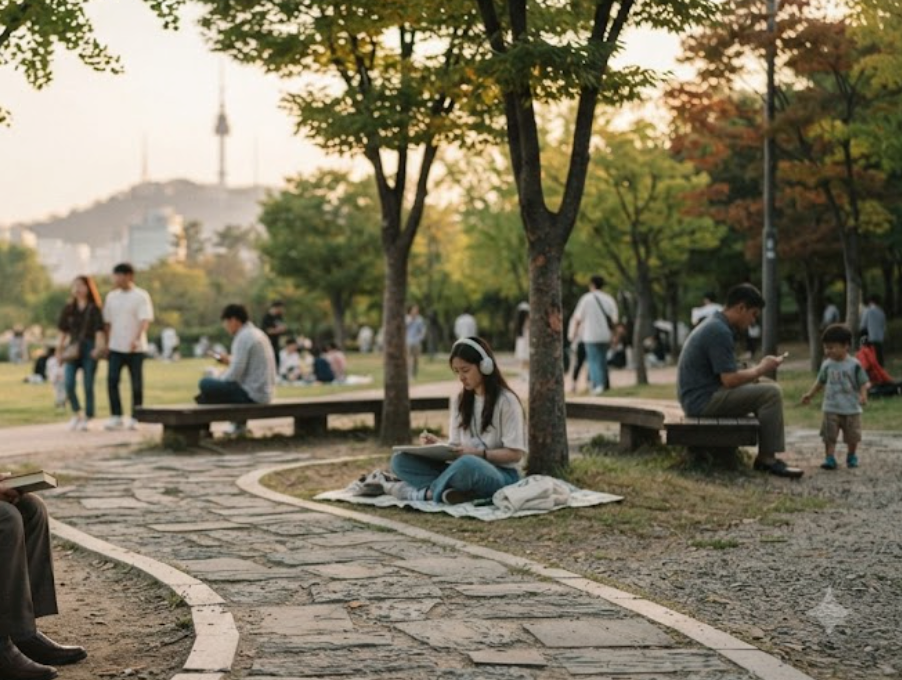
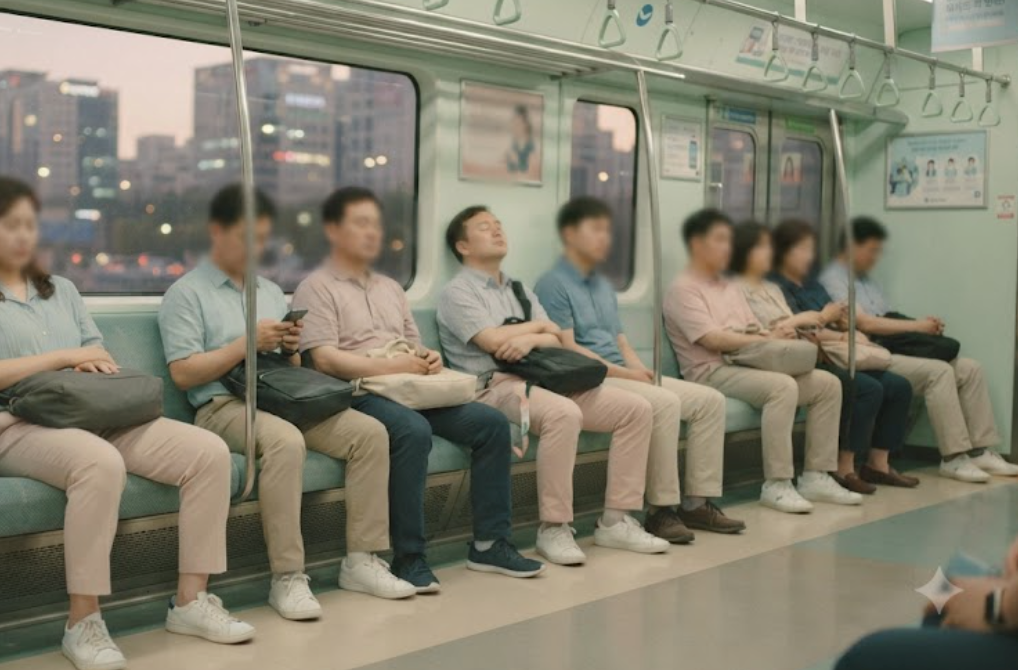
One of the first things foreigners notice is how public spaces in Seoul feel quietly communal. Cafés filled with people working alone still feel warm. Parks where strangers sit on separate benches still feel connected. Subway cars full of silent passengers somehow feel peaceful rather than cold.
There’s an unspoken understanding here:
We are together, even if we are not speaking.
Foreigners often describe Seoul’s public spaces as “softly social.” You don’t need to talk to feel included. You don’t need to know anyone to feel part of the environment. The presence of others becomes a kind of comfort—steady, predictable, reassuring.
Even in silence, Seoul feels shared.
The Rhythm of Moving Together
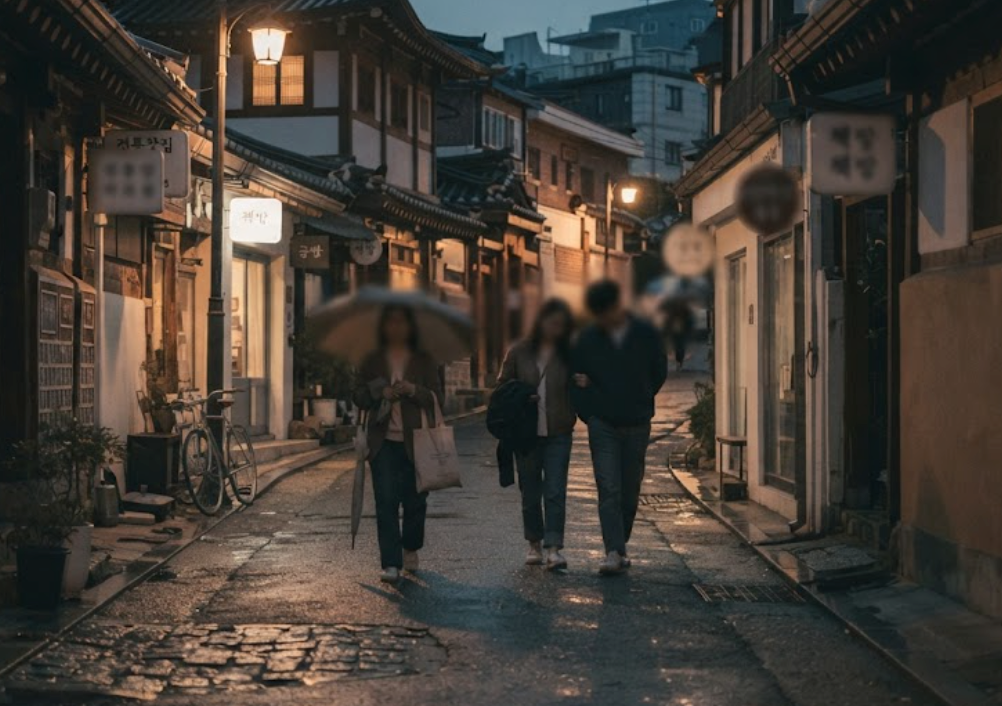
Walk through any Seoul neighborhood and you’ll notice something subtle: people move in harmony. Not intentionally, not choreographed, but naturally. The city has a collective rhythm—crosswalks, escalators, subway platforms, narrow alleys—where people flow like water.
Foreigners often say this rhythm makes them feel less alone.
You’re walking by yourself, but you’re walking with others.
You’re navigating the city alone, but you’re part of a shared movement.
It’s a kind of togetherness that doesn’t require interaction.
Just presence.
The Gentle Social Awareness
Korean social culture is built on subtle awareness of others.
Small gestures.
Quiet consideration.
Unspoken etiquette.
Foreigners notice it immediately:
Someone moves their bag so you can sit.
A stranger holds the door a second longer.
People lower their voices in public spaces.
Neighbors leave shoes neatly aligned outside their doors.
A passerby warns you softly if your backpack is open.
These gestures are small, but they accumulate.
They create a sense of being looked after, even by people you don’t know.
It’s not loud kindness.
It’s gentle kindness.
The kind that makes a city feel safe, warm, and quietly connected.
Eating Alone Without Feeling Alone
In many cities, eating alone can feel awkward or isolating.
But in Seoul, it feels normal—almost comforting.
Restaurants are designed for solo diners.
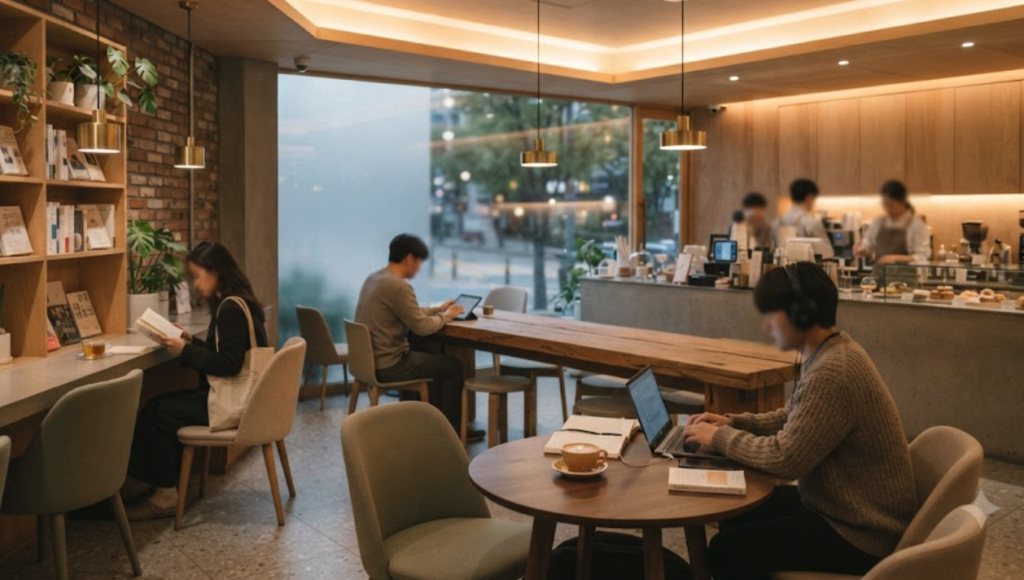
Cafés welcome people who stay for hours.
Markets offer single portions.
Even BBQ restaurants increasingly accommodate one-person tables.
Foreigners often say Seoul is the first city where they felt comfortable dining alone.
Not because people talk to them,
but because nobody minds.
Nobody stares.
Nobody judges.
Your solitude is respected.
Your presence is accepted.
And that acceptance feels like togetherness.
Neighborhood Familiarity Without Obligation
Seoul’s neighborhoods have a quiet intimacy.
You might not know your neighbors’ names,
but you recognize their routines.
You see the same faces at the convenience store,
the same elderly couple walking in the park,
the same barista who remembers your order even if you never speak.
Foreigners often say this familiarity makes them feel anchored.
Not socially obligated,
but gently connected.
It’s a kind of community that doesn’t demand participation.
It simply exists around you,
holding you in place.
The Emotional Safety of the City
One of the strongest reasons Seoul never feels lonely is safety.
Foreigners repeatedly mention how safe they feel walking at night,
taking the subway late,
or wandering through quiet alleys.
Safety creates emotional space.
It allows solitude to feel peaceful rather than threatening.
It lets you explore the city alone without fear.
It turns independence into comfort.
When a city feels safe,
being alone becomes a choice,
not a vulnerability.
Togetherness Without Pressure
What makes Seoul’s culture of togetherness so unique is that it’s never forced.
You’re not expected to socialize.
You’re not pressured to join groups.
You’re not judged for being alone.
Togetherness here is ambient.
It’s atmospheric.
It’s something you feel rather than something you perform.
Foreigners often say Seoul taught them a new kind of companionship—
one that doesn’t rely on conversation,
one that doesn’t require closeness,
one that simply exists in shared space.
It’s the companionship of presence.
The companionship of rhythm.
The companionship of quiet coexistence.
Why Seoul Never Feels Lonely
Loneliness isn’t about being alone.
It’s about feeling disconnected.
Seoul, somehow, bridges that gap.
It lets you be alone without feeling isolated.
It lets you move independently while still feeling part of something larger.
It lets you exist quietly among others who are also living their own quiet stories.
Foreigners often say Seoul feels like a city that walks with you.
Not beside you,
not behind you,
but around you.
A city that holds you gently,
even when you’re alone.
The Soft Heart of the City
Seoul’s togetherness isn’t loud.
It isn’t dramatic.
It isn’t expressed through big gestures.
It’s expressed through presence.
Through shared silence.
Through small kindnesses.
Through the comfort of routine.
Through the warmth of strangers who don’t feel like strangers.
It’s a culture that makes solitude feel safe,
and makes independence feel supported.
And that’s why Seoul never feels lonely.
Not because it’s full of people,
but because it’s full of presence.
A quiet, steady, human presence
that stays with you
long after you leave.
🔗 Recommended External Link
Visit Seoul – Official Seoul Tourism Website (English)