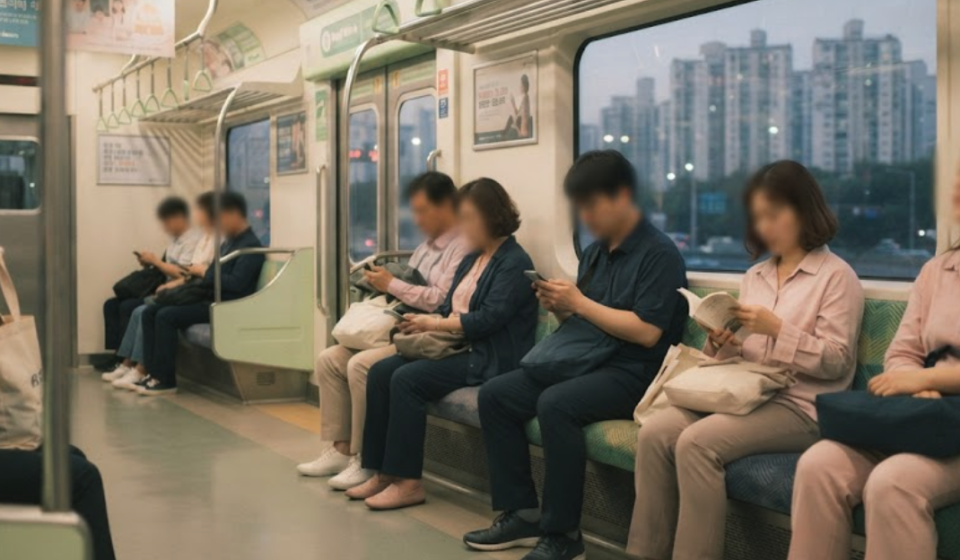

A quiet social rhythm in a city that moves fast
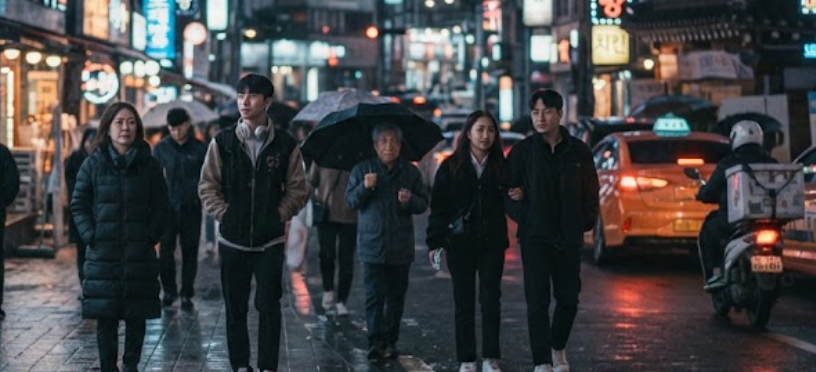
Seoul is loud in all the ways that matter—
the traffic, the neon, the subway announcements, the endless movement.
But socially, the city is quiet.
Not cold, not unfriendly, just… quiet.
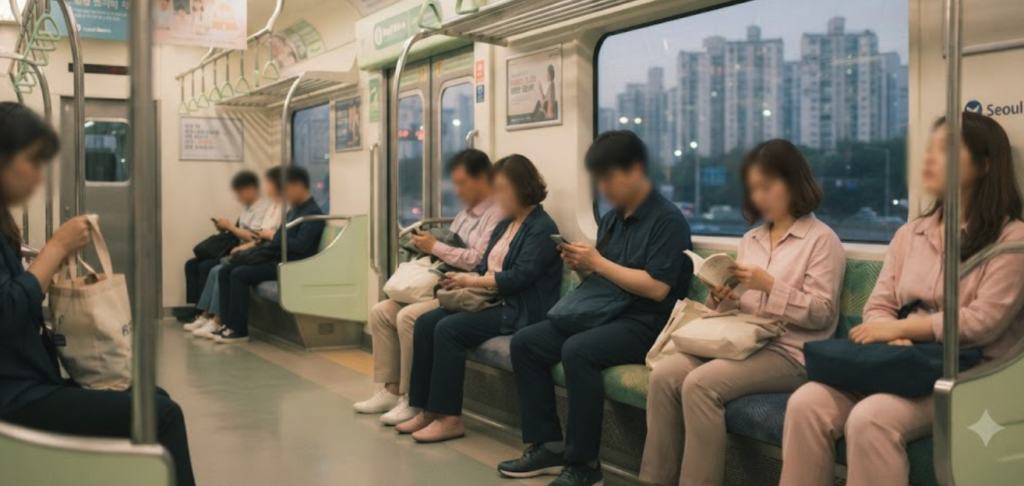
Foreigners often notice it within hours of arriving:
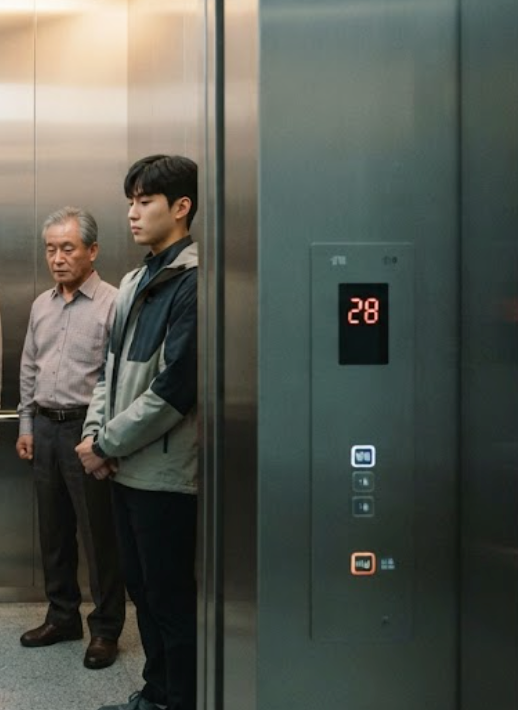
No one chats in elevators.
No one comments on the weather.
No one makes casual jokes with strangers.
No one asks, “How’s your day?” unless they truly mean it.
It’s not rudeness.
It’s not shyness.
It’s not avoidance.
It’s culture.
Korea is a place where silence is not awkward.
It’s comfortable, respectful, and socially efficient.
And understanding this quietness reveals a deeper layer of Korean society—
one that’s subtle, warm, and surprisingly thoughtful.
Silence as Social Respect
In many Western cultures, small talk is a sign of friendliness.
It’s a way to show openness, warmth, and social ease.
But in Korea, silence often is the friendliness.
It’s a way of saying:
“I won’t intrude.”
“I won’t make you uncomfortable.”
“I respect your space.”
“I acknowledge you without demanding anything.”
Foreigners often interpret silence as distance,
but Koreans interpret silence as consideration.
It’s a cultural understanding that
not every moment needs to be filled with words.
The Korean Concept of ‘Nunchi’
To understand the absence of small talk,
you have to understand nunchi—
the Korean art of sensing others’ feelings and adjusting your behavior accordingly.
Nunchi is quiet.
It’s observational.
It’s subtle.
It teaches people to read the room,
to avoid imposing,
to avoid unnecessary chatter,
to avoid making someone feel pressured to respond.
Small talk, in many cases, is seen as a potential burden.
It demands attention.
It demands reaction.
It demands emotional energy.
Nunchi says:
“Let the other person breathe.”
A High-Density City That Values Personal Space
Seoul is dense.
People live close, commute close, work close.
Physical proximity is unavoidable.
So Koreans create emotional space instead.
Silence becomes a buffer.
A way to maintain boundaries in crowded environments.
Foreigners often say:
“Everyone is so close, but no one bothers me.”
Exactly.
That’s the point.
In a city where millions share the same subway,
the same elevators,
the same sidewalks,
silence becomes a form of social harmony.
Efficiency Over Formality
Korean communication tends to be:
- direct
- purposeful
- concise
- context-driven
Small talk doesn’t fit neatly into that structure.
In workplaces, conversations often begin with the task at hand.
In stores, interactions are transactional but polite.
In public spaces, people move with intention.
It’s not that Koreans dislike conversation.
They simply reserve it for moments where it matters.
Warmth Without Words
Foreigners often say:
“Koreans are so kind, but they don’t chat casually.”
This is one of the most interesting cultural contrasts.
Korean warmth is expressed through:
- actions
- gestures
- helpfulness
- shared food
- quiet companionship
- remembering details
- showing up when needed
Not through casual chatter.
A Korean coworker may never ask,
“How was your weekend?”
but will bring you a vitamin drink when you look tired.
A Korean stranger may not say,
“Nice weather today,”
but will move aside so you can pass comfortably.
Warmth is quiet.
But it’s real.
Why Small Talk Feels Unnecessary in Korea
1) Relationships are deep, not wide
Korean social circles tend to be tight-knit.
Once you’re “in,” you’re in deeply.
But casual acquaintances remain casual.
2) Privacy is valued
Asking personal questions can feel intrusive.
Even “How’s your day?” can feel too intimate.
3) Emotional energy is conserved
Korean work and school culture are intense.
People save emotional bandwidth for meaningful interactions.
4) Silence is comfortable
Koreans don’t fear silence.
They embrace it.
5) Public spaces are shared respectfully
Talking loudly or casually in public can feel disruptive.
The Places Where Koreans Do Talk
Interestingly, once a relationship is established,
Koreans talk a lot—
deeply, emotionally, and honestly.
You’ll see it in:
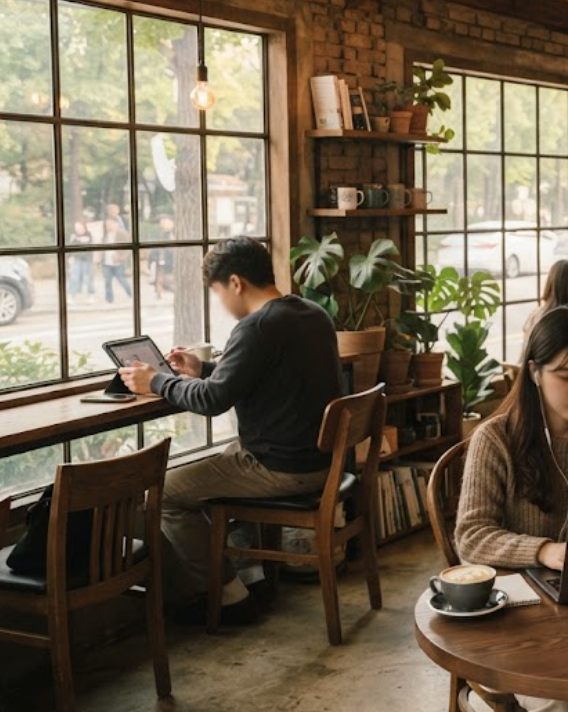
- late-night cafés
- long dinners
- group chats
- close friendships
- family gatherings
- drinking culture
- private spaces
Korean communication is not shallow.
It’s concentrated.
Small talk is rare,
but deep talk is abundant.
How Foreigners Adapt (And Why They Love It)
Foreigners often say that after a few months in Korea,
they start to appreciate the quiet.
No forced conversations.
No awkward elevator chats.
No pressure to perform friendliness.
No emotional labor with strangers.
Just calm coexistence.
Many say it feels refreshing—
a break from constant social noise.
Some even say they prefer it.
Silence as a Cultural Signature
The absence of small talk is not a flaw.
It’s a feature.
It’s part of what makes Seoul feel:
- calm
- respectful
- efficient
- emotionally spacious
- quietly warm
It’s a cultural rhythm that reveals itself slowly,
but once you understand it,
you start to see the beauty in it.
Korea’s silence is not emptiness.
It’s intention.
It’s not distance.
It’s respect.
It’s not coldness.
It’s gentleness.
And in a city that moves fast,
that gentleness matters.