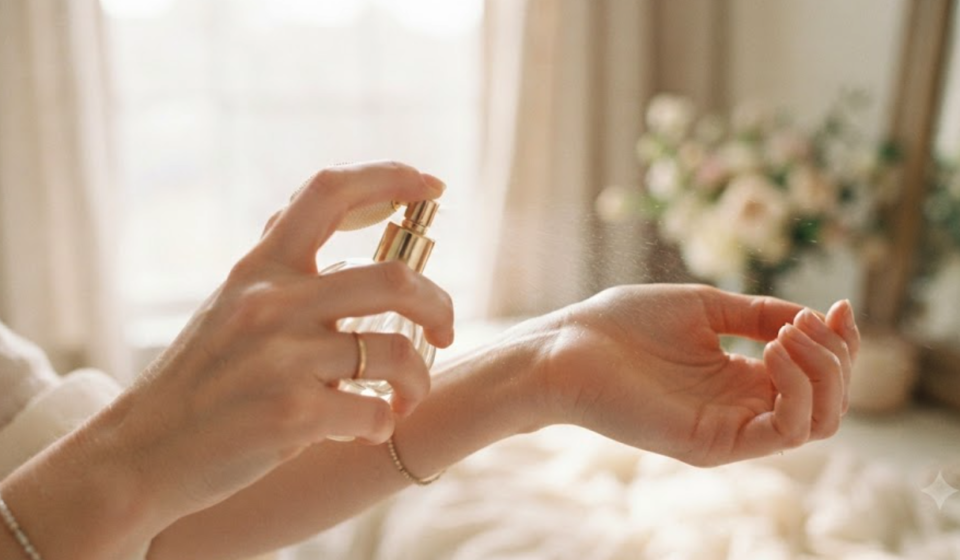

Walk through Seoul on any given day—
morning subway platforms, afternoon cafés, evening streets—
and you’ll notice something subtle in the air.
A trail of scent.
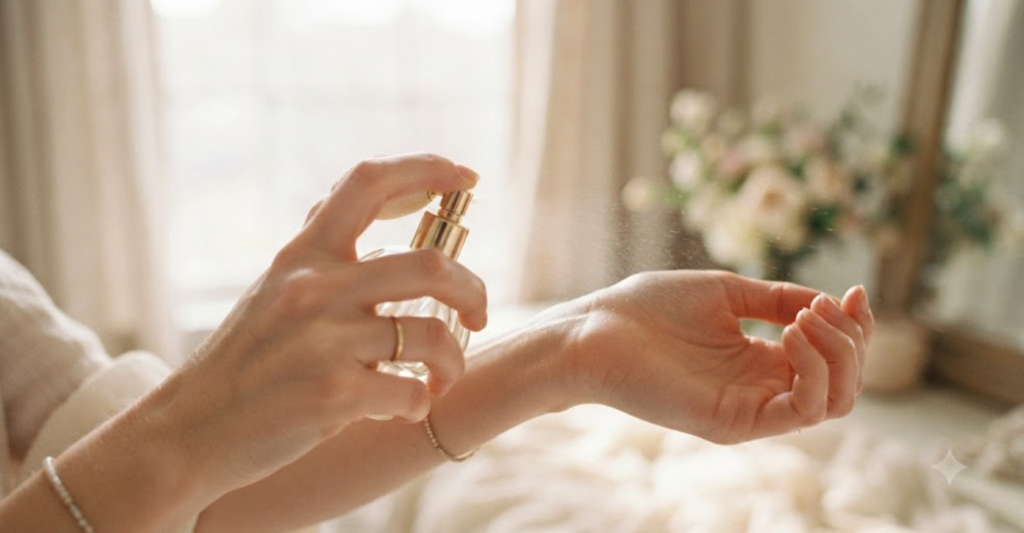
Soft, clean, woody, citrusy, musky, powdery.
Not overpowering, not loud, but intentional.
Korea has fallen in love with fragrance.
Not as an accessory, not as a finishing touch,
but as identity.
Perfume is no longer just something you wear.
It’s something you are.
Scent as a Personal Signature
In Korea, fragrance has become a way to express personality without speaking.
It’s a quiet introduction, a subtle mood, a soft aura.
Foreigners often say:
“Koreans smell… curated.”
And it’s true.
People choose scents the way they choose outfits, playlists, or café seats.
Not for others, but for themselves.
Perfume is a personal signature—
a way of saying:
“This is how I feel today.”
“This is who I am becoming.”
“This is the version of me I want to carry into the world.”
Why Scent Fits Modern Korea So Well
Korea is a city of subtlety.
People don’t talk loudly.
They don’t make big gestures.
They don’t rely on small talk.
So fragrance becomes a perfect medium—
a quiet form of self‑expression that doesn’t disturb anyone.
It’s emotional, but not intrusive.
Personal, but not performative.
Present, but not demanding.
Scent is the ideal language for a society that communicates softly.
The Rise of Niche Perfume
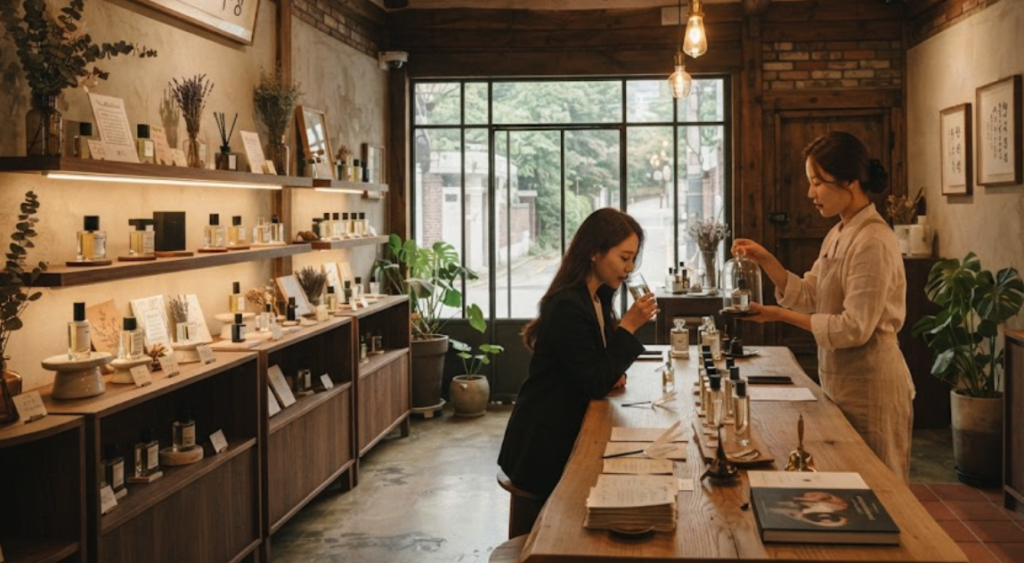
Walk into any perfume shop in Seoul—
Tamburins, Nonfiction, Granhand, Soohyang—
and you’ll see something interesting:
People aren’t looking for “popular” scents.
They’re looking for themselves.
Niche fragrances exploded because Koreans want:
- uniqueness
- subtle complexity
- emotional storytelling
- scents that evolve
- scents that feel like a mood, not a product
Perfume is no longer about smelling “good.”
It’s about smelling specific.
The Emotional Side of Scent
Korea’s fragrance obsession is deeply emotional.
Perfume is used to:
- mark a new chapter
- heal from a breakup
- celebrate a milestone
- create comfort
- build confidence
- set the tone for the day
- feel grounded in a fast city
People say things like:
“This scent feels like autumn in Seongsu.”
“This smells like a slow morning.”
“This reminds me of someone I used to love.”
Perfume becomes memory.
Memory becomes identity.
Why Koreans Layer Their Scents
Layering is huge in Korea.
Body wash → lotion → hair mist → perfume.
Not to smell stronger,
but to create a personal blend.
Layering makes the scent:
- softer
- deeper
- more dimensional
- more “yours”
It’s like building a playlist for your skin.
Fragrance as Lifestyle
Perfume in Korea isn’t just beauty.
It’s lifestyle.
You see it in:
- cafés selling candles
- bookstores selling room sprays
- fashion brands releasing signature scents
- hotels creating custom fragrances
- neighborhoods with their own olfactory identity
Seongsu smells different from Hannam.
Hannam smells different from Apgujeong.
Apgujeong smells different from Yeonnam.
Scent becomes part of the city’s personality.
Why Foreigners Notice It Immediately
Foreigners often say:
“Korea smells clean.”
“Korea smells soft.”
“Korea smells intentional.”
It’s one of the first things they mention after arriving.
Because in Korea, fragrance isn’t used to impress.
It’s used to express.
Perfume is not a performance.
It’s a mood.
Perfume as a Quiet Confidence
In a society where people value:
- subtlety
- calmness
- emotional balance
- personal space
- quiet communication
perfume becomes a form of quiet confidence.
It’s a way to stand out without being loud.
A way to be memorable without being bold.
A way to be present without taking up space.
Scent is confidence in its softest form.
The Future of Korea’s Scent Identity
Korea’s fragrance scene is still growing.
More niche brands.
More experimental blends.
More scent‑driven spaces.
More personalization.
Perfume will continue to evolve from beauty to identity—
a way for people to define themselves in a city that moves fast
but feels deeply.
Korea’s new obsession isn’t about smelling good.
It’s about smelling like yourself.