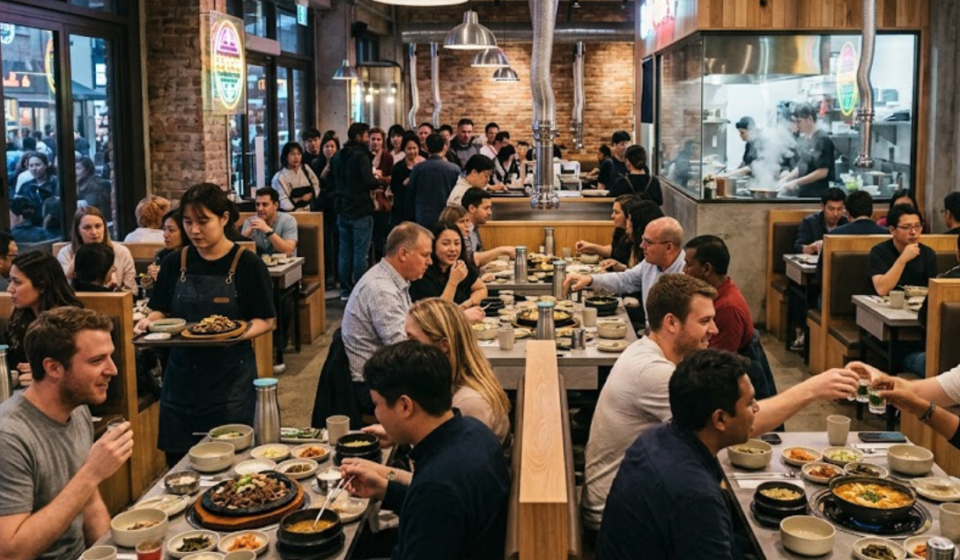

For decades, the typical weekday lunch in Manhattan followed a familiar pattern.
Office workers grabbed sandwiches, salads, bagels, or quick takeout between meetings before rushing back to work.
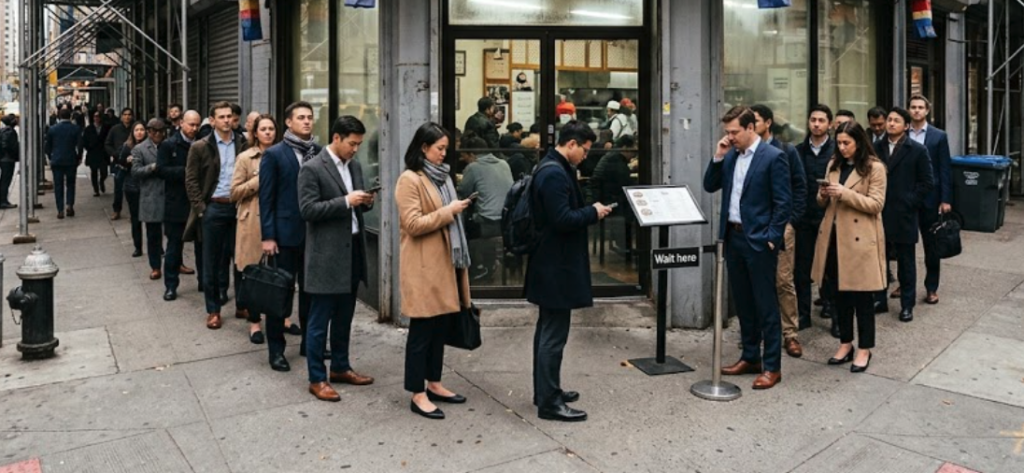
Yet a surprising trend has begun attracting attention among food enthusiasts and local observers.
A growing number of professionals are reportedly trading cold lunches for steaming bowls of Korean gukbap,
a traditional Korean soup-and-rice dish served piping hot in stone bowls.
What makes the story particularly interesting is that many of these customers are not tourists searching for an exotic food experience. They are lawyers, bankers, consultants,
and corporate employees who often have limited time for lunch and countless dining options available to them.
So why would busy professionals wait in line for a bowl of soup?
The answer may reveal something larger about changing food preferences, workplace culture, and the growing global appeal of Korean cuisine.
The Changing Lunch Culture of Manhattan
Manhattan is one of the busiest business districts in the world.

For many professionals, lunch is less about enjoyment and more about efficiency.
Speed often determines where people eat. A meal needs to be quick, convenient,
and filling enough to get them through the rest of the day.
Traditional lunch options have long dominated this market.
Sandwich shops offer convenience. Salad bars promise lighter meals.
Fast-food chains focus on speed.
Coffee shops and bakeries provide quick alternatives for workers rushing between appointments.
However, convenience alone does not always satisfy customers.
Many workers spend long hours dealing with deadlines, meetings, financial pressure, and demanding schedules.
As a result, some have started looking for meals that provide more than simple convenience.
They want comfort, warmth, satisfaction, and energy.
This changing preference has helped create opportunities for restaurants offering something different from the standard lunch menu.
Why Gukbap Feels Different
To someone unfamiliar with Korean cuisine, gukbap may appear simple.
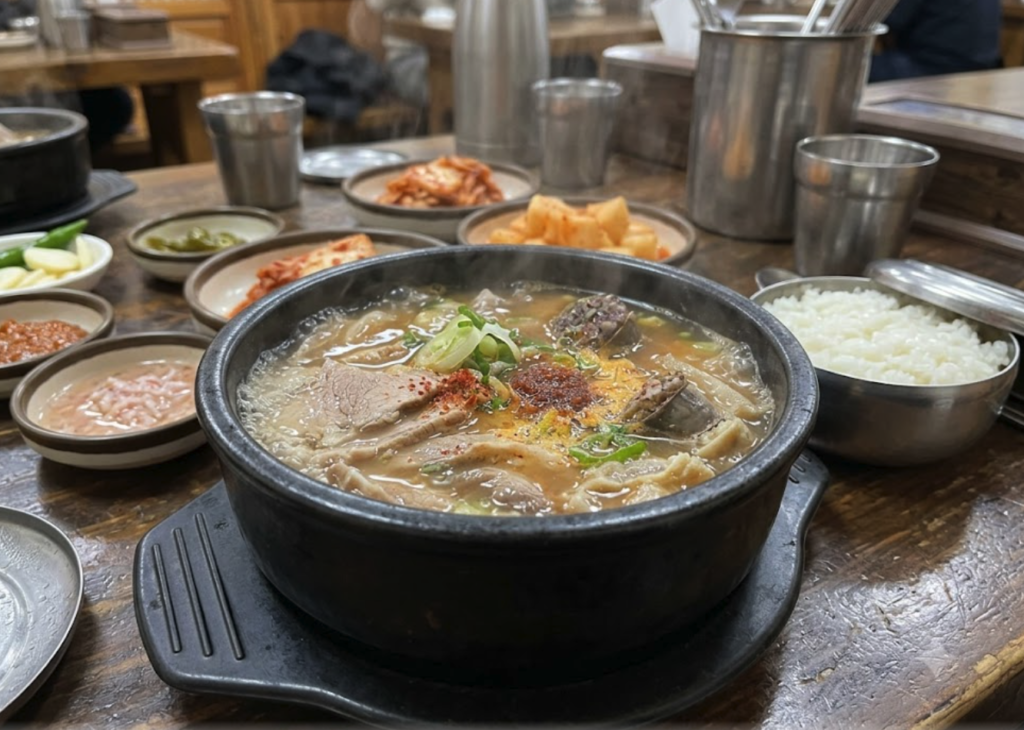
A bowl of broth, rice, meat, vegetables, and side dishes does not seem revolutionary.
Yet simplicity may actually be one of its greatest strengths.
Unlike many modern lunch options, gukbap offers a complete meal in a single bowl.
The dish combines protein, carbohydrates, vegetables,
and a rich broth that has often been simmered for long periods.
Many customers describe the experience as comforting rather than merely filling.
A cold sandwich may stop hunger,
but a hot bowl of soup can provide a feeling of warmth that many people find emotionally satisfying.
This difference becomes especially noticeable during colder seasons,
when workers leave air-conditioned offices and walk through chilly streets.
For these customers, gukbap represents more than food. It represents a moment of comfort during a stressful day.
The Power of Hot Food in a Fast-Paced City
One frequently mentioned advantage of Korean gukbap is temperature.
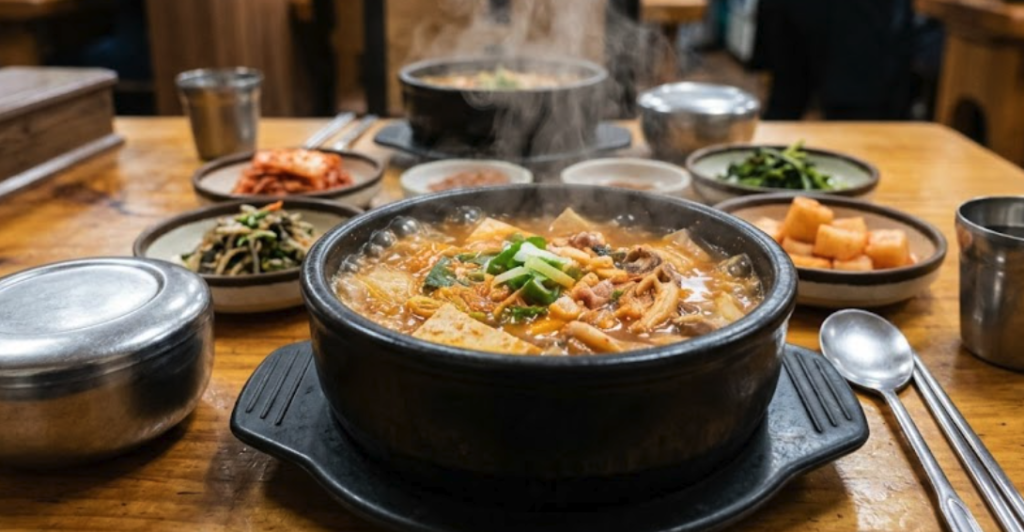
Many lunch items begin cooling immediately after being served.
By the time customers reach the middle of the meal, the food may already be lukewarm.
Korean gukbap is different.
Because it is often served in a heated stone bowl, the soup remains hot throughout the meal.
Steam continues rising from the bowl long after it reaches the table.
This small detail creates a surprisingly memorable dining experience.
Customers often report that the final spoonful feels nearly as warm as the first.
For people accustomed to quickly assembled lunch options, this consistency leaves a strong impression.
The serving method itself becomes part of the experience.
In a city where speed dominates nearly every aspect of life, taking ten or fifteen minutes to enjoy a completely hot meal feels surprisingly luxurious.
A Meal That Adapts to Personal Taste
Another reason often cited by customers is flexibility.
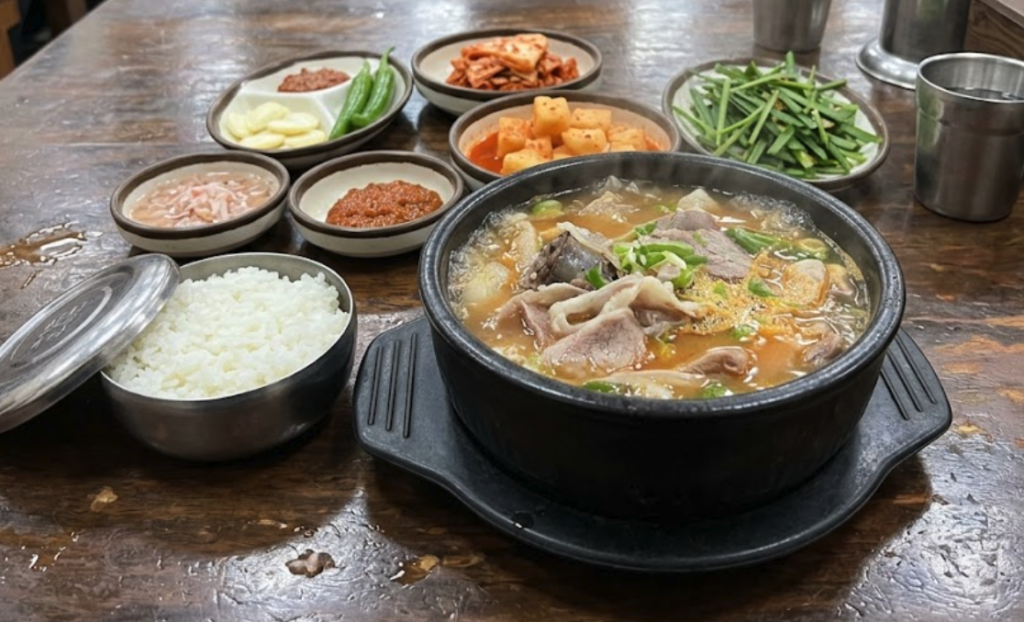
Many Korean meals include various condiments and side dishes that allow diners to customize flavors.
A bowl of gukbap can taste different depending on how it is eaten.
Some people prefer the broth in its original form.
Others add spicy seasoning, green onions, fermented shrimp, ground perilla seeds, or additional vegetables.
The side dishes also create variety.
Kimchi, radish kimchi, pickled vegetables,
and other accompaniments allow diners to create multiple flavor combinations within the same meal.
This level of personalization contrasts with many Western lunch options that arrive in a fixed format.
Some customers appreciate having control over how intense, spicy, or rich their meal becomes.
Instead of eating the exact same dish every day, they can create a slightly different experience each time.
The Side Dish Culture That Fascinates Foreign Customers
One aspect of Korean dining frequently surprises international visitors.
In many countries, side dishes are treated as separate menu items and often carry additional charges.
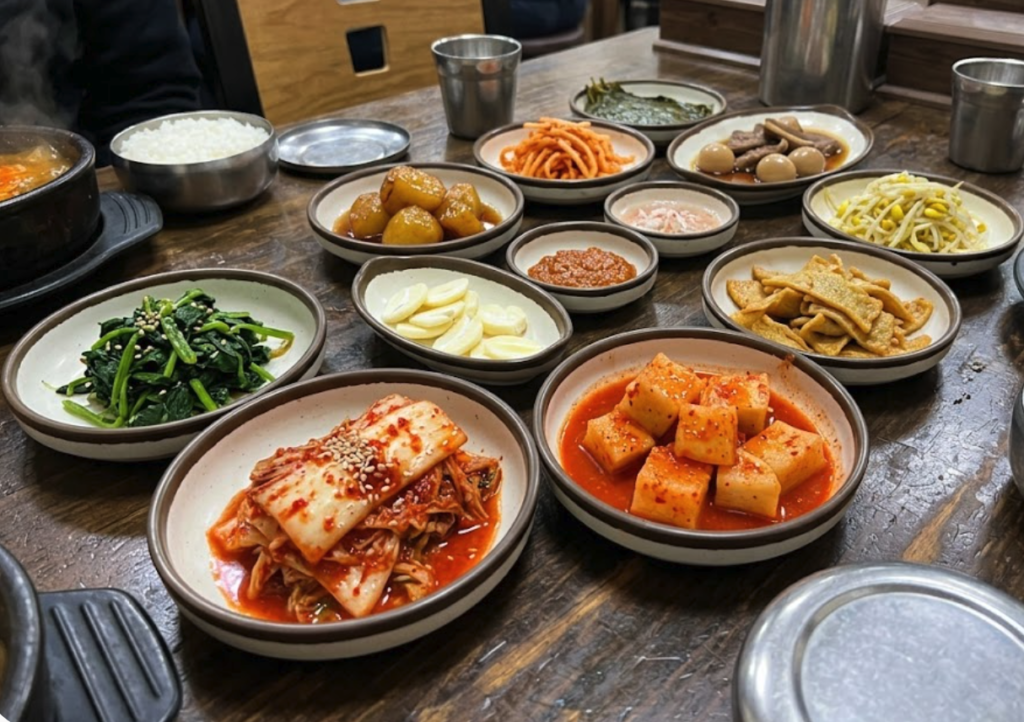
Korean restaurants traditionally approach the experience differently.
Small side dishes are commonly included with the meal.
For customers unfamiliar with this style of service, the concept can feel unusually generous.
The variety also contributes to the dining experience.
A meal is no longer just one main dish.
Instead, diners explore multiple flavors and textures during a single sitting.
Many customers describe this as one of the most distinctive elements of Korean food culture.
It creates a feeling that the meal offers more value than expected.
In a city where restaurant prices can be high, this perception matters.
Customers are not simply paying for food. They are paying for an experience.
Why Office Workers Appreciate Gukbap
Professionals often evaluate lunch differently than casual diners.
Taste is important, but productivity also matters.
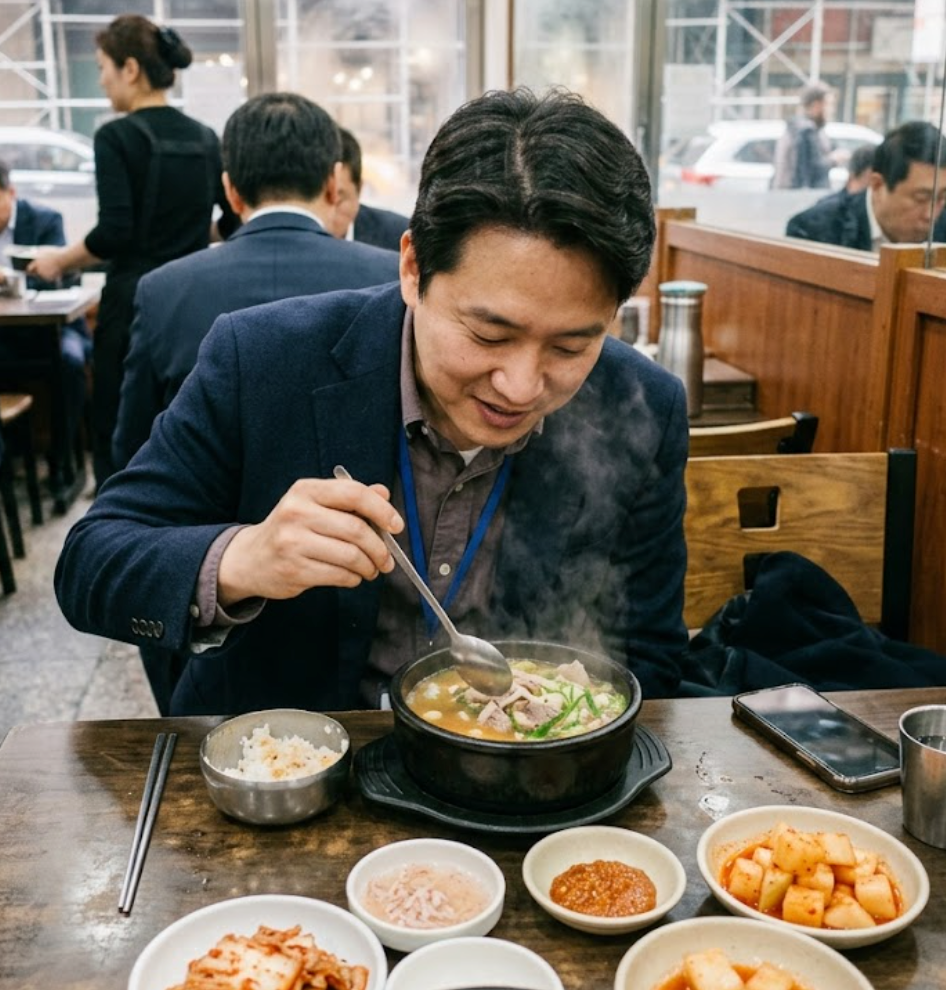
Many workers want a meal that keeps them focused during the afternoon.
Heavy or overly greasy meals can leave people feeling sluggish.
At the same time, extremely light meals may leave them hungry before the workday ends.
Some customers believe gukbap offers a balance between these extremes.
The combination of broth, rice, and protein creates a substantial meal without necessarily feeling excessively heavy.
Many diners describe feeling satisfied rather than overstuffed.
Whether this perception is nutritional, psychological, or cultural, it contributes to the dish’s appeal among busy professionals.
Workers who feel energized after lunch are likely to return again.
Consistency is often one of the strongest drivers of restaurant loyalty.
More Than a Food Trend
The popularity of Korean food has been growing internationally for years.
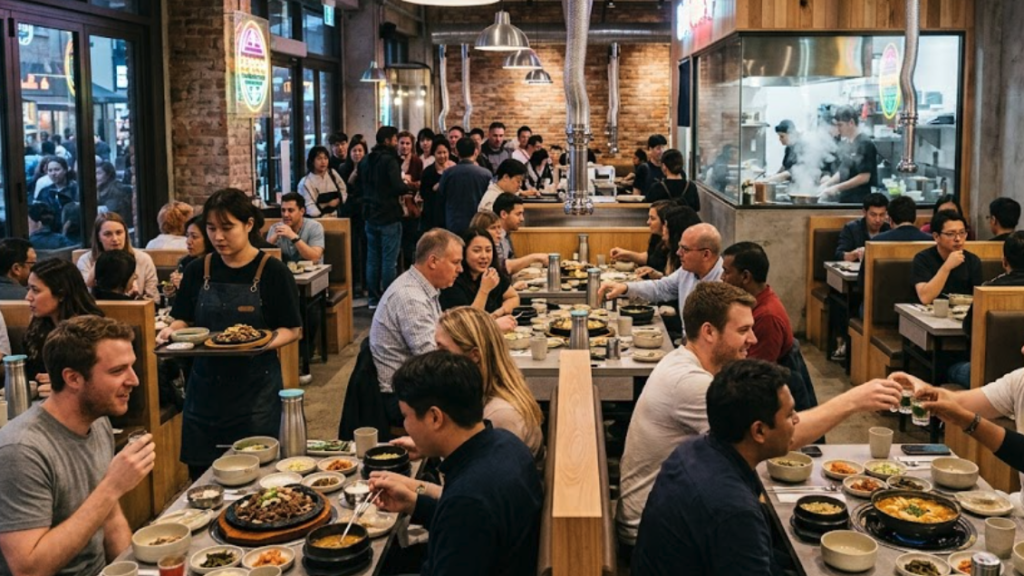
K-pop, Korean dramas, Korean beauty products, and Korean culture have attracted attention across the world.
Food has naturally followed this wave of interest.
However, the appeal of gukbap may represent something deeper than simple curiosity.
Many food trends gain popularity because they are novel.
They attract attention for a short period before fading away.
Comfort foods behave differently.
People repeatedly return to foods that make them feel satisfied, relaxed, and refreshed.
The growing interest in gukbap suggests that Korean cuisine is moving beyond trend status and becoming part of everyday dining choices for many customers.
This shift may be one of the strongest indicators of long-term cultural influence.
Could Gukbap Become the Next Global Comfort Food?
Every culture has comfort foods that provide warmth and familiarity.
For Americans, it might be chicken soup.
For Japanese diners, it could be ramen.
For many Koreans, gukbap has long occupied that role.
As international diners continue searching for meals that are comforting, practical, and satisfying, gukbap may find a place alongside other globally recognized comfort foods.
Its strengths are relatively universal.
It is warm.
It is filling.
It can be customized.
It offers variety.
And it provides an experience that feels authentic rather than manufactured.
Those qualities help explain why more people appear willing to wait in line for it.
Conclusion
The growing popularity of Korean gukbap among New York professionals is not necessarily about novelty.
Instead, it reflects a combination of factors that modern diners increasingly value.
Warmth, comfort, customization, efficiency, and satisfaction all contribute to the appeal.
In a city famous for speed and convenience, a steaming bowl of Korean soup and rice offers something unexpected: a brief moment of comfort in the middle of a demanding workday.
As Korean cuisine continues expanding across international markets, dishes like gukbap may help demonstrate that the simplest foods are sometimes the most powerful.