
A 5,000+ Word Documentary‑Style Information Guide for International Readers
Modern Korea is often introduced through K‑pop, high-speed internet, futuristic architecture, and its globally admired convenience culture.
But beneath the neon lights and fast-paced lifestyle lies one of the most remarkable features of contemporary Korean society:
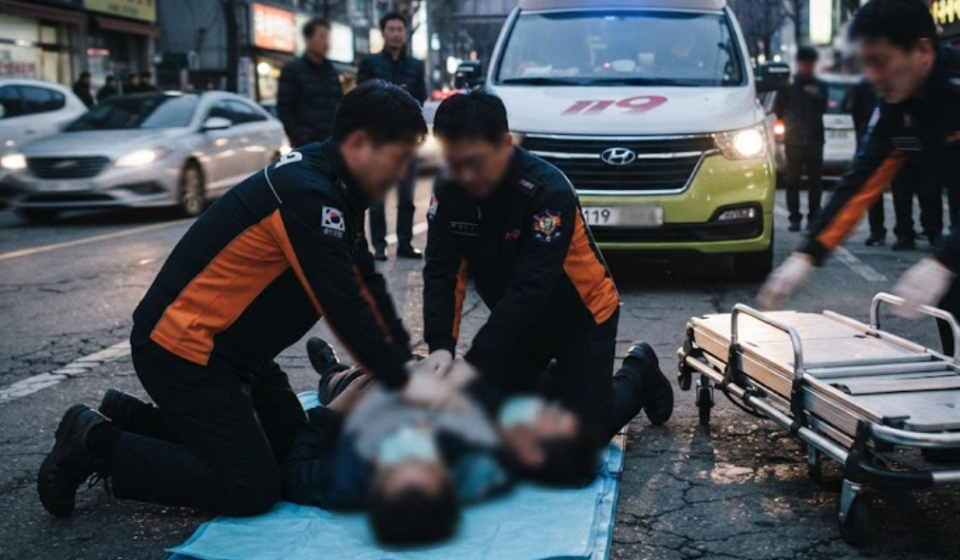
its emergency response culture — a system where ordinary citizens routinely save lives.
This phenomenon is known as Heart Saver Culture, a modern Korean public safety model that blends technology, education, and civic responsibility.
For international readers, understanding this culture offers a deeper look into how Korea became one of the safest urban environments in the world.
This guide explains what Heart Saver means, why it exists, how it works, and why it matters, using real-world context and modern Korean infrastructure.
1. What Is a “Heart Saver” in Korea?
In Korea, a Heart Saver is an individual who successfully saves a person experiencing cardiac arrest by performing CPR or using an AED (Automated External Defibrillator).
This title is officially recognized by:
- Korea Fire Department (119)
- Ministry of Health and Welfare
- Local governments
- Emergency medical institutions
Unlike many countries where only medical professionals receive such recognition, Korea formally acknowledges ordinary citizens who intervene during emergencies.
This reflects a core value of modern Korean society:
public safety is a shared responsibility.
2. Why Korea Has So Many Heart Saver Heroes
Korea’s Heart Saver culture is not accidental.
It is the result of decades of investment in public safety infrastructure, education, and social awareness.
2.1 AEDs Are Everywhere
Korea has one of the highest public AED densities in the world.
You can find AEDs in:
- subway stations
- convenience stores
- schools
- parks
- government buildings
- shopping malls
- bus terminals
- apartment complexes
- sports centers
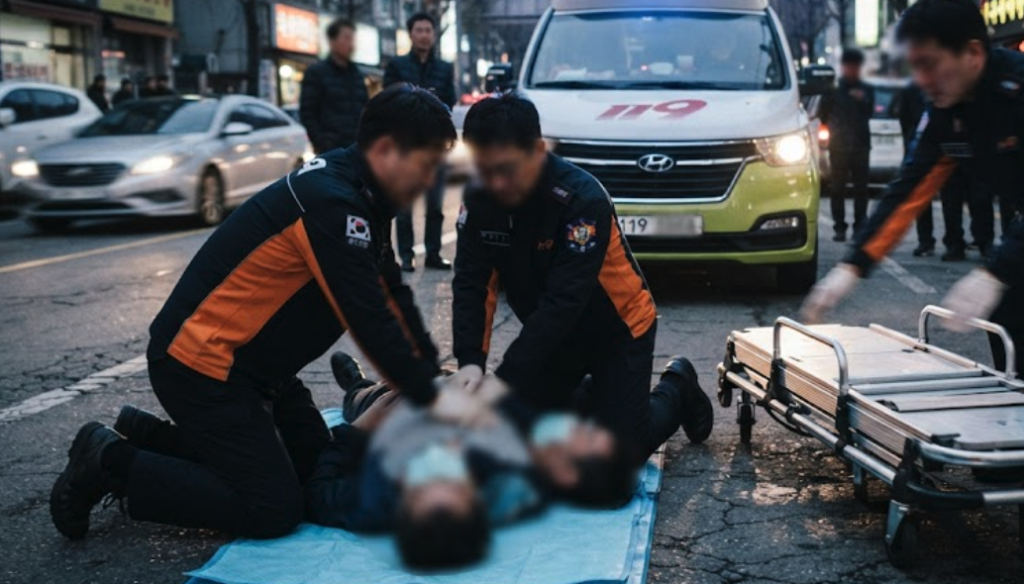
Foreigners often say:
“I’ve never seen so many AEDs in public places before.”
This accessibility dramatically increases survival rates.
2.2 CPR Education Is Universal
Koreans learn CPR in:
- middle and high schools
- universities
- workplaces
- military service
- community centers
- public safety campaigns
This means a large portion of the population has basic emergency response skills.
2.3 Korea’s 119 System Is Exceptionally Fast
Korea’s emergency hotline, 119, is known for:
- rapid dispatch
- GPS-based location tracking
- highly trained paramedics
- real-time hospital coordination
- multilingual support for foreigners
- advanced equipment
In urban areas, response times are among the fastest in Asia.
2.4 Strong Public Awareness
Korean media frequently highlights Heart Saver stories.
Public facilities display AED instructions.
Schools and companies host emergency drills.
This creates a culture where helping is normal, not exceptional.
3. How Korea’s Heart Saver System Works in Real Life
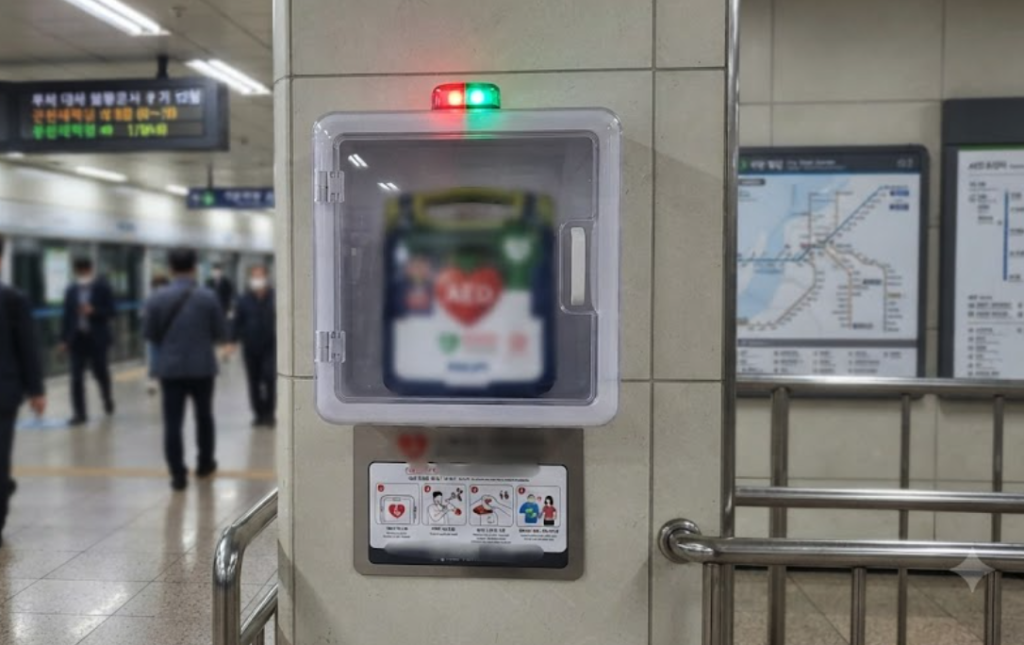
When someone collapses in Korea, the response typically follows this sequence:
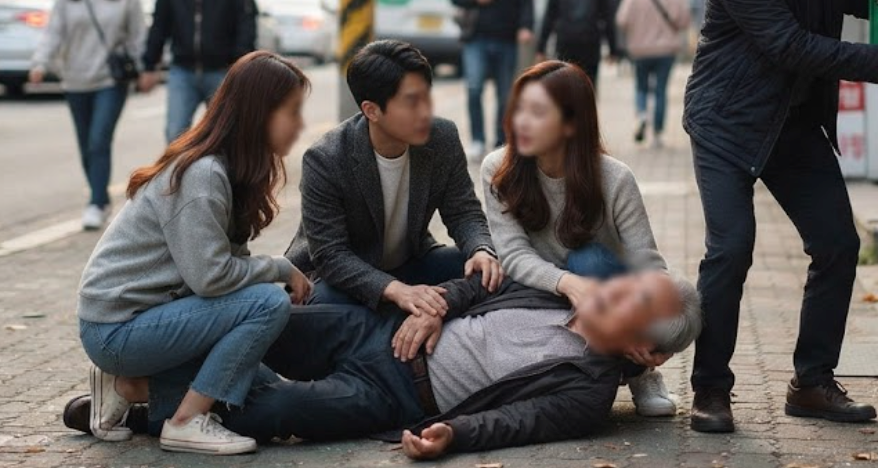
- Nearby citizens react immediately
- CPR begins within seconds
- AED is retrieved from a nearby location
- 119 is called
- Paramedics arrive quickly
- Hospital transfer occurs smoothly
This entire process often happens within 3–5 minutes, which is critical for cardiac survival.
In many countries, bystanders hesitate due to fear of legal consequences or lack of training.
In Korea, the cultural expectation is clear:
“If someone collapses, you help.”
4. Real Situations Foreigners Often Witness in Korea
Foreign visitors frequently share stories like:
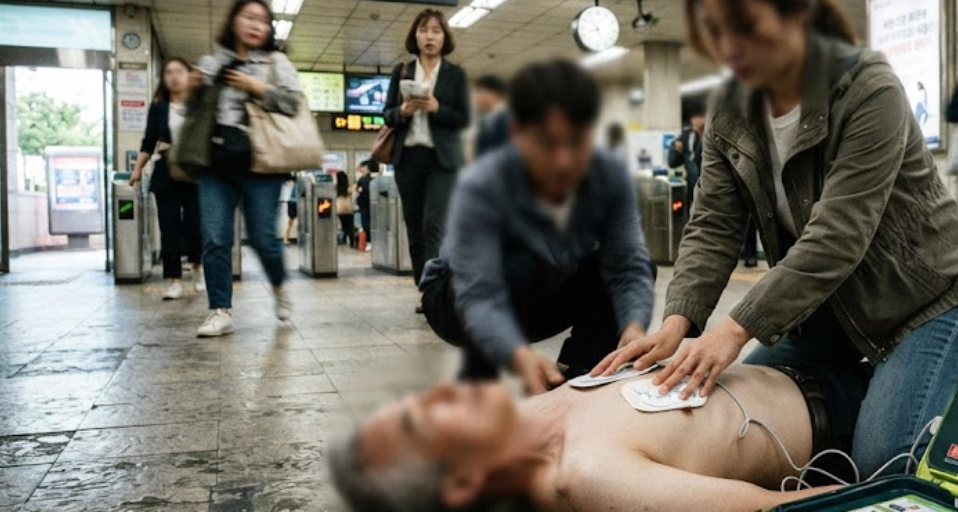
- “A man collapsed in the subway, and three people immediately started CPR.”
- “There was an AED right next to us — I’ve never seen that before.”
- “119 arrived incredibly fast.”
- “Koreans acted like trained professionals.”
- “I felt safer in Korea than in my home country.”
These experiences highlight how deeply emergency culture is embedded in modern Korean life.
5. Modern Korea’s Infrastructure Supports Emergency Action
Korea’s urban design is intentionally built for safety.
5.1 AED Placement Strategy
AEDs are placed:
- within 100–200 meters in major urban zones
- near high-traffic areas
- in locations with trained staff
- in places where cardiac events statistically occur
5.2 CCTV Monitoring
Public spaces are monitored to detect emergencies quickly.
5.3 Emergency Buttons
Subway stations and public buildings have emergency call buttons connected directly to 119.
5.4 Trained Staff
Station employees, security guards, and public facility workers receive CPR and AED training.
This infrastructure ensures that emergencies are detected and responded to quickly.
6. Why Korea’s Heart Saver Culture Matters for Foreign Residents and Travelers
Foreigners living in Korea benefit from:
- fast emergency response
- accessible AEDs
- trained citizens
- safe public spaces
- reliable 119 system
- supportive community behavior
Many foreigners say they feel safer in Korea than in their home country.
7. Legal Protection for Citizens Who Help
Korea has a Good Samaritan Law, which protects individuals who perform CPR or use an AED during emergencies.
This encourages citizens to act without fear of legal consequences.
8. How Foreigners Can Participate in Korea’s Heart Saver Culture
Foreigners can also become Heart Savers by:
- learning CPR
- understanding AED basics
- calling 119 during emergencies
- following emergency instructions
- attending community safety workshops
Korea actively encourages foreigners to join its public safety culture.
9. Heart Saver Recognition Program
Every year, thousands of Koreans — and some foreigners — receive the official Heart Saver Medal.
Recipients include:
- students
- office workers
- soldiers
- nurses
- police officers
- subway staff
- convenience store clerks
- retirees
- foreign residents
This recognition reinforces Korea’s belief that saving lives is a civic duty.
10. The Future of Korea’s Emergency Culture
Korea continues to innovate with:
- AI-based cardiac detection systems
- smart AED networks
- real-time emergency alerts
- expanded CPR education
- multilingual training for foreigners
- increased AED installations in rural areas
Korea’s goal is simple:
No one should die because help arrived too late.
11. Why Heart Saver Culture Represents Modern Korea
Heart Saver culture reflects the values of modern Korean society:
- speed
- efficiency
- compassion
- community responsibility
- advanced technology
- government support
- citizen participation
It shows that Korea’s modern identity is not only built on entertainment and technology,
but also on human-centered safety systems.
12. Final Summary
Korea’s Heart Saver culture is one of the most impressive aspects of modern Korean life.
It combines:
- widespread CPR education
- high AED accessibility
- fast 119 response
- strong public awareness
- legal protection
- advanced infrastructure
- community-driven action
For foreigners, this culture offers a unique sense of safety and trust.
It is one of the reasons Korea is considered one of the safest countries for travelers, residents, and medical tourists.
Modern Korea is not just fast and futuristic —
it is a society where ordinary people save lives.
🔗 Recommended External Links
Korea Fire Department (119) – Emergency Information
Korea Disease Control and Prevention Agency (KDCA)
Seoul Metropolitan Government – Safety Services
Korean Red Cross – CPR Training