
Korea’s MZ Generation—Millennials and Gen Z—often gets described as the group that “changed Korea.”
But that narrative oversimplifies what’s actually happening.
Rather than being the sole drivers of change, they are the generation most actively living through Korea’s transformation—a transformation shaped by technology, urban development, shifting social values, and global influence.
For visitors, expats, and anyone curious about modern Korea, observing how this generation lives offers one of the clearest windows into the country’s current direction.
This article doesn’t glorify them or portray them as a cultural revolution.
Instead, it provides a grounded, realistic look at how Korea’s younger adults navigate—and reflect—the evolving landscape of Korean society.
🌟 1. Seoul’s Changing Neighborhoods: Slow, Steady Transformation
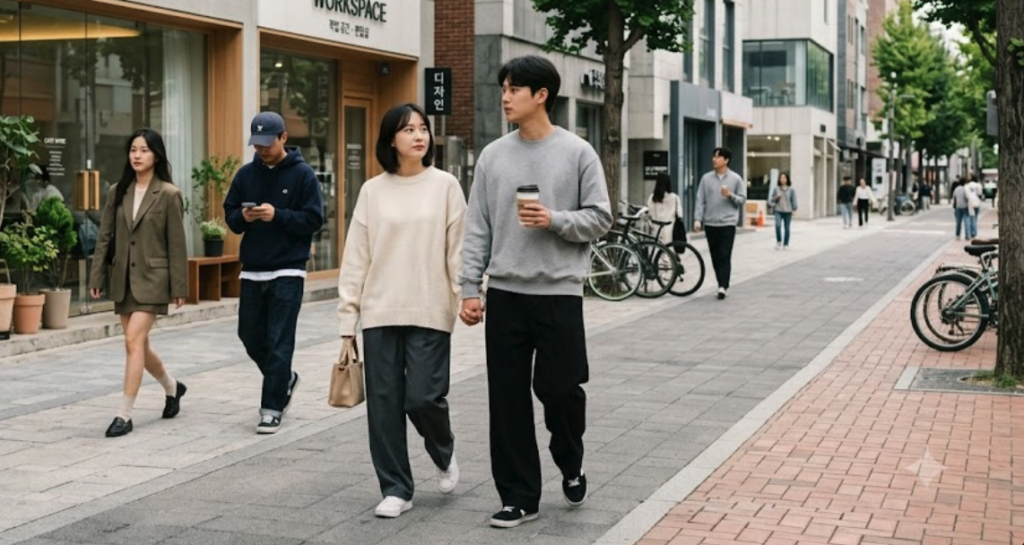
Seoul is a fast-changing city, but its transformation rarely feels dramatic.
Instead, it unfolds quietly:
a new café opens in an old building,
a small independent brand takes over a former workshop,
and foot traffic gradually shifts from one street to another.
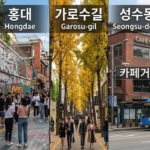
Seongsu-dong
Once an industrial zone filled with shoe factories, Seongsu has become one of Seoul’s trendiest districts.
Cafés, concept stores, galleries, and pop-up shops now fill the area.
This shift didn’t happen because a generation “decided” to change the neighborhood.
It happened because young Koreans naturally gravitated toward underused spaces and reinterpreted them.
Yeonnam-dong
Yeonnam’s narrow alleys are lined with small bakeries, craft shops, and cozy restaurants.
Foreign visitors often say,
“I didn’t expect Seoul to have such quiet, walkable neighborhoods.”
Its charm comes from organic growth rather than planned development.
Hannam-dong
Hannam has become a hub for lifestyle brands, fashion boutiques, and minimalist design.
It reflects the aesthetic preferences of younger Koreans—clean, modern, understated.
These changes are not the result of a generational “movement.”
They are the outcome of urban evolution shaped by how people choose to live, work, and spend their time.
🌟 2. Café Culture: The Center of Urban Life
One of the first things foreigners notice in Korea is the sheer number of cafés.
Not just many cafés—but many distinct cafés.
In Korea, a café is not just a place to drink coffee.
It is:
- a workspace
- a meeting spot
- a place to rest
- a photography backdrop
- a personal comfort zone
- a reflection of one’s taste
This multi-purpose use of cafés is not exclusively an MZ trend.
It’s a broader shift in Korean urban life, where cafés have become the most accessible and versatile public spaces.
Foreigners often ask,
“Why do Koreans spend so much time in cafés?”
The answer is simple:
Cafés offer comfort, convenience, and a sense of personal space in a dense, fast-paced city.
🌟 3. Digital Life: Not a Trend, but a Default Setting
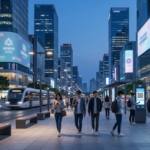
Korea’s digital infrastructure is one of the most advanced in the world.
But what surprises foreigners is not the technology itself—it’s how normal it feels.
For Koreans, especially younger adults, digital convenience is not a luxury.
It’s the baseline.
- QR payments everywhere
- Delivery arriving in 10–20 minutes
- Subway Wi-Fi that rarely drops
- Real-time taxi apps
- Mobile banking and shopping as daily routines
- Cloud-based work tools
This isn’t about MZ Koreans being “tech-obsessed.”
It’s about living in a country where digital systems are efficient, reliable, and deeply integrated into everyday life.
The generation simply uses what the environment provides—and uses it well.
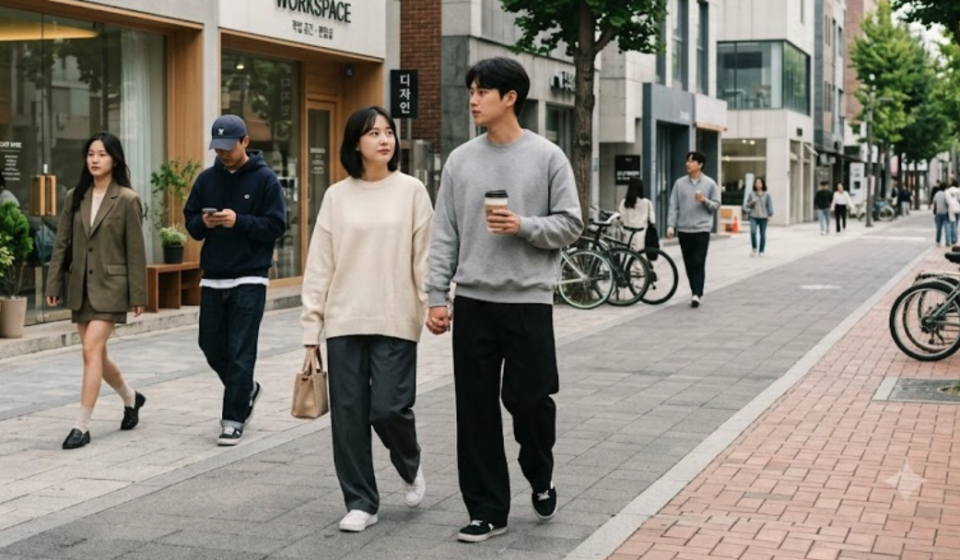
🌟 4. Fashion and Personal Style: A Growing Acceptance of Diversity
Korean fashion often impresses foreign visitors.
People dress well, and styles vary widely—from minimalist to streetwear to vintage.
But again, this isn’t because the MZ generation “changed everything.”
It’s because Korean society is gradually becoming more accepting of individuality.
Younger Koreans use fashion as a natural form of self-expression, not as a statement.
It’s simply part of how they navigate a modern, globalized city.
Foreigners frequently say,
“Everyone looks stylish here.”
That impression comes from a culture where appearance is seen as a way to communicate respect, identity, and confidence.
🌟 5. Value-Based Consumption: A New Standard, Not a Trend
Sustainability, ethical production, and transparent communication matter to younger Koreans.
But this isn’t a uniquely Korean phenomenon.
It’s part of a global shift in consumer behavior.
What makes Korea notable is how quickly these values became mainstream.
Brands that fail to show authenticity or responsibility lose favor fast.
Companies respond by adopting eco-friendly packaging, ethical sourcing, and clearer messaging.
This is not a dramatic cultural revolution.
It’s a practical adjustment to changing expectations.
🌟 6. Workplace Culture: Structural Change, Not Generational Conflict
Korea’s workplace culture is evolving.
Remote work, flexible hours, and work-life balance are becoming more common.
This shift is often framed as a clash between older and younger generations.
But in reality, it’s part of a broader modernization of Korean corporate culture.
Global standards, digital tools, and new business models all contribute to the change.
Younger Koreans simply represent the group most willing to embrace these new norms.
🌟 7. The Rise of Solo Culture: A Practical Response to Urban Living
Solo dining, solo travel, and solo hobbies are increasingly common in Korea.
Foreigners often find this surprising, given Korea’s collectivist reputation.
But the rise of solo culture is not a rebellion.
It’s a practical adaptation to modern life:
- busy schedules
- dense cities
- diverse lifestyles
- increased focus on personal well-being
Korea has become a place where being alone is socially acceptable—and often comfortable.
⭐ Conclusion: MZ Koreans Reflect Korea’s Current Moment
Korea’s MZ Generation is not a dramatic force reshaping the country.
They are the visible face of Korea’s ongoing transformation—a transformation driven by technology, urban development, global influence, and shifting social values.
Understanding how they live offers a realistic, grounded way to understand modern Korea.
Not through exaggerated narratives,
but through everyday scenes:
a crowded café,
a quiet alley in Yeonnam,
a seamless mobile payment,
a minimalist boutique in Hannam,
a person eating alone without hesitation.
These moments reveal more about Korea today than any slogan or stereotype.