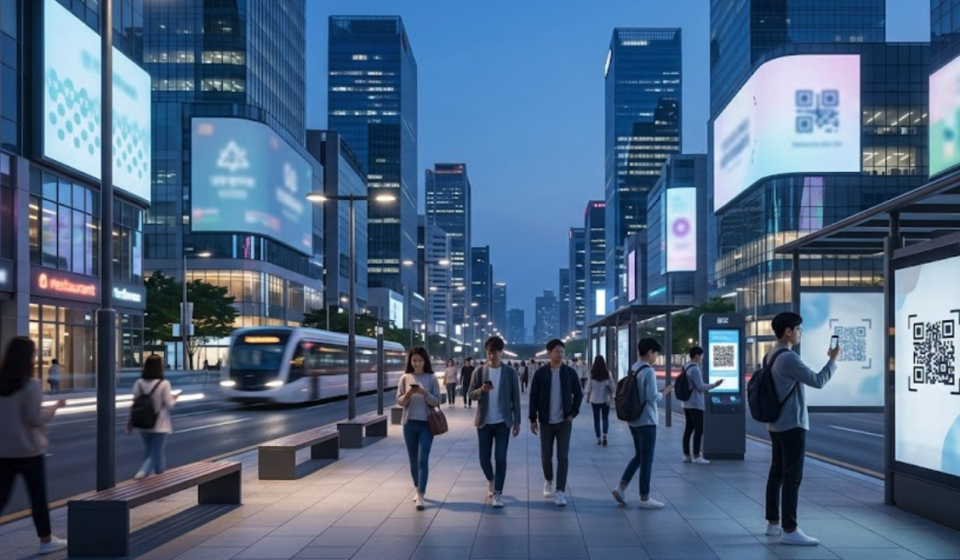

If you spend even a few days in Korea, you’ll notice something quickly:
people here live through their phones. Not in the “everyone is addicted to screens” kind of way, but in the very literal sense that daily life is built around mobile systems. Paying for coffee, catching a bus, ordering dinner, sending money, booking a hospital appointment—almost everything happens through a smartphone.
For foreigners, this can feel almost futuristic.
For Koreans, it’s just normal.
Let me walk you through what “Digital Korea” actually looks like in everyday life.
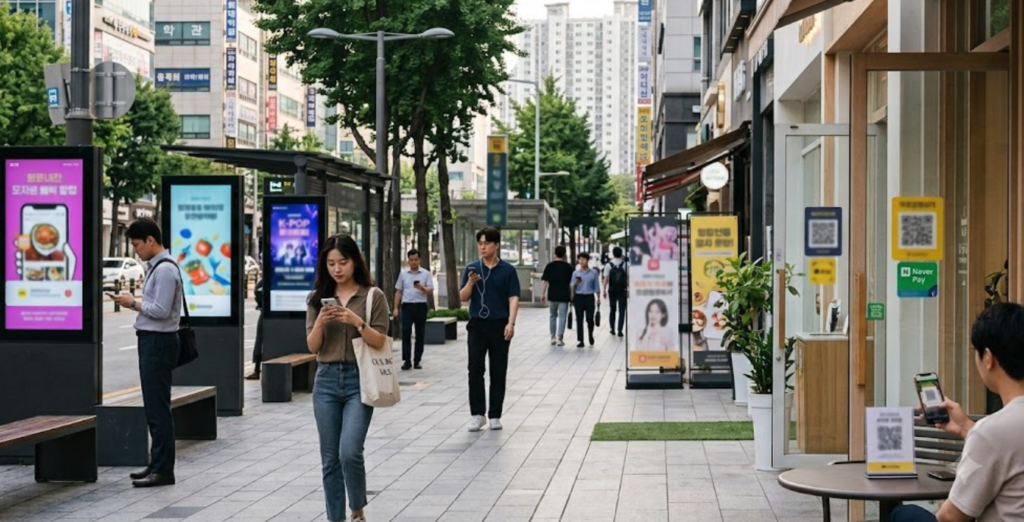
1. QR Payments: Korea Is Basically a Wallet‑Free Society
In Korea, most people don’t carry wallets anymore.
You don’t need one.
Cafés, convenience stores, restaurants, taxis, subway gates, vending machines—almost everywhere accepts QR or mobile payments. And the two apps that dominate everyday life are KakaoPay and NaverPay.
These apps aren’t just payment tools. They handle:
- Paying bills
- Sending money instantly
- Membership points
- Insurance
- Investments
- Transportation
- Online shopping
- Reservations
Foreigners often say, “Wait, everything is inside one app?”
Yes. And that’s exactly why people stop carrying wallets.
Your phone is your wallet.
2. Delivery Culture: Fast Isn’t Impressive—It’s Expected
Korean delivery culture is famous, but you only understand it when you experience it.
The surprising part isn’t that delivery is fast.
It’s that delivery is so normal.
Apps like Baemin, Coupang Eats, and Yogiyo make ordering food ridiculously easy. You tap a few buttons, pay instantly, and watch the rider move toward you in real time.
Foreigners are shocked by things like:
- Food arriving in 10–20 minutes
- Almost every type of food being available
- Low delivery fees
- Real‑time tracking
- Smooth payment → delivery → completion flow
In Korea, delivery isn’t a luxury.
It’s part of daily life.
People order dinner after work, snacks late at night, or coffee on a rainy day—without thinking twice.
3. Transportation: The Entire City Is Synced With Your Phone
Korea’s transportation system is efficient, but what really surprises foreigners is how deeply connected it is to mobile apps.
Apps like KakaoMap and Naver Map show:
- Real‑time bus locations
- Exact subway arrival times
- Transfer routes
- Walking paths
- Taxi availability
- Estimated travel time
Foreigners often say, “The bus arrival time is accurate to the minute?”
Yes. And everyone uses it.
Taxis
You don’t wave at taxis on the street.
You call them through Kakao T.
You see the driver’s location, car number, arrival time, and fare before the car even arrives.
Transportation in Korea isn’t just efficient—it’s predictable, because your phone tells you everything.
4. Shopping: Offline Is for Browsing, Online Is for Buying
Koreans shop mostly through their phones.
Offline stores are often just for checking the product in person.
Coupang (Rocket Delivery)
Order at 11 PM, receive it the next morning.
Foreigners think it’s magic.
Koreans think it’s normal.
Naver Shopping
Price comparison, reviews, delivery options, points—everything is integrated.
Shopping in Korea is designed around convenience.
People browse offline, but buy online.
5. Banking: You Almost Never Visit a Bank
In Korea, bank visits are rare.
Most people do everything through mobile apps:
- Opening accounts
- Sending money
- Applying for loans
- Managing cards
- Reporting lost cards
- Checking investments
Foreigners are surprised by:
- Instant transfers
- No transfer fees
- Extremely stable banking apps
- Fast identity verification
- No need for physical paperwork
In Korea, the bank app is the bank.
6. Government Services: Even Public Systems Are Mobile‑First
This is where Korea really stands out.
Government services are also digital.
Through apps like Government24, Kakao Certification, and mobile ID systems, you can:
- Get official documents
- Check health insurance
- Use a mobile driver’s license
- Make public service reservations
Foreigners often ask, “Why don’t people go to government offices?”
Because you don’t need to.
The mobile version is faster and easier.
7. Why Korea Became So Digital
Korea’s digital lifestyle didn’t happen by accident.
There are clear reasons:
- High population density → mobile systems work efficiently
- Fast internet infrastructure → everything loads instantly
- Tech‑friendly consumers → people adopt new tools quickly
- Strong competition → companies must innovate
- Government digitalization → public and private systems align
The result is a country where digital convenience isn’t a trend—it’s the foundation of everyday life.
8. In Korea, Your Phone Isn’t a Device—It’s Your Operating System
After living in Korea for a while, you stop thinking of your phone as a gadget.
It becomes your daily operating system.
You use it to:
- Pay
- Move
- Shop
- Bank
- Order
- Reserve
- Verify identity
- Communicate
- Work
Foreigners often say, “Korea feels like the future.”
But for Koreans, this is just how life works.