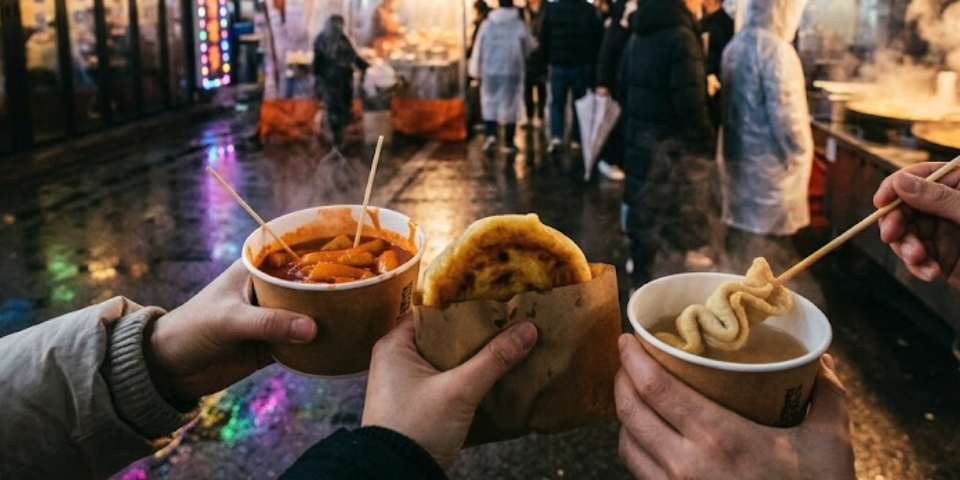

A sensory walk through Seoul’s most iconic street food spots.
Street food in Seoul isn’t just food—it’s a part of the city’s heartbeat.
It’s the sound of oil sizzling, the smell of sweet batter caramelizing, the warmth of a paper cup in your hands on a cold evening.
This guide takes you through the street foods that define Seoul, and where to find them.
Note: This guide contains affiliate links. If you book through them, we may earn a small commission at no extra cost to you. See our Affiliate Disclosure.
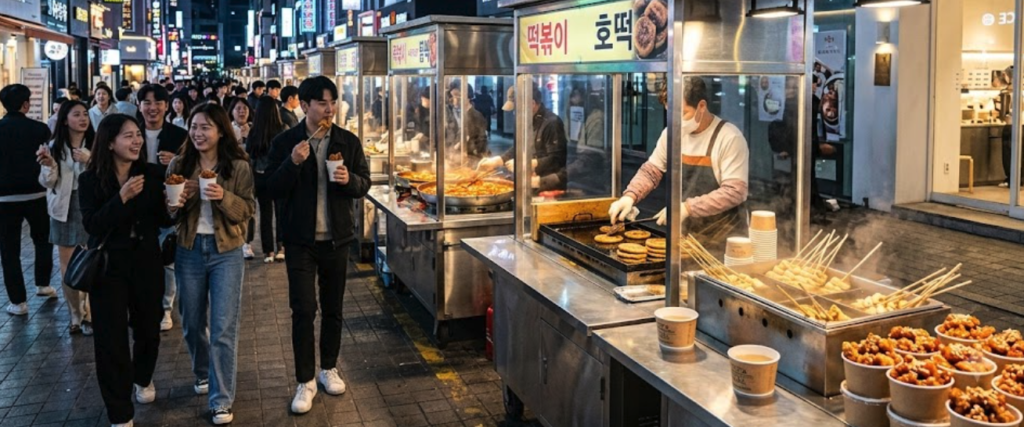
Seoul street food prices at a glance
Prices below are typical 2026 ranges. Expect to pay more in Myeongdong than in markets or neighborhood stalls.
Prices are shown in US dollars first (approximate, November 2026 exchange rate: US$1 ≈ ₩1,335) with Korean won in brackets. You will pay in won in Korea.
| Food | Typical price | Best season |
|---|---|---|
| Tteokbokki (one portion) | $3–4.50 (₩4,000–6,000) | All year |
| Hotteok | $1.10–2.20 (₩1,500–3,000) | Autumn–winter |
| Odeng (per skewer) | $0.75–1.50 (₩1,000–2,000) | Autumn–winter |
| Chicken cup | $3.70–6 (₩5,000–8,000) | All year |
| Tornado potato | $3–4.50 (₩4,000–6,000) | All year |
| Kalguksu (market bowl) | $5.20–6.70 (₩7,000–9,000) | All year |
| Bindaetteok | $3.70–5.20 (₩5,000–7,000) | All year |
| Mayak gimbap (one plate) | $3–4.50 (₩4,000–6,000) | All year |
| Gyeranppang / Bungeoppang | $0.75–2.20 (₩1,000–3,000) | Winter |
| Korean corn dog | $2.20–3.70 (₩3,000–5,000) | All year |
🍢 1. Tteokbokki (Spicy Rice Cakes)
Soft rice cakes simmered in a sweet, spicy red sauce.
It’s bold, comforting, and uniquely Korean.
Where to try it:
- Myeongdong Street
- Hongdae Food Alley
- Gwangjang Market
Why it’s iconic:
It’s the unofficial street food of Seoul—everyone eats it.
🍡 2. Hotteok (Sweet Filled Pancake)
A warm, crispy pancake filled with melted brown sugar, nuts, and cinnamon.
When you bite into it, the syrup spills out—pure happiness.
Best spots:
- Namdaemun Market
- Insadong Street Vendors
Tip:
Eat it fresh. Hotteok cools fast.
🍢 3. Odeng (Fish Cake Skewers)
Served in hot broth, perfect for cold evenings.
You dip the skewer, take a bite, sip the broth—it’s a ritual.
Where to find:
- Any pocha street stall
- Gwangjang Market
Why locals love it:
It’s cheap, warm, and nostalgic.
🍗 4. Korean Fried Chicken (Street Style)
Not the restaurant version—street chicken is different.
Crispy, saucy, and served in paper cups.
Try:
- Honey butter chicken cups
- Sweet & spicy boneless chicken
Best areas:
- Hongdae
- Myeongdong
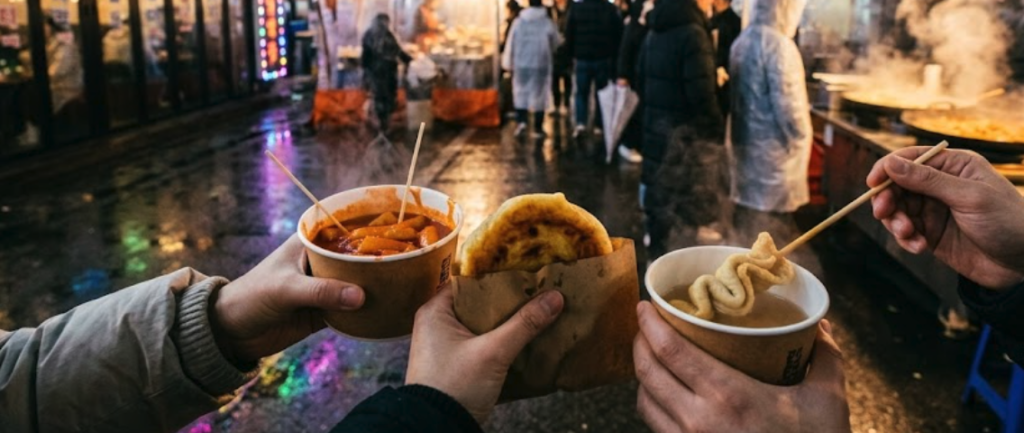
🍢 5. Tornado Potato (Twisted Potato Skewer)
A long spiral potato fried until crispy and dusted with cheese powder.
It’s fun, messy, and very Seoul.
Where:
- Myeongdong
- Dongdaemun Night Market
🍜 6. Kalguksu (Knife-Cut Noodles) – Market Style
Thick noodles in hot broth, made fresh in front of you.
Best place:
- Gwangjang Market’s famous noodle alley
Why it’s special:
It’s one of the few “street foods” served at a table inside a traditional market.
🍖 7. Bindaetteok (Crispy Mung Bean Pancake)
Savory, crispy, and fried right in front of you.
You hear the sizzling before you see it.
Best place:
- Gwangjang Market
Pair with:
- Makgeolli (rice wine) for the full experience.
🍙 8. Mayak Gimbap (Mini Rice Rolls)
“Mayak” means addictive—and it’s true.
Tiny rice rolls dipped in mustard soy sauce.
Where:
- Gwangjang Market
Why foreigners love it:
It’s light, flavorful, and easy to eat while walking.
🍢 9. Egg Bread (Gyeranppang)
Soft bread with a whole egg baked inside.
Slightly sweet, warm, and perfect for winter nights.
Best spots:
- Myeongdong
- Hongdae
🍧 10. Korean Shaved Ice (Bingsu) – Street Version
Not the café version—street bingsu is simple and refreshing.
Try:
- Strawberry bingsu
- Milk bingsu
Where:
- Myeongdong dessert stalls
🌭 11. Korean Corn Dog (Hotdog)
A hot dog, mozzarella cheese or both on a stick, coated in batter (sometimes with potato cubes or crunchy ramen bits), fried and rolled in sugar. Finish it with ketchup and mustard — the sweet‑salty mix is the point.
Where: Myeongdong, Hongdae and corn dog chain shops near almost every subway station.
🐟 12. Bungeoppang (Fish‑Shaped Bread)
Crispy fish‑shaped waffles filled with sweet red bean paste or custard cream. Bungeoppang carts appear on street corners when the weather turns cold, and finding one becomes a small winter hobby for Seoul locals.
Tip: carts often take bank transfer or cash only, so keep a few $0.75 (₩1,000) notes. Visiting in the cold months? See our Seoul winter travel guide.
🥢 13. Sundae (Korean Blood Sausage)
Steamed sausage made with glass noodles and pig’s blood, served sliced with salt and pepper or with tteokbokki sauce. It sounds adventurous, but the flavor is mild and savory. Ask for “tteok‑sun” to get tteokbokki and sundae together.
Where: Gwangjang Market, Sillim‑dong sundae town and tteokbokki stalls across the city.
🧭 Best Areas for Street Food in Seoul
Myeongdong
Tourist-friendly, colorful, and full of variety.
Hongdae
Youthful, experimental, and open late.
Gwangjang Market
Traditional, authentic, and full of history.
Namdaemun Market
Classic Korean flavors and cheap eats.
Dongdaemun Night Market
Fashion + food + nightlife.
How to visit Gwangjang Market
Gwangjang Market is the single best place to try many of the foods in this guide in one visit. Opened in 1905, it is one of Korea’s oldest traditional markets, and its central food alley is packed with counters serving bindaetteok, mayak gimbap, kalguksu and yukhoe (Korean beef tartare).
- Getting there: Jongno 5‑ga Station (Line 1) or Euljiro 4‑ga Station (Lines 2, 5).
- When: food stalls are busiest from late afternoon into the evening; many textile shops close on Sundays, but most food stalls stay open.
- How to order: sit at a counter, point to what you want and pay when you leave.
- Prices: after complaints about overcharging tourists, the market added more posted price boards. Check the menu price before you order, and don’t hesitate to ask for the price.
Want to know more about Seoul’s market culture? Read the quiet charm of Seoul’s traditional markets.
Street food hours by area
- Myeongdong: carts roll out in the late afternoon and stay until around 10–11 p.m.
- Gwangjang Market: from morning, busiest in the evening.
- Hongdae: late into the night, especially on weekends.
- Namdaemun Market: best in the daytime; most shops close in the evening.
Still hungry after midnight? Our Seoul nightlife & late‑night food guide covers where to eat after the stalls close.
🌐 Tips for Enjoying Street Food Like a Local
- Bring cash or a card—most vendors accept both
- Eat while standing or walking
- Don’t be afraid to try unfamiliar dishes
- Go early evening for the best selection
- Follow the crowds—locals know what’s good
- Trash: public bins are rare in Seoul. Return skewers and cups to the stall or keep a small bag for trash.
- Spice level: tteokbokki and some chicken sauces can be very spicy. Ask for “an maepge” (not spicy) or try a bite first.
- Vegetarians: odeng broth and many sauces contain fish or meat stock. Hotteok, gyeranppang and corn dogs with cheese only are easier choices.
- Payment: most stalls take cards now, but small carts may be cash or bank transfer only.
🍢 Eating your way through Seoul?
Pay at food stalls and ride the subway with one card, and stay online to find the next market.
Booked via Klook · Affiliate link · Disclosure
A street food route for one evening
- 5 p.m. — Gwangjang Market: bindaetteok, mayak gimbap and a bowl of kalguksu to share.
- 7 p.m. — Cheonggyecheon walk: walk off dinner along the stream toward the city center.
- 8 p.m. — Myeongdong: tornado potato, gyeranppang and a chicken cup from the evening carts.
- Late — Hongdae: corn dogs and tteokbokki with the night crowd.
Don’t forget Korean convenience stores for a cheap late snack — here are the best convenience store foods to try.
Frequently Asked Questions
Where is the best street food in Seoul?
Gwangjang Market for traditional dishes, Myeongdong for the widest variety in the evening, and Hongdae for late‑night snacks.
How much money do I need for street food in Seoul?
Most items cost $0.75–6 (₩1,000–8,000). Around $15–22 (₩20,000–30,000) per person is enough for a full street food dinner.
Is Seoul street food safe to eat?
Yes. Food is usually cooked fresh in front of you and turnover is high. Choose busy stalls for the freshest food.
Can I pay by card at street food stalls?
Many stalls in Myeongdong and Gwangjang accept cards, but small carts may take cash only. Carry some $0.75 (₩1,000) notes.
Dollar amounts are approximate and based on the November 2026 exchange rate (US$1 ≈ ₩1,335).
Discover more from Korea Seoul Info
Subscribe to get the latest posts sent to your email.


[…] Best Korean Street Foods You Must Try in Seoul […]