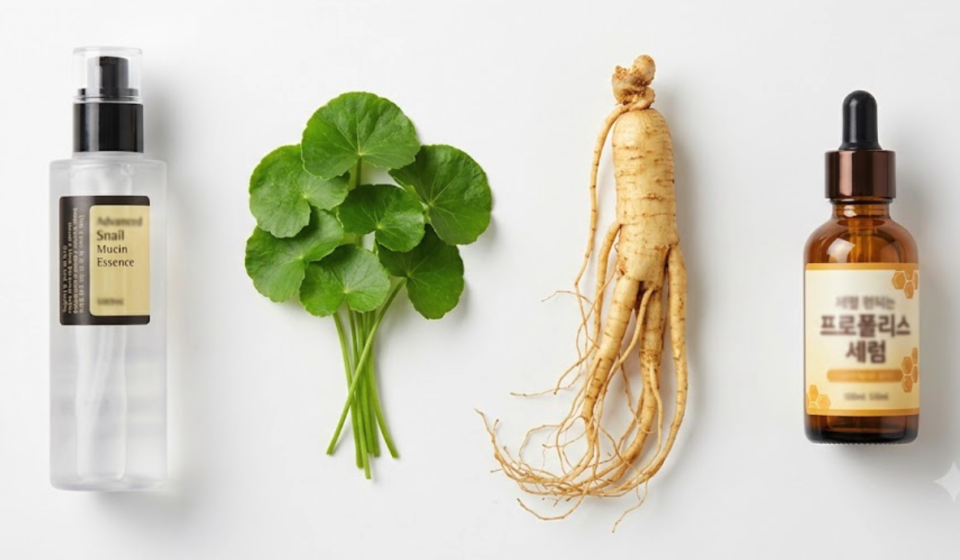

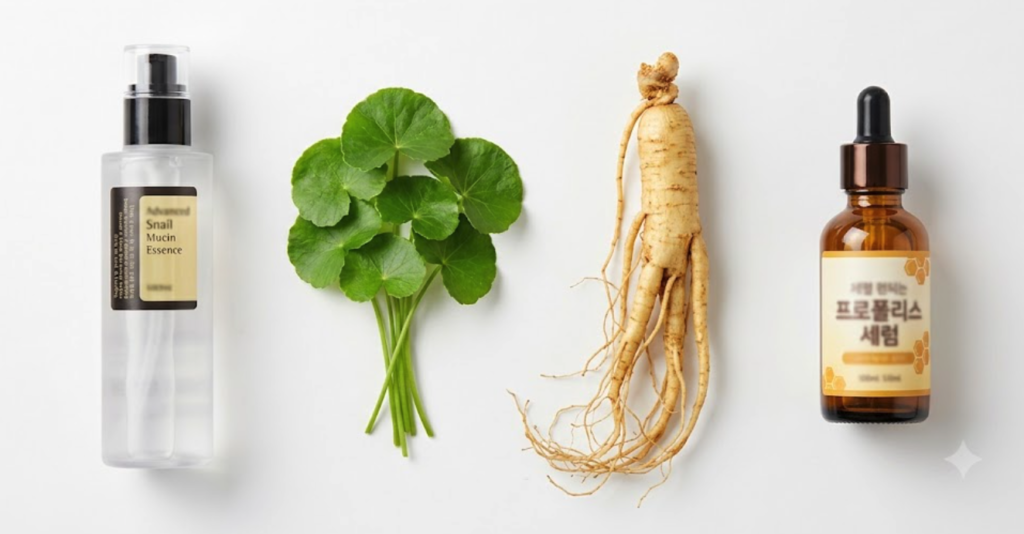
If you’ve ever looked at Korean skincare labels, you’ve probably seen the same four names again and again: snail mucin, centella asiatica, ginseng and propolis. They’re on the front of serums, creams, toners and even sunscreens.
I wanted to know what each one actually does, who it suits, and what the evidence really says, especially for the question I see asked most often: do these ingredients help with acne scars and redness? Here’s what I found.
Snail Mucin: Hydration and Recovery
Snail mucin is the ingredient that made a lot of people curious about K-beauty in the first place. On an ingredient list, it usually appears as Snail Secretion Filtrate. It’s a slippery, lightweight liquid that contains naturally occurring hyaluronic acid, glycoproteins and other moisturizing compounds.
Its main job is hydration. It helps skin hold water, feels light rather than greasy, and is often used in “essence” products that go on after toner. Many people also like it for skin that feels tight or irritated after acne treatments or over-exfoliating.
Best for: dry, dehydrated or dull skin, and anyone who wants a simple, light hydrating step. It’s one of the easiest K-beauty ingredients to start with.
Centella Asiatica: Calming and Redness
Centella asiatica is a plant used in traditional Asian medicine. In Korea, products made with it are often labeled “cica.” On ingredient lists, look for Centella Asiatica Extract, or its active compounds madecassoside, asiaticoside and asiatic acid.
Centella is known for calming skin. It’s a favorite for skin that gets red, stings easily, or has a weakened barrier from harsh products, wind or cold weather. That’s why you’ll find it in so many “soothing” and “sensitive skin” lines in Korea.
Best for: sensitive, easily irritated or redness-prone skin, and skin that feels stressed after acne treatments.
Ginseng: Nourishment for Dull or Mature Skin
Ginseng has been used in Korean traditional medicine for centuries, and in skincare it’s mostly found in richer, premium lines. It contains compounds called ginsenosides, which are studied for their antioxidant effects.
In practice, ginseng products tend to be richer creams and serums aimed at dull or tired-looking skin and early signs of aging. They’re usually a “nice to have” rather than an essential step.
Best for: dry, mature or dull skin, especially in colder months.
Propolis: Glow and Moisture
Propolis is a resin-like substance that bees make to protect their hives. In skincare, it appears as Propolis Extract and is popular in honey-colored ampoules and serums.
People use it for moisture and a healthy-looking glow, and it has antioxidant and anti-inflammatory properties. One caution: propolis is a known allergen for some people. If you’re allergic to bees, bee products or balsam of Peru, skip it or ask a doctor first.
Best for: dry or dull skin that wants a dewy finish, as long as you don’t react to bee products.
Do Snail Mucin and Centella Help With Acne Scars and Redness?
This is the question I see most, so here’s the honest answer from what I read.
For redness: centella is the better fit of the two. It’s widely used to calm red, irritated skin, and many people find it helps the pink marks left after a breakout look calmer over time. Snail mucin can help too, mainly by keeping the skin hydrated while it recovers.
For acne scars: it depends on what you mean by “scar.”
- Flat red or brown marks after a pimple aren’t true scars. They often fade on their own over weeks or months, and good hydration, calming ingredients and daily sunscreen can help them fade more evenly.
- Indented scars (the small pits or dents in the skin) are a change in the skin’s structure. No serum or cream, Korean or otherwise, will fill those in. Dermatologists treat them with procedures like lasers, microneedling or subcision.
So snail mucin and centella are good supporting ingredients for skin that’s healing from acne, but they’re not scar treatments. If you have active, painful acne or deep scars, a dermatologist is the right first step.
How to Choose the Right Ingredient for Your Skin
- Dry or dehydrated skin: snail mucin, or propolis if you want more glow.
- Red, sensitive or irritated skin: centella first.
- Skin recovering from breakouts: centella plus a light snail essence, and daily sunscreen.
- Dull or mature skin: ginseng in a richer cream, especially in winter.
You can use more than one, since these four ingredients generally work well together. Start with one new product at a time, though. If your skin reacts, you’ll know which one caused it.
Patch Test Before You Commit
“Natural” doesn’t mean safe for everyone. Plant extracts and bee products can cause reactions in some people. Before using something new on your whole face, put a little on your jaw or inner arm for two or three days. If you see redness, itching or bumps, stop using it.
Where to Buy These Products in Korea
If you’re visiting Seoul, health and beauty stores like Olive Young carry all four ingredients in many brands and price ranges, and you can usually test products in store. Products with snail mucin and centella are among the most common, so you won’t have to look hard. For the best order to use them in, see my guide to the Korean skincare routine.
Frequently Asked Questions
Does snail mucin help with acne scars?
It can help skin stay hydrated while flat red or dark marks fade, but it can’t fix indented acne scars. Those need treatment from a dermatologist.
Is centella good for redness?
Yes. Centella is one of the most popular calming ingredients in Korean skincare and is widely used for red, sensitive or irritated skin.
Can I use snail mucin and centella together?
Yes. They’re often combined in the same product. Add one new product at a time so you can tell what works for you.
Who should avoid propolis?
Anyone allergic to bee products or balsam of Peru. If you’re not sure, patch test first or ask a doctor.
Information checked in November 2026. This post is general skincare information, not medical advice. For acne, scars or a skin condition, see a dermatologist.
Discover more from Korea Seoul Info
Subscribe to get the latest posts sent to your email.