
What makes winter in South Korea so surprising to foreigners? It is not just the freezing temperatures or the snow-covered streets. From heated bus stop seats to cozy floor heating and traditional kimchi-making, Korea has developed some fascinating ways to stay warm during the coldest months of the year.
Here are seven things about Korean winters that often surprise visitors from around the world.
1. Bubble Wrap on Windows to Keep Homes Warm
As winter approaches, many Korean households prepare their homes for the cold by covering their windows with bubble wrap.
To foreigners, this can look unusual. Bubble wrap is normally used to protect fragile items during shipping, so why would anyone stick it on a window?
The secret is the layer of trapped air inside the bubbles. It creates an additional insulating barrier that can help reduce heat loss through the glass. It is an inexpensive and simple way to make a room feel warmer without major renovations.
Koreans have used similar methods for generations. In the past, people sealed gaps around traditional doors with paper strips called munpungji to block cold drafts. Today, bubble wrap and weatherstripping serve a similar purpose.
2. Long Puffer Jackets and the Korean Winter Fashion Trend
One of the most recognizable sights on Korean streets during winter is the long puffer jacket.
These oversized winter coats often extend down to the knees, protecting the body from cold winds and low temperatures. During particularly cold weather, entire groups of students and commuters can look as though they are wearing the same uniform.
Long padding jackets became especially popular in South Korea around the winter of 2017, when a limited-edition jacket associated with the PyeongChang Winter Olympics sparked enormous demand.
Foreign visitors are often surprised by how widely the style is adopted. In Korea, when a practical fashion item becomes popular, it can quickly become a nationwide trend.
Another interesting feature of Korean winter fashion is the contrast between heavy outerwear and surprisingly light clothing underneath. Some people wear shorts or short sleeves indoors because heated homes and buildings can be very warm. When stepping outside briefly, they may simply throw on a thick coat.
It is not that Koreans are immune to the cold. They have simply learned to adapt to changing temperatures between indoor and outdoor spaces.
3. Heated Bus Stops and Warm Subway Seats
Waiting for a bus in freezing weather can be uncomfortable, especially when strong winds blow through an open street.
In many Korean cities, however, winter bus stops offer a more comfortable experience. Some have enclosed windbreak shelters that protect passengers from cold air, while others provide heated seats that warm up when temperatures drop.
For visitors from countries where public transportation stops may offer little protection from the weather, these features can be a pleasant surprise.
The warmth does not stop at the bus stop. Some subway systems in Korea also provide heated seats during colder months, making winter commutes more comfortable.
These small conveniences reflect a practical approach to public transportation: even a short wait outdoors should not have to mean standing in the freezing wind.
4. Hot Fish Cake Soup and Bungeoppang on Winter Streets
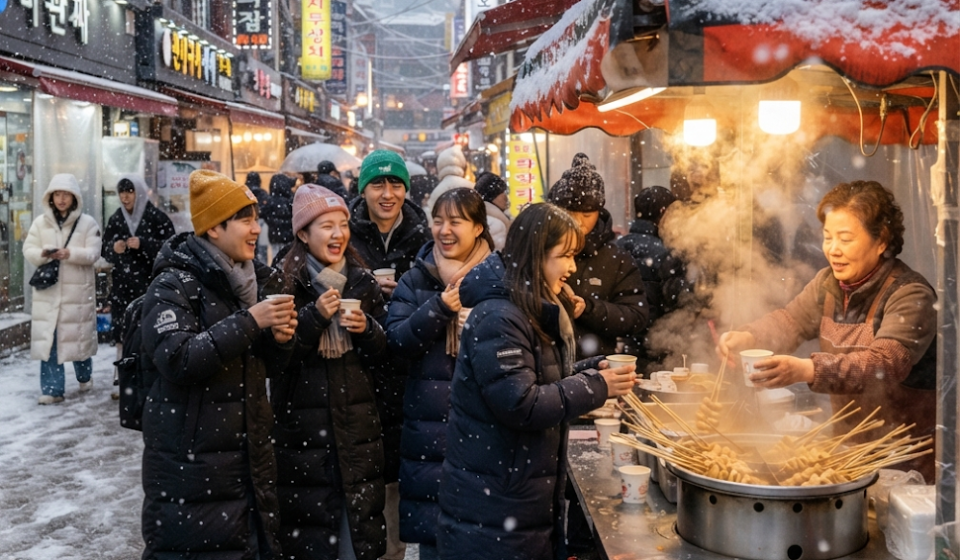
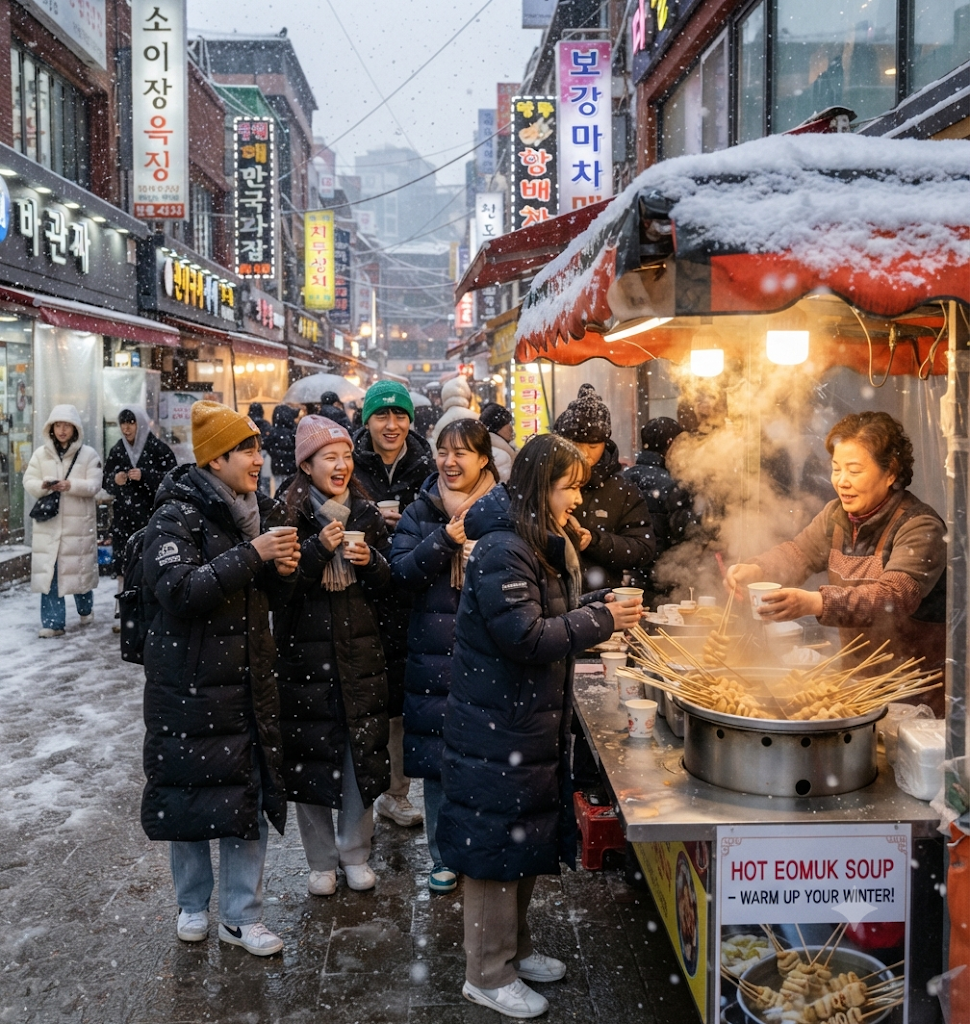
When temperatures fall, Korean streets fill with the comforting aroma of winter street food.
One favorite is eomuk, or Korean fish cake, often served on skewers with a cup of hot broth. The fish cake is simmered in a flavorful soup, and the warm broth is commonly offered to customers at no additional charge at traditional street stalls.
For foreigners, the idea of drinking the broth while standing beside a street vendor can be a memorable experience. For Koreans, it is a familiar way to warm up on a cold day.
Another seasonal favorite is bungeoppang, a fish-shaped pastry traditionally filled with sweet red bean paste. Despite its fish-like shape, it contains no fish at all.
Modern versions may contain custard, sweet potato, or cheese, but red bean remains a classic filling. The pastries are especially popular during the colder months, when their warm, sweet centers provide a welcome treat.
These simple street foods are more than snacks. They are part of the atmosphere that makes a Korean winter feel complete.
5. Korean Jjimjilbangs: Heated Floors, Saunas, and Relaxation
A Korean jjimjilbang is a public bathhouse and sauna complex where people can relax, warm up, and spend time together.
Many facilities offer hot baths, heated rooms, resting areas, and shared spaces where visitors can eat, watch television, or take a nap. Guests typically change into comfortable clothing provided by the facility.
Foreign visitors are often surprised to discover people sleeping on the heated floors, sometimes in large communal rooms. What may initially seem unfamiliar can quickly become one of the most relaxing parts of the experience.
Traditional jjimjilbang snacks are another highlight. Roasted eggs and cold sikhye, a sweet Korean rice drink, are popular choices.
For many Koreans, visiting a jjimjilbang is not simply about bathing. It is an opportunity to unwind with family or friends, especially during the cold winter months.
Korean-style sauna facilities have also opened in various parts of the United States, introducing more international visitors to this distinctive part of Korean culture.
6. Ondol: Korea’s Traditional Heated Floor System
One of the most distinctive features of traditional Korean homes is ondol, a heating system that warms the floor.
In many Western homes, heating primarily focuses on warming the air. Traditional ondol works differently: heat travels beneath the floor, allowing the surface itself to become warm.
Historically, heat from a kitchen or fireplace passed through channels beneath stone floors before escaping through a chimney. The stones absorbed heat and released it gradually, helping keep rooms warm long after the fire had died down.
People could spread blankets on the heated floor, sit together, eat, and sleep in a comfortable space. The warmest area, traditionally called agungi or the lower-floor hearth area in this context, was often a favored place to sit during winter.
Modern Korean homes generally use boilers and hot-water pipes beneath the floor instead of traditional wood-burning systems. With a simple control panel, residents can adjust the heating to keep their homes comfortable.
Foreign visitors often find this system surprisingly cozy. Some become so accustomed to warm Korean floors that they miss them after returning home.
Ondol also helps explain another familiar Korean winter scene: people wearing light clothing indoors and quickly putting on a thick coat when stepping outside.
7. Kimjang: Making Enough Kimchi for the Winter
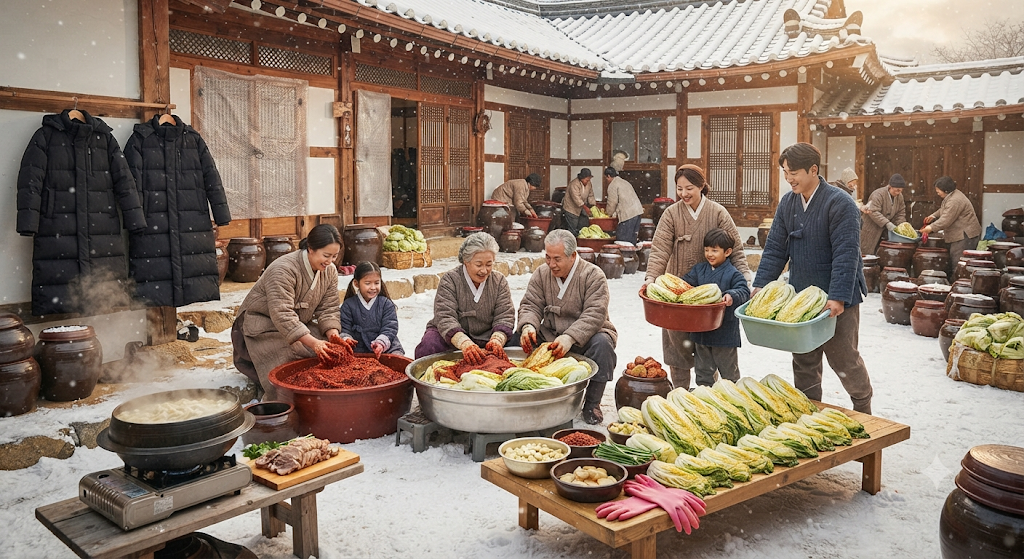
As winter approaches, Korean households prepare for another important seasonal tradition: kimjang, the communal preparation of large quantities of kimchi.
Traditionally, families made enough kimchi to last through the winter and into the following year. The process often involved preparing dozens of heads of napa cabbage, salting them, and carefully spreading a seasoned mixture between the leaves.
The work could take one or two days, and family members and neighbors often helped one another. For people unfamiliar with the tradition, the amount of cabbage and the labor involved can be astonishing.
After the kimchi is prepared, it must be stored properly to develop its flavor and remain usable over time. In the past, many families buried large earthenware jars in the ground, where temperatures stayed relatively stable. Today, specialized kimchi refrigerators are common in Korean homes.
Kimjang is about more than preserving food. It represents cooperation, family traditions, and the habit of preparing ahead for the coldest season.
After a long day of making kimchi, families often enjoy freshly prepared boiled pork, known as suyuk, with some of the newly made kimchi. It is a meal that turns hard work into a shared celebration.
The Hidden Meaning Behind Korean Winter Traditions
From bubble wrap on windows and long puffer jackets to heated bus stops, street food, jjimjilbangs, ondol heating, and kimjang, these seven traditions reveal how Koreans adapt to winter.
Some practices are modern conveniences, while others have roots stretching back generations. Together, they show how Korean households combine practical solutions with food, family, and community.
Winter in Korea has not always been easy. In the past, families had to prepare firewood or coal, maintain their heating systems, and make sure their homes stayed warm throughout the season. Today, modern heating, improved public facilities, and community support have made many aspects of winter life more convenient.
Yet the underlying idea remains the same: prepare for the cold, look after one another, and make the most of the season.
For international visitors, these everyday customs can reveal a side of South Korea that goes beyond famous landmarks and popular tourist attractions. Sometimes, the most interesting cultural experiences are found in the ordinary details of daily life.
Which Korean winter tradition would you most like to experience: relaxing in a jjimjilbang, eating hot fish cake soup on a snowy street, or lying on a warm ondol floor?
Discover more from Korea Seoul info
Subscribe to get the latest posts sent to your email.