Why Do Koreans Handle Extreme Cold So Well? The Surprising Reasons Behind Korea’s Winter Culture

Have you ever wondered why some Koreans seem perfectly comfortable wearing relatively light clothing in winter, even when temperatures drop below freezing?
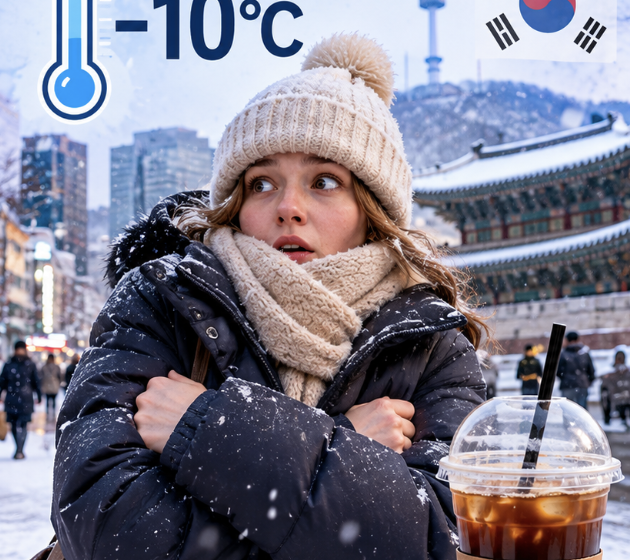
Many international visitors are surprised by the way Koreans dress during the coldest months of the year. From people walking around with iced coffee in the middle of winter to restaurants serving steaming bowls of soup and even cold noodles, Korean winter culture can seem completely different from what foreigners are used to.
But is South Korea really colder than countries such as Canada, Russia, or the Scandinavian nations? And why do people from tropical countries sometimes find Korean winters so difficult to handle?
There are some fascinating explanations involving climate, lifestyle, food, and history.
1. Why Do Some Foreigners Underestimate Korean Winters?
I once met a friend from northern Europe who grew up in a region where winter temperatures regularly dropped to between minus 10 and minus 20 degrees Celsius.
People living in that part of the world were accustomed to extremely cold weather. Snowfall was common, and winter was a normal part of everyday life.
When we first met, however, it was summer in Korea. The weather was extremely hot, and my friend was surprised by how uncomfortable the Korean summer felt.
They even joked that Korea seemed hotter than some of the hottest places in Japan.
But when winter came, my friend confidently insisted that Korean winter would be easy to handle. After all, people in colder countries did not always need extremely thick coats, so how difficult could a Korean winter possibly be?
Then the Korean winter arrived.
What happened next? My friend ended up buying a long padded winter coat for the first time.
The cold was much more difficult to deal with than expected. They struggled with the temperatures, caught a cold, and quickly changed their opinion about Korean winters.
This raises an interesting question.
If some European cities regularly experience temperatures of minus 10 to minus 20 degrees Celsius, why can a Korean winter sometimes feel just as uncomfortable, or even colder?
The answer is not simply the number displayed on the thermometer.
2. Why Can Korean Winters Feel So Cold?
One important factor is humidity.
Some northern European regions experience extremely cold winters with substantial snowfall. In certain places, snow remains on the ground for long periods, and buildings are designed to handle prolonged freezing conditions.
Snow can also provide insulation for the ground, although it does not simply make the surrounding air warmer.
South Korea has a different winter climate.
Much of the country is influenced by a continental climate, with cold, dry air and strong seasonal winds. During winter, cold air masses from inland Asia can move across the Korean Peninsula, causing temperatures to drop sharply.
Wind makes a significant difference.
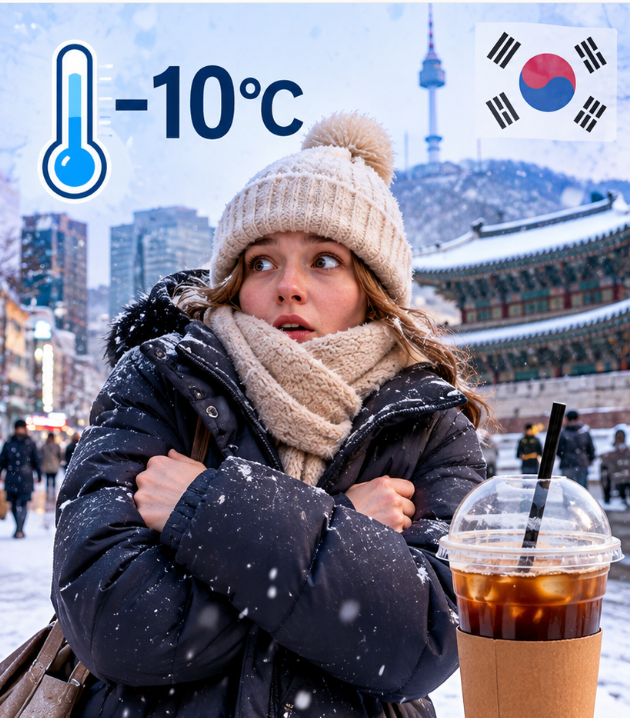
Even when the thermometer shows a temperature that seems manageable, strong winds can make exposed skin lose heat more quickly. This is why the wind chill temperature can feel considerably lower than the actual air temperature.
Dry air can also contribute to discomfort. It can make the skin, lips, and respiratory passages feel dry, especially when people move between cold outdoor conditions and heated indoor spaces.
In some colder northern regions, people may be accustomed to particular types of winter clothing, insulated buildings, and heating systems designed for their local climate.
Koreans, meanwhile, experience a combination of freezing temperatures, dry air, and strong winds.
That combination helps explain why visitors who are accustomed to cold weather elsewhere can still find Korean winters surprisingly harsh.
3. Why Do People From Tropical Countries Find Korean Winters So Difficult?
The experience can be even more dramatic for people who come from countries near the equator.
Indonesia is a good example.
Located close to the equator, Indonesia has a tropical climate, with warm temperatures throughout the year. Many people grow up without experiencing the kind of freezing winter conditions that are common in South Korea.
For someone accustomed to warm weather all year, arriving in Korea during January can be a major shock.
Imagine living somewhere where winter temperatures are still relatively warm, then suddenly stepping outside in Seoul when the temperature is below zero and cold winds are blowing.
The difference is enormous.
People from tropical countries may find Korean summers surprisingly hot as well, especially when humidity levels are high.
But winter can be an entirely different challenge.
Someone who has never experienced freezing weather may need time to adjust to winter clothing, heated indoor environments, icy roads, and the physical discomfort caused by cold temperatures.
That is why some visitors from Southeast Asia describe Korean winter as much colder than they expected.
It is not necessarily that their bodies are fundamentally less capable of handling cold. Their previous climate experience, clothing habits, and exposure to cold weather can make a major difference.
4. Why Do Koreans Drink Iced Coffee Even in Winter?
There is another Korean winter habit that often surprises foreigners: drinking iced coffee when it is freezing outside.
In Korea, the expression Eoljukah is a shortened form of a popular phrase meaning, “I would rather freeze than give up iced Americano.”
It describes people who continue ordering iced Americanos even during the coldest months of the year.
For many Koreans, iced coffee is not just a summer drink. It is an everyday preference.
The habit has become so recognizable that iced coffee remains a familiar sight even when snow is falling outside.
Interestingly, this preference has also attracted attention overseas.
Korean-style iced Americano culture has influenced international coffee conversations, and Korean cafés have helped introduce different coffee habits to global consumers.
The popularity of iced coffee reflects something interesting about modern Korean lifestyle: people do not necessarily change their favorite drinks just because the seasons change.
Of course, not every Korean prefers cold drinks in winter. Many people still enjoy hot coffee, tea, and traditional winter beverages.
But the sight of someone holding an iced Americano while wearing a thick winter coat has become a recognizable part of everyday life in Korea.
5. Why Do Koreans Enjoy Sour and Refreshing Foods?
Another interesting part of Korean food culture is the popularity of sour flavors.
Korean cuisine includes many fermented foods with distinctive sour and savory tastes.
Kimchi is probably the best-known example.
As kimchi ferments, its flavor changes and develops a characteristic acidity. Depending on the ingredients and fermentation period, it can become pleasantly sour and refreshing.
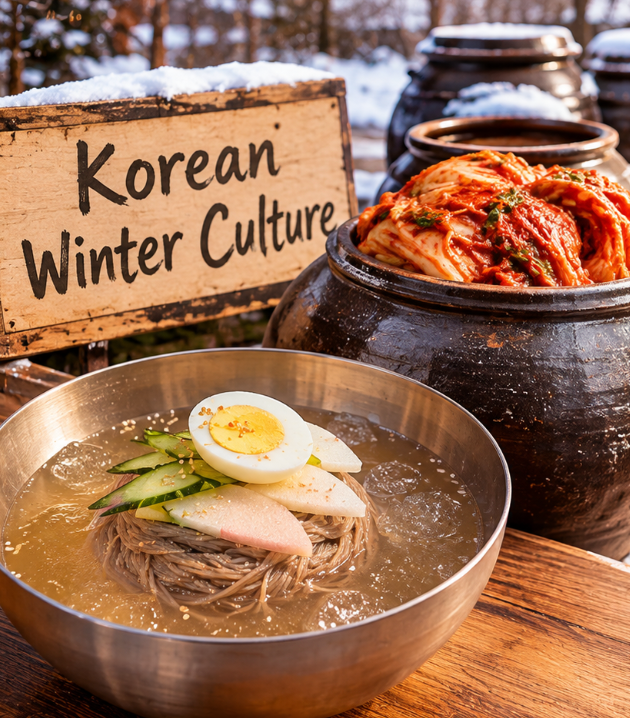
Koreans also enjoy dishes such as cold noodles, particularly naengmyeon.
Naengmyeon is traditionally made with thin noodles served in a chilled broth or with a spicy sauce, depending on the variety.
For many international visitors, the idea of eating a bowl of cold noodles can seem unusual.
Some people initially find the texture and flavor unfamiliar. But after trying it several times, they begin to appreciate the refreshing taste.
One interesting detail is that traditional naengmyeon has a long history that predates modern refrigeration.
In the past, people in colder parts of the Korean Peninsula could enjoy cold noodle dishes during winter because natural cold conditions made it possible to keep food chilled.
Today, naengmyeon is especially popular during summer because its cold broth provides a refreshing contrast to hot weather.
However, it is not exclusively a summer dish. Its historical connection to winter food culture remains an interesting part of Korean culinary history.
This is one reason Korean food can sometimes surprise international visitors: dishes that seem unusual in one country may have developed naturally from the climate and lifestyle of another.
6. How Did Korea’s Cold Climate Shape Traditional Food?
To understand Korean winter food culture, it helps to look back at the country’s agricultural history.
For centuries, Korean communities had to prepare for long, cold winters.
Fresh vegetables were not always available throughout the year, particularly during periods when farming was limited by freezing temperatures.
People therefore developed ways to preserve food for longer periods.
One of the most important methods was fermentation.
Vegetables were salted and stored so they could be eaten over an extended period. These preservation methods eventually became an important part of Korean food culture.
Kimchi is the most famous example.
However, traditional Korean preserved foods were not always made with red chili powder.
White kimchi and dongchimi are examples of varieties that do not rely on the red seasoning commonly associated with modern spicy kimchi.
Dongchimi is a watery kimchi made by fermenting ingredients such as radishes in a lightly salted brine. It is known for its clean, refreshing flavor.
These foods demonstrate that Korean fermentation traditions are much broader than the familiar image of red, spicy cabbage kimchi.
Korean kimchi culture developed over a long period through agricultural practices, seasonal food preparation, and regional traditions.
The introduction and widespread use of chili peppers also changed the appearance and flavor of many kimchi varieties over time.
This means that the history of kimchi cannot be understood by looking only at the modern red version.
7. Why Did Koreans Develop Such Strong Food Preservation Traditions?
Before modern refrigerators became common, storing food safely was a major challenge.
Korean households developed various preservation methods to make seasonal food last longer.
During autumn, people prepared vegetables and other ingredients for the coming winter.
Fermentation and storage in cool environments helped preserve food for extended periods.
Traditional storage methods included burying earthenware jars in the ground, where temperatures were relatively stable compared with the changing outdoor air.
These jars were used to store kimchi and other fermented foods.
The tradition of making large quantities of kimchi before winter became known as kimjang.
Kimjang was more than simply preparing food. It was a communal activity in which family members, relatives, and neighbors often worked together.
In 2013, UNESCO recognized kimjang, the making and sharing of kimchi in the Republic of Korea, as an element of Intangible Cultural Heritage.
This tradition shows how Korea’s climate, agricultural lifestyle, and community relationships helped shape its food culture.
8. Why Is Korean Kimchi Different From Other Fermented Foods?
Fermented vegetables are found in many countries around the world.
China, Japan, and other Asian nations also have long traditions of preserving vegetables through salting and fermentation.
However, different regions developed their own ingredients, techniques, and flavors.
Korean kimchi is known for its wide variety of ingredients, including napa cabbage, radish, garlic, ginger, green onions, and, in many varieties, chili pepper.
Not all Korean kimchi is spicy or red. White kimchi and dongchimi demonstrate the diversity of traditional Korean fermentation.
The history of kimchi is complex and developed over many centuries. It is not accurate to describe fermented vegetables as belonging exclusively to one country simply because similar preservation techniques exist elsewhere.
What makes Korean kimchi distinctive is the particular combination of ingredients, preparation methods, regional varieties, and cultural traditions that developed in Korea.
And its importance goes far beyond food.
Kimchi has become one of the most recognizable symbols of Korean cuisine around the world.
9. What Makes Korean Winter Culture So Unique?
When we look at Korean winter culture as a whole, several things become clear.
The country’s cold, dry winters and strong winds have influenced the way people dress, heat their homes, and organize everyday life.
Its agricultural history encouraged the development of preserved foods such as kimchi and dongchimi.
Traditional winter dishes, including naengmyeon, show how people adapted their food habits to seasonal conditions.
At the same time, modern Korean lifestyle has created its own recognizable habits, such as drinking iced Americano even when temperatures fall below zero.
For international visitors, these everyday customs can be just as fascinating as Korea’s famous landmarks and shopping districts.
So, the next time you see a Korean walking through freezing weather with an iced coffee in hand, remember that there is more to the story than simply being used to the cold.
Korea’s winter culture has been shaped by its climate, history, food, and everyday lifestyle over many generations.
And perhaps that is what makes experiencing winter in South Korea so interesting for people from around the world.
Discover more from Korea Seoul info
Subscribe to get the latest posts sent to your email.